
What Happens if You Don't Fix Storm Damage to Your Roof
Updated: Sep 15
A storm can leave more than a few missing shingles behind. Hail impacts and wind damage may open a path for water, even when your ceiling still looks normal. The longer that damage sits, the more opportunity moisture has to move into the roof deck, insulation, walls, and ceilings.
If you do not fix storm damage, a small roof problem can become a persistent leak, structural rot, mold, and a much costlier repair. Delaying temporary protection or reporting the damage may also affect what your insurance policy covers. The storm damage guide for Minnesota homeowners explains the issues to watch.
For Twin Cities homeowners, the practical question is not only whether damage is visible from the ground. It is how quickly hidden damage can worsen and what that progression may mean for your home and claim. Here is what can happen when a damaged Minnesota roof is left unrepaired.
Get your free instant estimate today and have a Minnesota Roofing Company inspector document the storm damage before it spreads to the deck, insulation, and ceilings.
What Happens if You Don't Fix Storm Damage to Your Minnesota Roof
If you do not address storm damage promptly, a loose shingle, dented flashing edge, or cracked pipe boot can become an active leak. The longer water enters the roof system, the more likely a straightforward repair turns into damaged decking, interior finishes, insulation, or structural materials. Waiting can also complicate the insurance process if later damage is viewed as preventable.
Minnesota Roofing Company helps homeowners across the Twin Cities metro and statewide Minnesota evaluate hail and wind damage before small defects compound. Our team takes a practical approach: identify what changed during the storm, protect the home from further exposure, and explain the repair options without pressure. For background on common roof damage and next steps, use the storm damage guide for Minnesota homeowners.
How damage typically progresses
Storm damage is not always dramatic from the ground. Hail can bruise shingles without leaving an obvious hole, while wind can lift or loosen tabs that still look attached. Flashing may bend, and a cracked boot can allow water around a roof penetration. These weak points are exposed to every later rain, freeze-thaw cycle, and winter storm.
- Immediately after the storm:
Shingles, flashing, and roof accessories may be loose, cracked, dented, or missing, even when the attic and rooms appear dry.
- After repeated weather:
Water can work beneath the roof covering and reach underlayment, sheathing, insulation, and framing.
- During Minnesota's freeze-thaw cycles:
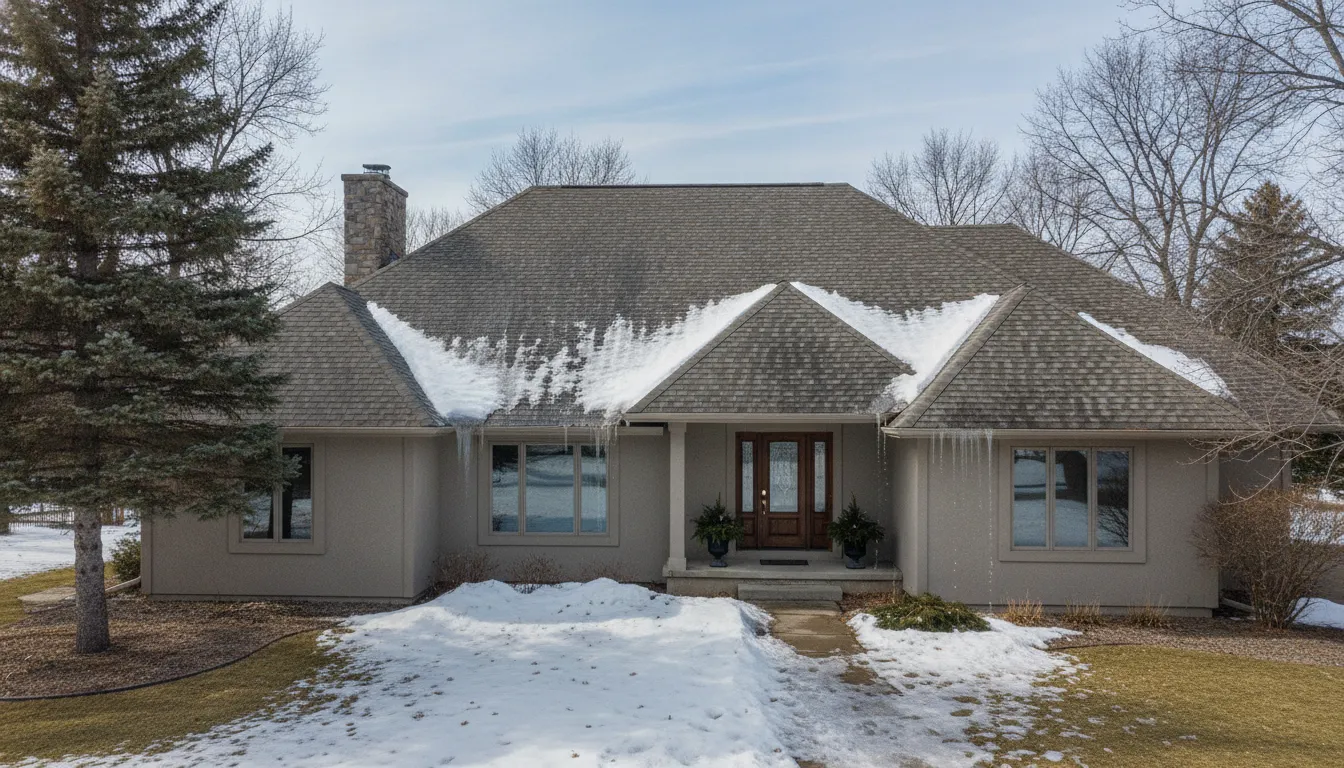
Moisture can expand in vulnerable areas, while ice dams can redirect melting water beneath shingles and into the roof assembly.
- After the damage spreads:
Stains, soft decking, peeling paint, musty odors, mold, and weakened structural materials may appear inside the home.
Why a quick inspection matters
Hail and wind are not the only concerns. Minnesota's winter conditions add ice dams and repeated freeze-thaw stress to a roof that may already have storm-related weaknesses. A roof can shed water during one light rain and still leak during a heavier storm or when an ice dam forms. By then, the original defect may be harder to identify, and the repair may involve more than replacing a few shingles.
Do not climb onto the roof to investigate. Look from the ground or attic only if it is safe, and document visible changes. If water is entering the home, arrange temporary protection and professional evaluation as soon as possible. If the roof needs immediate stabilization, see our guide to emergency roof repair after a severe storm.
Addressing damage early does not guarantee a particular insurance outcome, but it gives you a better chance to document the condition accurately and limit secondary damage. The cheapest repair is often the one handled before the next storm turns a small opening into a larger roofing problem.
How Small Roof Leaks Become Costly Structural and Interior Damage
A storm-related roof problem rarely stays confined to the spot where it began. A crack, lifted shingle, or loosened flashing detail may look minor from the ground, but each can create an opening for Minnesota rain, melting snow, or wind-driven moisture. Once water gets beneath the roof covering, it can keep moving through the roof system and into the home.
The progression often follows a path like this:
- Roof covering:
A cracked shingle, lifted tab, or damaged flashing allows water to enter instead of shedding it away from the roof.
- Underlayment:
Water reaches the protective layer below the shingles. Continued exposure can saturate or deteriorate the underlayment, especially around seams and penetrations.
- Plywood sheathing:
Moisture moves into the roof deck. Plywood that stays damp can soften, swell, or begin to decay, reducing the strength and reliability of the roof assembly.
- Attic insulation:
Leaking water can wet insulation, reducing its effectiveness and creating a damp environment where odors and biological growth may develop.
- Ceilings and walls:
As water travels through framing and building materials, it can leave stains, damage paint and drywall, and eventually affect interior finishes and rooms below.
That is why a small visible leak should not be judged only by the size of the ceiling stain or the missing shingle. Water can travel away from the original entry point before it becomes visible inside. By the time a homeowner notices discoloration, bubbling paint, a sagging ceiling, or a musty odor, moisture may already be affecting insulation or the roof deck.
The University of Minnesota Extension explains that water entering through roof cracks and ice dams can damage walls, ceilings, and insulation. Persistent moisture also supports mold and mildew growth, which may contribute to respiratory problems. In other words, postponing a repair can turn a limited exterior correction into a larger project involving structural materials and interior restoration.
After hail or high winds, it helps to document the roof promptly and learn how to identify storm damage on shingles. A professional inspection can trace the likely entry point and check areas that are not visible from the yard. Early attention does not guarantee that every problem is minor, but it gives you a better chance to address the roof before moisture spreads through the home.
Does Delaying a Claim Affect Your Insurance Payout in Minnesota?
Does delaying a claim affect your payout?
It can affect how your claim is evaluated, but there is no automatic result. Your policy language, the facts of the loss, and the insurance adjuster's review determine what is covered. Reporting damage promptly gives your insurer a clearer record of when the storm occurred, what was damaged. And whether later problems resulted from the original event or from a failure to protect the property.
If you are unsure whether the damage is covered, review whether homeowners insurance covers roof storm damage and then contact your carrier. Waiting to report a visible leak or missing shingles can make the timeline harder to document. It may also allow water to reach the roof deck, insulation, ceilings, or walls. The adjuster may consider that progression when reviewing the claim, so do not assume that a delayed report will be approved or denied without an inspection.
What should you do after discovering storm damage?
Start with documentation and reasonable steps to prevent additional damage. Minnesota Department of Commerce guidance recommends contacting your insurance company immediately after discovering a loss. Before cleanup or repairs change the evidence, take clear photographs and video of the roof, interior damage, fallen materials, and affected belongings. Capture wide views that show where the damage is located, along with close-ups of individual problems.
Notify your insurer promptly and ask what documentation or claim number you need.
Take photographs and video before removing debris or beginning cleanup, when it is safe to do so.
Use temporary protection, such as a properly installed tarp, to limit additional water entry.
Keep damaged items for the adjuster's review. Do not dispose of them unless they are perishable or create a health or safety hazard.
Save receipts for emergency mitigation and keep notes about when you discovered each problem.
Temporary protection matters because failing to make reasonable repairs, such as tarping a damaged roof, can leave additional damage uncovered under a policy. A tarp is not a permanent repair, and it should not replace a professional inspection. Avoid making major repairs or discarding damaged materials before your insurer has had a reasonable opportunity to review them. Unless immediate action is needed to protect people or the home.
For a step-by-step process, see how to file a roof insurance claim in Minnesota. Minnesota Roofing Company can also help document visible storm conditions during an inspection. Our storm damage guide for Minnesota homeowners explains the broader inspection and repair process, but the adjuster makes the final coverage decision.
How Much More Does a Delayed Roof Repair Really Cost?
The cost of storm damage is usually lowest when the problem is still limited to a few shingles, a small area of underlayment, or a repairable flashing point. Waiting can allow water to move into the roof deck, insulation, ceilings, and walls. At that point, the job may involve multiple trades and a much larger portion of the roof. In severe Minnesota storms, insurance claims often reach $30,000, but that figure reflects the broad financial impact a storm can create, not a guaranteed price for every home.
That is why homeowners should compare the cost trajectory, not just the first estimate. A minor repair completed promptly may prevent a chain of damage that eventually makes replacement the practical option. The table below shows how the decision can change as damage spreads.
Factor | Fix it early | Delay and let it spread |
Damage scale | Damage is more likely to remain confined to the storm-affected area. | Moisture may spread through decking, insulation, ceilings, walls, and other interior materials. |
Typical scope | A targeted repair, temporary protection, or localized replacement may address the immediate issue. | The work may expand to roof replacement, interior restoration, mold treatment, or structural repairs. |
Cost trajectory | The expense is generally easier to define and control while the damage is limited. | Costs can increase as additional materials, labor, and restoration needs enter the project. |
Insurance risk | Prompt documentation and temporary protection create a clearer record of the storm damage. | Additional damage after an unrepaired condition may be harder to distinguish and may not be covered under the policy. |
A repair can become a replacement decision
Storm damage does not always require a full replacement. An inspection can determine whether the roof still has a sound system around the damaged area and whether a focused repair is appropriate. If the roof is already compromised in several areas, however, repeated patching may not provide a dependable long-term solution. The longer moisture remains present, the greater the chance that a simple exterior repair becomes a project involving the roof system and the home below it.
Homeowners who are unsure what to do next can review what to do in the first hours after roof hail damage. Acting promptly does not guarantee an insurance outcome, since the policy and adjuster's findings control the claim. It does give you a better opportunity to document the condition, limit preventable spread, and understand whether the roof needs a minor repair or a larger replacement plan.
Signs That Deferred Storm Damage Has Triggered Secondary Water Damage
Storm damage does not always announce itself with an active drip. A small opening around a shingle, flashing joint, vent, or chimney can allow moisture into the roof system and attic before water reaches the living space. By the time interior signs appear, the original storm damage may have created a second problem that needs prompt attention.
Look for these warning signs after hail, high winds, or another severe storm.
- Brown or yellow ceiling stains:
Discolored patches, rings, or streaks often indicate that water has traveled through the roof assembly and collected above the ceiling.
- Wall stains or peeling paint:
Moisture can move along framing before it becomes visible, leaving marks near exterior walls, upper corners, or window openings.
- Sagging or bubbling drywall:
A soft, bulging, or drooping area may be holding water. Do not press on it, since saturated drywall can fail unexpectedly.
- A musty smell:
Persistent earthy odors in an attic, closet, or upper-floor room can point to damp materials and developing microbial growth, even when staining is limited.
- Damp attic insulation:
Wet or matted insulation loses effectiveness and signals that water has entered the attic. Check from a safe location without walking on unsupported areas.
- Water marks around vents or chimneys:
Rings, streaks, or damp wood near roof penetrations can indicate failed flashing or storm-displaced materials.
- Granular loss in gutters:
Heavy deposits of shingle granules after a storm may indicate surface damage. Granules alone do not prove a leak, but they warrant a closer roof inspection.
The concern is not cosmetic. The University of Minnesota Extension explains that water entering through roof openings can damage walls, ceilings, and insulation. It also notes that moisture from water damage can support mold and mildew growth, which may cause respiratory problems. Read the University of Minnesota guidance on moisture and ice-dam damage for additional context.
If you find any of these signs, limit access to affected areas and place containers under active drips if it is safe to do so. Photograph the damage before disturbing materials, then arrange an inspection. For immediate concerns such as an active leak, exposed decking, or water entering the home, use our guide to emergency roof repair after a severe storm. Early action can help prevent a localized roof problem from spreading into insulation, drywall, framing, and other parts of the home.
Mold, Rot, and the Health Risks of Standing Water
A storm leak does not stop causing damage when the rain ends. Water can remain inside insulation, roof sheathing, wall cavities, and framing, especially when the damaged area is difficult to see or reach. Mold spores can begin spreading within days of a roof leak, while continued dampness creates conditions for mildew and wood rot. That means delaying a repair can affect both the structure of your home and the people living in it.
Trapped moisture creates a mold problem
Moisture that enters through damaged shingles, flashing, or underlayment may travel beyond the original leak. It can soak insulation and drywall, then stay hidden after the visible drip disappears. The University of Minnesota Extension notes that moisture can support mold and mildew growth, and exposure may contribute to respiratory problems. A musty odor, new allergy-like symptoms, or dark spotting near a ceiling or wall can be a reason to investigate. But visible mold is not required for a moisture problem to exist.
Standing water deserves additional caution. The Centers for Disease Control and Prevention warns that floodwater and standing water can contain dangerous bacteria. Roof leaks are not always the same as flood conditions, but pooled water in a home should still be handled carefully. Avoid unnecessary contact, keep children and pets away from affected areas, and arrange for appropriate cleanup after the source of the water has been controlled.
Rot can weaken the roof system
Wood framing and roof sheathing depend on staying dry. When they remain wet, fibers can soften and decay. Rot around a roof opening may reduce the strength of the deck, weaken fastener hold, and make a later repair more involved. Damage can also spread into rafters, wall plates, or attic components that were not part of the original storm impact.
Check ceilings and upper walls for spreading stains, bubbling paint, or soft drywall.
Look for damp or compressed insulation in the attic, without stepping between framing members.
Pay attention to musty smells and areas where wood appears discolored, soft, or crumbly.
Do not disturb suspected mold or wet materials unnecessarily before the area is assessed.
If you are unsure whether hail or wind damage opened a path for water, review how to identify storm damage on shingles. A prompt inspection can help separate a surface issue from hidden moisture and structural damage before the problem grows.
When to Call a Roofer Immediately vs. Schedule a Future Inspection
Not every sign of storm damage requires the same response, but waiting without a plan can allow a manageable repair to become interior or structural damage. Use this triage process after hail, wind, or a severe Minnesota storm.
- Call a roofer immediately when water is entering the home or the roof deck is exposed.
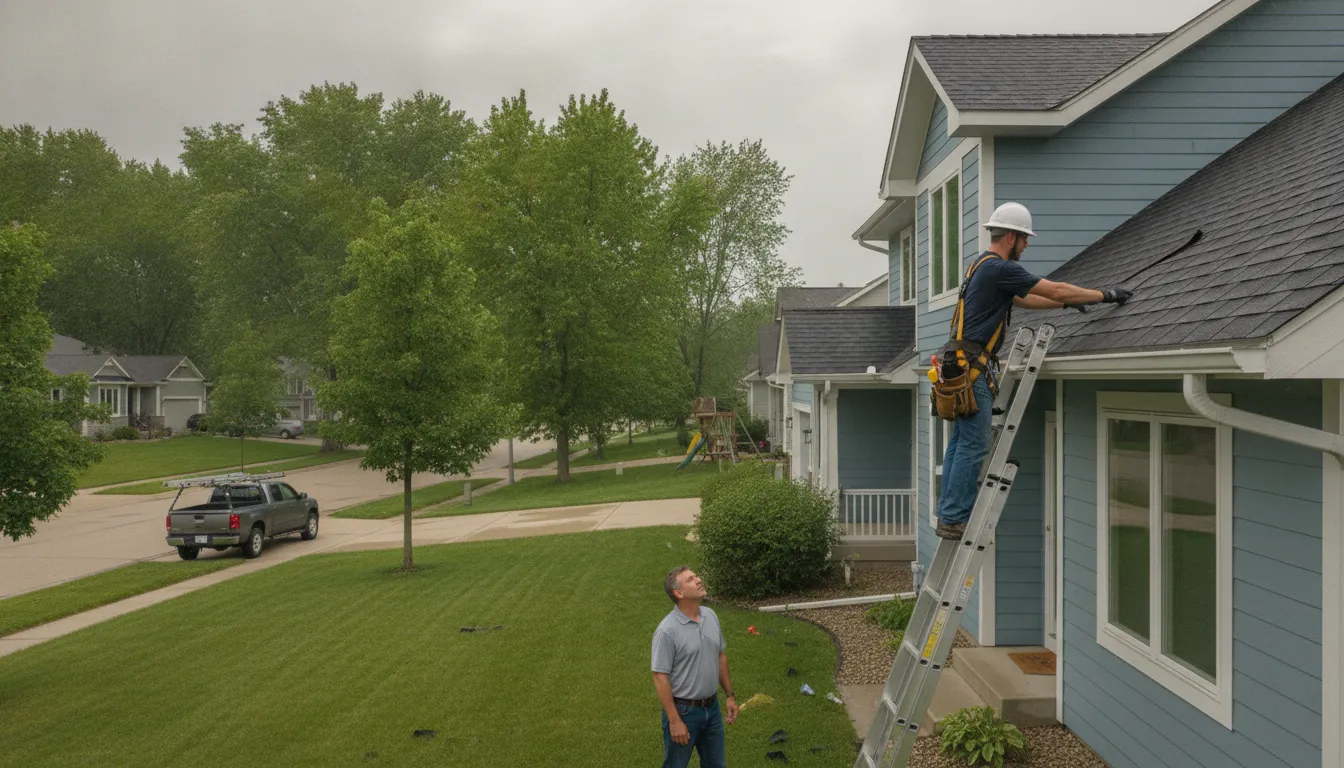
Active leaking, water stains that are spreading, dripping around ceiling fixtures, missing sections of roof covering, or visible decking are urgent conditions. Move belongings away from the affected area, place a container under interior drips, and avoid walking on the roof. Minnesota Roofing Company offers 24/7 storm response when immediate protection and an assessment cannot wait. If the situation involves electrical hazards, leave the area and contact the appropriate emergency professional.
Schedule an inspection within the next few days when damage is visible but there is no active leak.
Missing, lifted, cracked, or bruised shingles still deserve prompt attention, even if the attic and ceilings look dry. Wind and hail can compromise the roof surface or flashing without creating an obvious interior symptom. A timely inspection helps identify damage while the pattern is still clear and before the next rain exposes the home. For context, review our guide to
emergency roof repair after a severe storm
.
- Arrange temporary protection, such as a tarp, when the roof has an opening.
The Minnesota Department of Commerce advises homeowners to make reasonable temporary repairs to prevent additional damage. Failing to cover a damaged roof can leave some later damage uncovered by an insurance policy. Do not attempt a dangerous roof climb yourself. Ask a qualified contractor to install the tarp or other temporary protection safely, and keep receipts for reasonable emergency work.
- Document everything before cleanup or permanent repairs.
From the ground and inside the attic, photograph and record damaged shingles, openings, stains, wet materials, and affected belongings before anything is moved or discarded. This documentation is crucial to a claim. Do not throw away damaged items, except perishable materials, before the adjuster has had an opportunity to review them.
- Contact your insurer immediately after discovering the damage.
Ask about required documentation, temporary-repair procedures, deadlines, and whether the carrier wants an adjuster to inspect before permanent work begins. An insurer makes the coverage decision, so do not assume that every repair will be approved. A roofer can help identify and protect the damage, while your insurance company explains the claim process. If you are unsure whether the problem is urgent, schedule an inspection rather than waiting for the next storm.
For a broader overview of storm damage and insurance claims, start there, then request an assessment based on what you can safely observe.
Get your free instant estimate today for a clear read on whether your roof damage needs attention now or can wait.
Frequently Asked Questions
How long can you wait before repairing storm roof damage?
Do not treat waiting as harmless. Even a small opening can let water reach the roof deck, insulation, ceilings, and walls, especially during another Minnesota storm. Arrange a professional inspection promptly, and use safe temporary protection if recommended. If the roof is actively leaking or visibly unstable, seek emergency help.
Does homeowners insurance cover storm damage that gets worse before you report it?
Coverage depends on your policy, the cause of loss, and the adjuster's findings. Minnesota's Department of Commerce advises homeowners to make temporary repairs, such as placing a tarp over a damaged roof. Because additional damage may not be covered if you fail to prevent it. Photograph or record the damage before cleanup, then contact your insurer promptly: Minnesota Department of Commerce claim tips.
What are the first signs of storm damage on a Minnesota roof?
Look for missing, lifted, cracked, or bruised shingles, damaged flashing, loose roofing material, granules in gutters, and water stains in ceilings or walls. A musty odor, damp insulation, or unexplained dripping can indicate that water has moved beyond the roof surface. Do not climb onto a storm-damaged roof; inspect from the ground and call a qualified contractor.
Should a roofing contractor or insurance adjuster inspect the damage first?
They serve different roles. Your insurer's adjuster evaluates the claim under your policy, while a qualified roofing contractor assesses the roof's condition and explains necessary repairs. Report the loss to your insurance company promptly, document the damage before cleanup. And keep damaged materials available for the adjuster unless they create a safety or sanitation hazard.
What happens if you file a storm damage claim late in Minnesota?
A late report can make the timeline, cause, and extent of damage harder to establish, and your policy may include notice requirements. It does not automatically determine the outcome, because the policy and claim facts control. Report newly discovered damage as soon as possible and preserve photos, videos, receipts, and repair records.
Get a Free Instant Estimate for Your Storm-Damaged Roof
If hail or wind has hit your roof, waiting almost always costs more. A small, fixable leak can turn into a full replacement, interior water damage, and a harder insurance conversation. Minnesota Roofing Company has served Twin Cities homeowners for 30-plus years, and our certified teams handle storm assessments, insurance documentation, and repairs from first call to final shingle.
Get your free instant estimate today , no pressure, no obligation. We will inspect the damage, document it for your claim, and give you a clear picture of what needs attention now and what can wait.
Comments