
Emergency Roof Repair After Storm Minnesota: First 24 Hours
Updated: Sep 15
A sudden midnight storm can tear off shingles and leave your ceiling leaking within minutes. When severe weather hits, you must act fast to protect your family and stop leaks. Minnesota Roofing Company is here to help you secure your property and your insurance claim.
If your home has active storm damage, you can request a free roof damage assessment to secure your property immediately.
An emergency roof repair after storm minnesota is the main step you must take to protect your home from major water damage. Within the first 24 hours, you need to confirm your family is safe, take clear photos of all damage, and contact your insurer. You must also hire a licensed roofer to put a tarp over leaks to stop water from ruining your ceilings and walls. The Minnesota Department of Commerce tells homeowners to make temporary repairs right away to prevent more damage to the structure. Your insurance company can pay you back for these emergency repair costs if you save all your receipts and write down every detail.
Knowing what to do after severe storm wind or hail strikes can feel overwhelming. To help, you can read our Minnesota storm damage guide. Here is what this guide covers and what you should do in the hours right after the storm.
What to Do in the First 24 Hours After Storm Damage to Your Roof
Severe storms in Minnesota can hit without warning and leave your home exposed. When high winds or heavy hail strike, you must act fast to protect your home. Minnesota Roofing Company can help you during this stressful time, but the first hours need a clear plan. Taking a few simple steps keeps your home safe and gets you ready for the next steps.
Safety of family and pets
Your first step after a storm is always safety. Guidelines from the Minnesota Department of Commerce state you must make sure your family and pets are safe first. Do this before you look at any property damage. Do not rush outside while the storm is still active. Keep everyone inside until the wind and rain stop completely.
If you must leave or re-enter your house, check the structure first. Heavy wind or fallen trees can make a home unsafe. Ensure the structure is safe to enter and shut off the electricity if you suspect any water leaks. Also, watch out for fallen power lines on your lawn and stay far away from them.
Photos and videos of the damage
Once it is safe to go outside, you should look at your roof from the ground. Do not climb onto the roof yourself, as wet shingles are slick and dangerous. Instead, stand on the grass and use your phone to take clear photos and videos of the damage. This visual record is vital for your insurance company and helps speed up your claim.
Stand at a distance and take pictures of the entire roof line. Capture close-up views of any debris, such as tree branches that fell onto your shingles. If you find hail or wind damage on your siding or gutters, document those areas as well.
Make sure to take pictures of any fallen limbs, torn shingles, or broken metal trim. If you see water spots on your ceilings inside, take photos of those too. Do not start any cleanup or throw away broken parts until you have taken photos of all the damage. Having this proof ready will help when you speak to an adjuster.
Insurance and professional support
After you take your photos, find your home insurance files. Keep your insurance policy and claim number handy because you will need them when you report the loss. Having these details ready makes the intake process much smoother. You should contact your insurer quickly to report the storm damage.
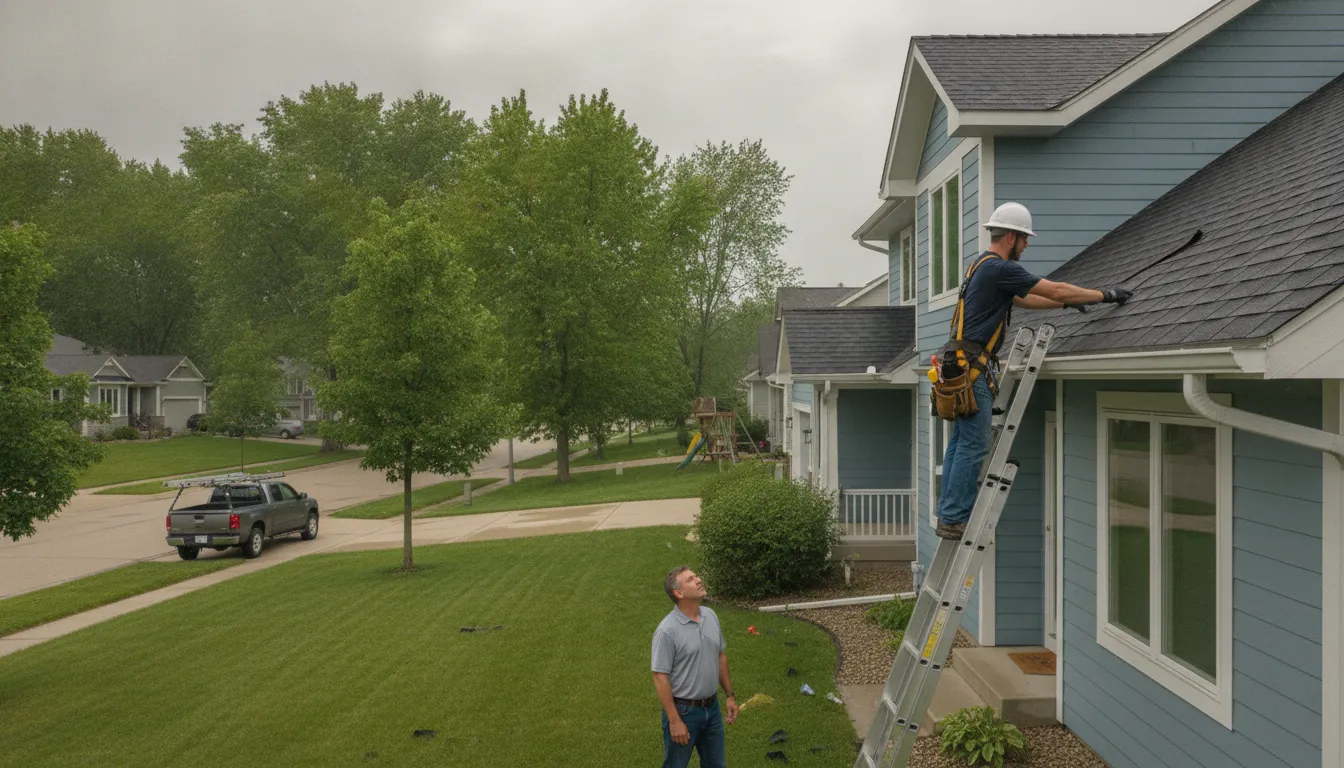
Next, you should seek help from a local roofing team. If your roof has an active leak, you will need emergency roof tarping services to prevent more water damage. Even if you do not see a leak, booking a professional storm damage inspection is a smart move. A trained eye can find hidden issues that might cause big leaks later on.
Temporary Tarping and Board-Up: When Is It Necessary?
Severe weather in the Twin Cities can leave your home at risk in a matter of minutes. When a storm causes heavy damage, you must act fast to protect your family and property. Knowing when to cover your roof or board up your windows is the first step in guarding your home from further harm.
When to cover a damaged roof
You need to cover your roof if the storm leaves open pathways for water to enter your home. This includes active leaks, exposed wood decking, broken skylights, or large holes from fallen tree branches. If wind rips away large sections of shingles, water can quickly seep into your attic and cause mold or ceiling damage. The Minnesota Department of Commerce states that owners must take immediate action to mitigate property damage after a storm to fulfill insurance duties. Doing this keeps your coverage active and prevents water from ruining your walls and floors.
Making temporary repairs like boarding up windows or throwing a tarp over a leaky roof helps prevent further loss. You should save all receipts for materials so you can get money back from insurance. If you need emergency roof repair after storm minnesota weather events, setting up these temporary covers is your first line of defense.
When to hire a pro roofer
While temporary covers are urgent, safety must always come first. Some times are far too dangerous for a DIY approach, and you should leave them to our trained crew at Minnesota Roofing Company. Never climb onto a roof if the pitch is very steep, or if there is active snow, ice, or rain. High winds can catch a tarp like a sail and pull you off the structure. You must also stay far away if downed utility lines are touching your home or yard. In these risky cases, it is always best to let pros handle the task.
Our professional roof tarping steps
Securing a tarp is a precise task that requires the right tools and steps. Our team at Minnesota Roofing Company provides emergency roof tarping services to protect your home. We use a safe method to keep things dry until we make final repairs.
- Assess and clear debris.
Our crew inspects the roof to find leaks. We clear away fallen branches, loose shingles, and dirt from the damaged area.
- Measure and cut the tarp.
We use a strong, waterproof tarp. It must extend at least four feet past the damaged area on all sides.
- Roll the tarp over the peak.
We pull the top edge over the roof peak. This keeps wind and rain from getting underneath the plastic.
- Secure with wooden boards.
Our team wraps the ends of the tarp around wooden boards. We screw these boards into the roof to hold the cover tight.
Before you begin, consult our Minnesota storm damage guide to understand how temporary repairs fit into the claims process.
How to Get Emergency Roof Repair in Minnesota After a Storm
Minnesota weather can cause major roof damage in minutes, leaving your home open to water leaks. When severe storms strike your neighborhood, you should not rush to hire the first roofer who knocks on your door. Finding a trusted local team is always the best way to get safe, long-term results that protect your property. To start this process quickly with Minnesota Roofing Company, you can get a free instant estimate online in just a few minutes.
Vetting local residential roofers
You must check the background of any roofer before they touch your home or start any repairs on your roof. According to the Minnesota Department of Labor and Industry, any home roofer in the state must hold a valid license. This license ensures the roofing company has proper insurance, bonds, and safety training to do the job right. Before you agree to any work, ask the roofer for their active license number and check it online.
Dangers of out-of-state storm chasers
After a major storm hits, out-of-state workers known as storm chasers often arrive on your street to look for work. According to state guidelines on hiring licensed contractors, these groups use high-pressure sales tactics to sign quick contracts. They often offer to pay your insurance deductible, which is against the law in Minnesota and can cause huge legal issues. If problems occur with your new roof later, you will have no way to contact them for repairs.
Vetting process for storm repairs
To keep your home safe, use a simple checklist when you talk to different roofers about the damage. A licensed local roofer will pass every test easily, while a storm chaser will fail them. Make sure you check these vital items before signing any papers or paying any money:
Ask to see their active license from the Minnesota Department of Labor and Industry. A real local roofer will show you this number right away.
Request a physical address in the Twin Cities area. You should make sure they have a local office and are not just working out of a truck.
Check online reviews on trusted sites. Look at what other Minnesota homeowners say about their speed, clean up, and quality of work.
Avoid any roofer who demands full payment upfront. You should only pay once they bring materials to your site and start the work.
Once you find a trusted roofer, they should inspect the roof and perform immediate fixes to stop leaks. Working with local experts for roof repair services ensures your home is protected from further storm damage. To understand the full process, read our Minnesota storm damage guide which covers insurance and repair steps. Acting quickly with a licensed local company is always the best way to protect your home and family.
Does Emergency Roof Repair Affect Your Insurance Claim?
Many homeowners worry that fixing their roof right after a storm will hurt their insurance claim. They fear the insurer will deny coverage if they do not wait for an adjuster. But the opposite is true. Taking fast action protects your claim and your home. Knowing how to handle emergency roof repair after storm minnesota winds hit your house will save you money and stress.
Policy duties for damage mitigation
Most home insurance policies have a clear rule about storm loss. You must take quick action to stop more water from getting inside. This is called your duty to mitigate damage. If a storm rips off shingles, water may pour into your attic. If you let this happen, the insurer might refuse to pay for that extra water damage.
To meet your policy rules, you should set up emergency roof tarping services to seal the holes. According to the Minnesota Department of Commerce, you must make cheap, short-term repairs to protect your home from more harm. Keep all receipts for any wood or tarps you buy, as your insurer can pay you back for these costs later.
Quick reporting and photo documentation
Before you or a contractor touch the roof, you must document the damage. Use your phone to take clear photos and videos of every broken shingle, dented vent, and water stain on the ceiling. This proof is key when you start filing roof insurance claims in the Twin Cities.
Once you have photos, you must contact your insurance company right away to report the loss. Waiting to file can slow down the process and raise doubts about when the storm damage happened. The claims agent will tell you what steps to take. Be sure to write down your claim number and keep it in a safe place.
Adjuster visits and deductible responsibilities
When a bad storm hits, local roofers will be busy. Some out-of-state crews may offer a free roof with no deductible. Do not trust these promises. In Minnesota, the homeowner must always pay the deductible. It is against the law for a contractor to pay, waive, or absorb your deductible, so you must plan to pay that portion yourself.
While you wait for your adjuster visit, do not throw away any ruined roof parts or stained drywall. State rules suggest you keep all damaged items until the adjuster can see them. Throwing items out too soon can make it hard to get paid for those losses. Our Minnesota storm damage guide can help you learn more about the steps to follow as you work with your insurance agent.
Emergency Roof Repair vs. Waiting for a Full Replacement
Severe storms in the Twin Cities can leave your home open to water damage. Homeowners who need emergency roof repair after storm minnesota weather hits must make a fast choice. You have to decide if you should make a quick temporary fix or wait for a full roof replacement. Waiting too long can let leaks spread and ruin your home.
Why temporary fixes are needed
An emergency repair is a fast shield for your house. The Minnesota Department of Commerce notes that you should make temporary roof repairs to prevent more damage to your property. This step is about stopping water from getting inside right now. It is not a final fix, but it keeps your family dry while you plan your next steps.
If you have active leaks, you need emergency roof tarping services to block water. Minnesota Roofing Company can set up a heavy tarp to protect open spots on your roof. This stops wood rot and mold before they start. It also gives you time to file your insurance claim and talk to an adjuster.
Comparison of repair and replacement
This table shows how emergency fixes compare to waiting for a full replacement after a storm. It helps you see the costs and risks of each choice.
Option | Speed | Upfront cost | Water damage risk | Insurance role | Best for |
Emergency repair | Done in a few hours | Very low initial cost | Stops leaks fast | Reimbursed by most plans | Active leaks and holes |
Waiting for replacement | Takes weeks to schedule | High upfront cost | High risk of mold and rot | Needs full adjuster review | Minor shingles loss |
As you can see, waiting for a full replacement leaves your home open to big risks. A storm can crack your shingles or rip them away, letting rain pour into your ceilings. While you wait for an adjuster to approve a new roof, wood rot can weaken your roof frame. Choosing a quick fix now stops these problems before they can get worse.
Professional help for storm damage
You do not have to handle this on your own. Minnesota Roofing Company does both emergency stabilization and permanent restoration for homes across the state. Our team can come out fast to secure your roof and prevent more damage. Once your home is safe, we work with you to complete a full, high-quality replacement.
We are a local business with over 30 years of experience. We know how Minnesota storms can damage homes in the Twin Cities. Our skilled team is ready to help you with both emergency repairs and final roof work. We can also help you understand the insurance claim process so you get the coverage you need.
Why 24/7 Response Time Matters When Storm Damage Is Active
When a severe storm hits, the damage to your roof does not stop when the wind dies down. Active leaks can quickly ruin your home. That is why getting an emergency roof repair after storm minnesota storms is so vital for local homeowners. Minnesota Roofing Company offers 24/7 emergency support to protect your house from growing threats.
Water intrusion and structural wood rot
Rainwater from a storm can soak through torn shingles and underlayment in minutes. Once water gets past the outer layer of your roof, it seeps into the wood decking. This moisture can soak your attic insulation and destroy its thermal value. Over a short time, wet wood begins to rot and can ruin the roof structure.
To avoid costly roof damage, you should get a professional storm damage inspection as soon as the storm passes. Catching wet spots early can save your roof decking. If you wait, minor leaks can turn into large sagging areas that need a whole new roof.
The short window for mold growth
Mold and mildew can start to grow in your home within 24 to 48 hours of water damage. Damp attic spaces are perfect breeding grounds for these fungi. Mold spreads fast through wet insulation and drywall, which brings health risks to your family. Once mold takes hold, cleanup becomes much more complex and costly.
A fast response stops water from sitting in your walls and ceilings. Our team can quickly trap leaks and dry out key areas. This quick action protects your family from breathing in mold spores. Stopping water in the first few hours is the best way to prevent mold from spreading through your living space.
Your insurance policy mitigation duty
Most home insurance plans have a strict rule about storm damage. Homeowners must take active steps to stop further loss after a storm. According to the Minnesota Department of Commerce, you should make quick repairs to protect your home. This means you must cover holes or tarp the roof to stop active water leaks.
If you do not take these steps, your insurer may deny parts of your claim. They might argue that the extra water damage was due to your neglect. Minnesota Roofing Company will protect your home while you work on filing roof insurance claims.
Frequently Asked Questions
How do I know if my roof storm damage requires emergency repair?
You need an emergency repair if your home is open to water or safety risks. This includes active water leaks inside your house, large holes from fallen tree branches, or missing shingles that expose the wood deck. If storm damage lets rain or snow inside, you must act fast to prevent mold and wood rot.
Is it safe to tarp my roof myself after storm damage?
It is best not to climb onto your roof to install a tarp yourself. Wet shingles are very slippery, and weak spots in the wood can cause a sudden fall. Experienced roofers have the right safety gear and training to cover the roof safely. Let a licensed expert handle the climb to protect yourself from serious injury.
Does homeowner's insurance cover emergency roof repairs?
Yes, most policies pay for short-term fixes that protect your home from more storm damage. The Minnesota Department of Commerce states that homeowners should make simple repairs like putting a tarp over a leaky roof. You must keep all receipts for the work so the insurance company can pay you back later.
How do I document storm damage for insurance claims?
You must take clear photos and videos of all the damage before you start any cleanup. According to the Minnesota Department of Commerce, you should record all property damage first to help your claim. Keep your policy and claim number close by to make the process go faster.
Ready to Request Your Free Minnesota Roof Damage Assessment?
Do not wait to fix storm damage to your roof. Waiting even a single day to cover leaks can lead to costly water damage inside your Minnesota home. Water quickly seeps through torn shingles and ruins your dry attic insulation, ceilings, and wooden rafters. By taking action right now, you prevent harmful mold growth and secure your insurance claim. Getting an expert check today gets your home back to normal much faster. Our family owned company has served local homeowners for over thirty years. We know how to handle severe storm damage fast.
Ready to request your inspection? Use our online estimate tool to request a free roof damage assessment.
Comments