
Does Homeowners Insurance Cover Roof Replacement? MN Guide
Updated: 4 days ago
A damaged roof does not automatically mean an insurance-funded replacement. In Minnesota, the outcome usually depends on the cause of damage, your policy language, the roof's age, and the coverage endorsement you carry.
Whether does homeowners insurance cover roof replacement applies to your home depends on the policy. Coverage may apply when a sudden, accidental event such as wind or hail damages the roof, while normal aging, wear, and deferred maintenance are commonly excluded. Review your policy and document the damage before making decisions.
After a storm, photos and a timely inspection can help establish what happened and when. Minnesota Roofing Company provides objective documentation and guidance for homeowners evaluating insurance coverage for storm damage. The first step is understanding which events policies commonly treat as covered damage and which conditions may limit or exclude coverage.
Need help documenting roof damage before you file? Call Minnesota Roofing Company at 612-888-7663 for a free inspection and claim preparation assistance.
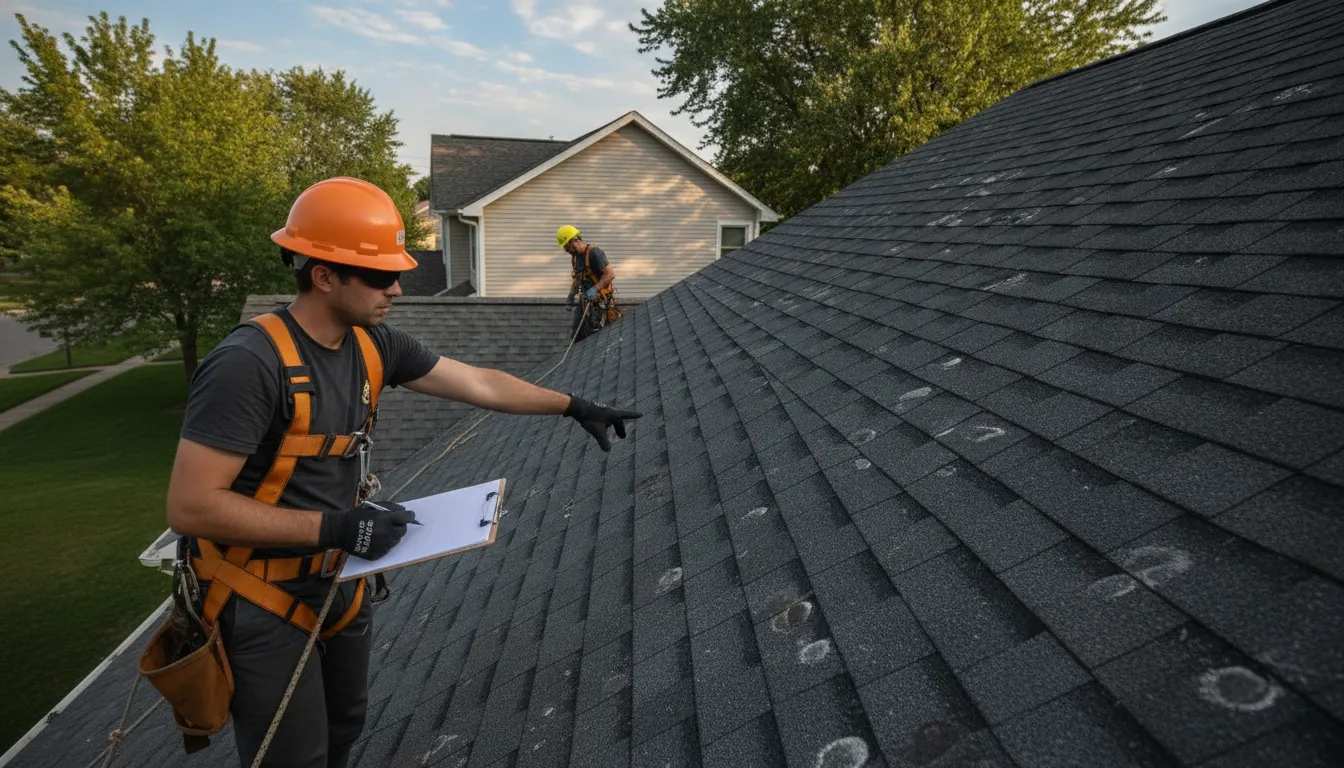
Does Homeowners Insurance Cover Roof Replacement: When Insurance Covers a Roof Replacement (and When It Doesn't)
Homeowners insurance generally responds to sudden, accidental roof damage caused by a covered peril, not to a roof that has simply reached the end of its service life. In Minnesota, that distinction matters because hail and wind can cause damage that is difficult to see from the ground. A professional inspection can help document the condition of the roof before you decide whether to file a claim.
Covered causes commonly include:
- Wind:
Strong gusts may lift, crack, or tear shingles and expose the roof deck.
- Hail:
Hail can bruise shingles, damage protective granules, and create openings that allow water intrusion.
- Fire or lightning:
A covered fire or lightning event may damage the roof and other parts of the home.
- Falling objects:
A tree, large branch, or other object may cause covered damage when it strikes the roof.
These examples reflect the general principle that sudden and accidental damage from a covered event may qualify for repair or replacement assistance. The Insurance Information Institute describes wind, hail, and falling trees as common covered perils, while Mercury Insurance also identifies fire and lightning as possible covered events. Review your policy for exclusions, endorsements, and deductible requirements before assuming coverage.
Minnesota hail creates a real coverage question
Minnesota recorded 87 hailstorms between 2012 and 2021, and the average related claim was approximately $30,000, according to the research for this guide. Those figures help explain why a storm inspection can be valuable, but they do not determine an individual claim. Some policies require visible punctures or tears before wind or hail damage qualifies, and separate wind or hail deductibles may apply.
Insurance usually does not cover normal wear and tear, gradual deterioration, an aging roof, neglect, or improper installation. It also may not cover damage that existed before the covered event. A leak that develops because flashing has deteriorated over many years is different from a storm-created opening. If you notice active water intrusion, arrange roof leak repair promptly to limit further damage, while keeping records and photographs.
For a closer look at insurance coverage for storm damage, compare the event date, visible damage, roof age, maintenance history, and policy language. Minnesota Roofing Company can provide an objective inspection and documentation, but only your insurance carrier can decide what the policy covers.
The Difference Between Actual Cash Value and Replacement Cost Coverage
The payment structure in your policy can matter as much as whether the storm damage is covered. Roof age and condition often determine whether an insurer uses Actual Cash Value (ACV) or Replacement Cost Value (RCV). The Insurance Information Institute notes that roofs older than 20 years may have limited coverage and may be paid at ACV instead of RCV: read the source details.
Identify the policy valuation method
ACV means the insurer calculates the roof's current value after depreciation. Age, condition, and expected useful life reduce the amount available for the covered loss. RCV is designed to pay the cost to replace the damaged roof with comparable materials, subject to the policy terms and deductible. Neither valuation method overrides exclusions for ordinary aging, poor maintenance, or an event the policy does not cover.
Apply the formula to a sample claim
Suppose a covered wind event causes damage and a comparable replacement is estimated at $18,000. Under an RCV policy, the insurer may calculate the covered amount as $18,000 minus your deductible. Under an ACV policy, the insurer first subtracts depreciation. If the depreciated value is $8,000, the initial payment is based on that lower figure, minus the deductible. These figures are illustrative, not a prediction of your settlement.
Check the deductible before planning repairs
Minnesota policies may include separate wind or hail deductibles. They can be a flat amount or a percentage of the home's replacement value, and percentage structures are commonly 1% to 5% of dwelling coverage. For example, a 2% deductible on $300,000 of dwelling coverage would equal $6,000. Confirm the exact calculation in your declarations page because deductibles vary by carrier and policy.
Have the policy and damage reviewed together
Before assuming that an estimate equals your payout, compare the policy's valuation language, roof-age provisions, deductible, and documented storm damage. Minnesota Roofing Company can help homeowners understand what their policy says, document visible conditions, and identify questions for the carrier without guaranteeing a coverage outcome.
How Minnesota Weather Events Trigger Coverage
Minnesota weather can damage a roof in more than one way, but an insurance claim usually depends on the specific event, the resulting damage, and the policy language. Hail, severe wind, and ice dams deserve different kinds of documentation and review.
Hail and severe wind
Hail can bruise shingles, crack protective surfaces, and damage flashing or other roof components. Minnesota recorded 87 hailstorms between 2012 and 2021, and the average insurance claim associated with these events has been reported at approximately $30,000. Those figures do not determine an individual claim, but they show why a careful post-storm inspection matters.
Wind may lift, crease, or tear shingles, expose underlayment, and allow water to enter later. However, some Minnesota carriers have changed their policy language. The Minnesota Department of Commerce reports that certain policies may exclude wind and hail damage unless shingles are punctured or torn and no longer provide an effective water barrier. Review your policy and ask the carrier how this language applies before assuming visible damage will qualify. Read the Minnesota Department of Commerce guidance.
Ice dams and resulting water damage
Ice dams form when snow melts on a warmer section of the roof, then refreezes near colder eaves. The resulting buildup can redirect water beneath shingles and into roof decking, insulation, ceilings, or walls. Whether the resulting damage is covered depends on the policy, exclusions, maintenance history, and the distinction between sudden damage and a long-term condition. Photos, inspection notes, and records of mitigation can help establish what happened and when.
Deductibles and rising premiums
Minnesota policies may include separate wind and hail deductibles. Structures commonly range from 2% to 5% of the dwelling coverage limit, although the exact amount and calculation vary by policy. A percentage deductible can be substantially different from a standard flat deductible, so check the declarations page before estimating your out-of-pocket cost.
Premiums also increased by about 34% in 2025, making policy details especially important when planning repairs. Coverage decisions still come from the insurer, not the contractor. Minnesota Roofing Company can document storm conditions and roof damage during an objective inspection, helping you understand what to discuss with your carrier. For more detail, review our guide to insurance coverage for storm damage.
What Adjusters Look for During a Roof Inspection
An insurance adjuster compares the reported event with the roof's visible condition, construction, and policy requirements. The inspection is not simply a search for damage. It is an assessment of whether the damage appears sudden, accidental, and related to a covered peril. Coverage still depends on the language of your policy and your carrier's decision.
Damage patterns and roof condition
For a hail claim, the inspection may focus on impact marks across shingles, vents, flashing, gutters, and other exposed components. Wind damage is often evaluated through lifted, creased, torn, or missing shingles and patterns that align with the storm's direction. Granule loss, exposed matting, punctures, and water-entry points can also help establish the roof's condition.
Adjusters also examine flashing around chimneys, walls, skylights, and roof penetrations. They may note whether flashing is damaged, loose, or improperly installed. The age and condition of the roofing materials matter as well. Older roofs can have limited coverage or depreciation under the policy. The Insurance Information Institute explains that roofs over 20 years old may be paid at Actual Cash Value rather than Replacement Cost Value. Depending on the policy and insurer. Review the source details about roof age and insurance.
Why professional documentation matters
Photographs should show both the full roof plane and close views of individual marks. Useful documentation includes multiple angles, affected accessories, interior water stains, attic evidence, and the surrounding property. Take photos only when it is safe. Do not walk on a steep or wet roof to create evidence.
Minnesota Roofing Company helps homeowners document these conditions with professional photography and a detailed inspection report. Our team can distinguish storm-related indicators from normal aging, record locations and patterns, and explain what the findings mean in plain language. We approach the adjuster meeting as the homeowner's ally, while recognizing that the carrier makes the coverage determination.
When missed damage needs a supplement
An initial inspection can miss damage hidden under debris, viewed from an unfavorable angle, or located on an accessory the adjuster did not document. If a contractor later identifies supported damage that was not included in the estimate. Minnesota Roofing Company can organize the photographs, measurements, and repair details for a supplemental claim. A supplement is not a guarantee of additional payment. It is a request for the carrier to review documented scope that may have been overlooked.
Keep your policy, adjuster's estimate, inspection photographs, and contractor report together. That record gives you a clearer basis for questions and helps everyone evaluate the same evidence.
Steps to Maximize Your Coverage Payout
You cannot control an insurer's coverage decision, but you can make the evidence clear, timely, and complete. These steps help protect your options while keeping the process focused on your policy and the documented damage.
Document the damage immediately
After a storm, photograph the roof from the ground and capture visible damage to siding, gutters, windows, and other exterior areas. Take close-up and wider context photos when it is safe. Record the date, approximate time, storm conditions, and when you first noticed the problem. Do not climb onto a damaged roof or make permanent repairs before it has been inspected. If emergency work is necessary to prevent additional interior damage, save receipts and photograph the condition first.
Schedule a professional inspection before the adjuster visit
Contact Minnesota Roofing Company for an independent inspection before the insurance adjuster arrives. A qualified roofing contractor can identify wind or hail damage that is difficult to see from the ground. Document affected areas, and explain whether the damage appears consistent with a recent event. This is not a guarantee of coverage. It gives you a clear, fact-based record to compare with the adjuster's findings.
Review your deductible and coverage type
Read the declarations page and roof-related endorsements in your policy. Confirm whether your roof is covered at Replacement Cost Value or Actual Cash Value, and check for a separate wind or hail deductible. Some Minnesota policies use a flat deductible or a percentage of the home's replacement value. Your insurer or licensed insurance professional can explain how those terms apply to your policy.
File promptly with thorough documentation
Report the loss according to your policy instructions and keep copies of your claim number, communications, photos, inspection reports, estimates, and receipts. For a detailed overview of filing an insurance claim, follow the required timeline and avoid guessing about facts you cannot verify. Prompt reporting helps preserve a consistent record, but it does not change the policy's coverage requirements.
Be present with your contractor during the inspection
Ask your contractor to attend the adjuster's inspection when possible. The contractor can point out damaged components, explain the scope of necessary work, and identify secondary damage that may not be obvious. If the adjuster's estimate misses covered damage, your contractor may prepare documentation for a supplemental claim. Keep the conversation professional and let the policy, evidence, and repair scope guide the discussion.
Common Reasons Roof Claims Are Denied in Minnesota
Understanding why a claim may be denied helps Minnesota homeowners set realistic expectations and prepare stronger documentation. Insurance is designed for sudden damage from a covered event, not every roofing problem. A policy may respond to wind, hail, fire, or a falling tree, but the final decision depends on the policy language, roof condition, and cause of loss. The Insurance Information Institute explains that roof age and condition can affect both eligibility and the way a carrier calculates payment.
If a storm also caused interior leaks, address the related water damage restoration promptly. Delayed action can allow a manageable loss to become more extensive, while it does not change whether the original roof damage was covered.
Potential denial reason | What it usually means | What to review |
Roof age over 20 years | Coverage may be limited, or the carrier may insure the roof at Actual Cash Value (ACV) rather than replacement cost. Some insurers may not write a new policy for an older roof. | Check the roof-age requirement, ACV or replacement-cost language, and any inspection or underwriting notice. |
Normal wear and tear | Gradual aging, weathering, and deterioration are generally excluded under standard homeowners policies because they are not sudden, accidental losses. | Separate long-term deterioration from damage that began with a documented, covered storm event. |
Lack of maintenance | Homeowners are responsible for reasonable upkeep. A carrier may deny or reduce a claim when neglected maintenance caused or significantly contributed to the loss. | Keep records of inspections, repairs, roof cleaning, and temporary protection after severe weather. |
Pre-existing damage | Damage that existed before the reported storm is not new covered damage. Older leaks, failed flashing, or prior storm damage can complicate the claim. | Compare dated photos, inspection reports, invoices, and prior claims with the reported loss date. |
Wind or hail policy exclusion | Some carriers now use language requiring shingles or siding to be punctured or torn and no longer able to serve as an effective water barrier. This policy change is discussed in Minnesota Commerce guidance. | Read the wind and hail endorsement, exclusions, deductible, and exact damage standard in your policy. |
These categories are guidelines, not a prediction of your claim outcome. Compare the denial explanation with the full policy and the documented condition of the roof. A qualified roofing inspection can help distinguish storm impact from age-related deterioration before you decide how to respond.
Frequently Asked Questions
Does homeowners insurance cover roof replacement?
It may, when a sudden, accidental event such as wind, hail, fire, lightning, or a falling tree damages the roof. Your policy, deductible, exclusions, and the adjuster's findings determine the outcome, so review the specific policy before assuming replacement is covered.
What type of roof damage is covered by homeowners insurance?
Coverage generally applies to damage from a covered peril, including wind, hail, fire, lightning, or a falling tree or branch. Some Minnesota policies limit wind and hail coverage unless shingles are punctured or torn and no longer protect against water intrusion. Minnesota Department of Commerce guidance explains this policy issue.
Does homeowners insurance cover roof replacement due to age or wear and tear?
Usually not. Normal aging, deterioration, neglect, and preventable maintenance problems are generally excluded because they develop over time rather than from a sudden covered event. A policy may also reduce payment when an older roof has limited coverage.
How does the age of my roof affect homeowners insurance coverage?
Roof age can affect both eligibility and the amount paid. Roofs older than 20 years often have limited coverage, and the insurer may use Actual Cash Value, which subtracts depreciation, instead of paying replacement cost. Confirm the valuation method and exclusions in your policy. Insurance Information Institute guidance provides additional context.
Does homeowners insurance cover a leaky roof?
Only when the leak results from a specific covered incident, such as recent storm damage. A leak caused by age, deferred maintenance, or long-term deterioration is generally the homeowner's responsibility. Photograph the damage promptly and arrange a professional inspection before making repair decisions.
Schedule Your Free Roof Inspection
Understanding your policy is easier when the roof damage is documented clearly and reviewed alongside the claim details. Minnesota Roofing Company can help you assess the visible damage and discuss your next steps without promising a coverage outcome. Schedule a free roof inspection and insurance claim consultation online, or call 612-888-7663 to get started.


Comments