
Freeze Thaw Roof Damage Minnesota: What to Know
If you are searching for freeze thaw roof damage minnesota, start by checking for signs safely. Repeated wet and cold conditions can create clues worth reviewing, but the weather alone does not prove a roof is damaged. This guide explains what to look for, which concerns may need a professional roof inspection, and why an individual assessment matters.
For Minnesota homeowners assessing freeze thaw roof damage, look for recurring moisture clues and visible changes. Do not assume each thaw has harmed the roof. Meltwater can travel beneath shingles in some conditions, while ceiling stains or attic dampness may signal a problem that needs a closer professional assessment.
The useful first step is to understand how repeated temperature changes affect the roof as a system. Then check for signs from safe places on the ground or inside the home. These sections explain the weather exposure, what to look for, and when an inspection makes sense.
Use this guide to find the section most relevant to your concern.
Observation | What it may suggest | Practical response |
Recurring ceiling stain or active drip | Moisture may be entering the home, but the stain may not be directly below the entry point. | Document safely and arrange a professional assessment. |
Shingle appears cracked, lifted, or displaced from the ground | A roof-surface change deserves closer review; appearance alone does not identify the cause. | Do not climb up; ask a qualified roofer to inspect. |
Frost or dampness in an accessible attic | Moisture or heat-flow conditions may need evaluation alongside the roof. | Avoid disturbing insulation and ask a professional about next steps. |
Sagging, new cracks, or unusual popping sounds | Possible structural warning that cannot be diagnosed from this article. | Move away; if collapse seems imminent, leave and call emergency services. |
How Freeze-Thaw Roof Damage Affects Minnesota Roofs
A roof in Minnesota can experience changing temperatures and moisture repeatedly over the course of winter. When water reaches roof materials, freezes, then thaws or softens as conditions change, that sequence is one form of weather exposure. It does not mean every cycle causes visible damage, or that a roof will fail after a certain number of cycles. The effect depends on the roof's condition and the full range of exposure it has experienced.
The National Institute of Standards and Technology notes that asphalt shingles face many weather conditions during service life. These include thermal cycling and freeze-thaw events. Its research discusses weathering-related changes such as discoloration, changes in mechanical properties, and chemical changes to the adhesive strip. NIST also notes that weather exposures may compromise shingles' ability to withstand direct mechanical loads. These are research observations about material weathering, not a prediction that a particular Minnesota roof has failed. Read the NIST research on asphalt-shingle durability.
That distinction matters when interpreting what you see. A patch of different color, for example, is an observation, not proof that a shingle has lost strength or that water is getting into the home. Likewise, a roof that looks intact from the yard may still need closer assessment if you have another reason to be concerned. The NIST findings help explain why material condition is worth considering. But they do not provide a simple visual test homeowners can use to determine the remaining strength of a roof.
Consider a roof that has been through many Minnesota winters. One area may look different from the rest. Another roof may show no obvious change from the ground. Neither observation alone identifies the cause or establishes how the roof will perform. Avoid treating each freeze-thaw episode as a separate injury; think of the cycles as part of the roof's overall exposure, alongside other weathering over its service life.
For a practical view of how age and weathering fit into roof condition, see our guide to how long a roof lasts in Minnesota. Age can provide context, but it is not a standalone diagnosis. If a concern persists, a qualified inspection can assess the roof more directly and help distinguish ordinary appearance changes from conditions that call for attention. The goal is not to assume damage from the weather alone, but to make decisions from the roof's actual condition.
Where Repeated Thawing and Refreezing Can Create Water Problems
Follow the water, not just the ice
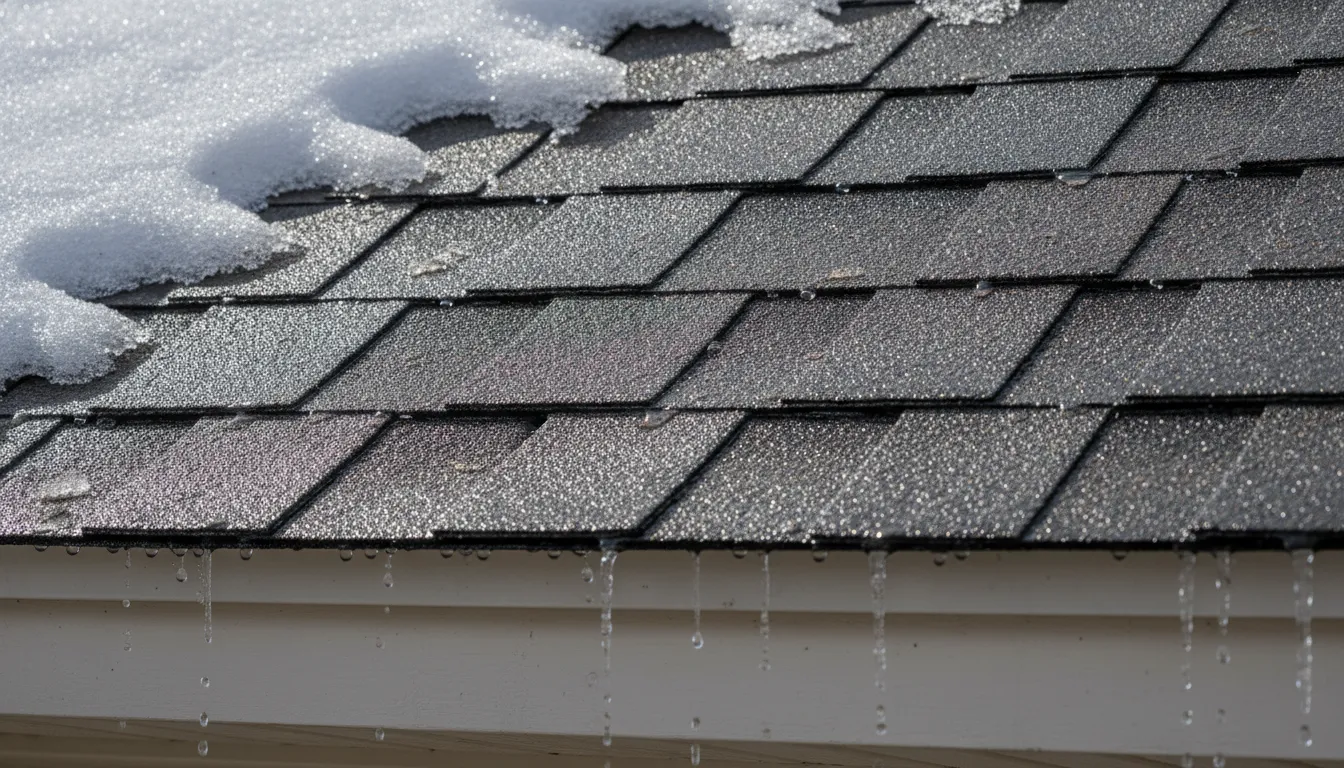
During a Minnesota winter, snow on part of a roof can melt. Runoff may refreeze when it reaches a colder surface. The National Weather Service describes daytime melting and overnight refreezing as one pattern that can affect a roof. After several days, meltwater and ice may work beneath shingles and reach the attic. That is a possible path for water intrusion, not proof that every thaw causes damage or that a particular leak has one cause. The National Weather Service's roof ice guidance explains this process.
Once water passes the roof covering, it may travel beyond the point where it entered. University of Minnesota Extension notes that water backed up behind an ice dam can find cracks or openings. Enter the attic, and move into exterior walls or through ceiling insulation before staining a ceiling. A stain indoors therefore does not necessarily sit directly below the roof opening. If an interior area is wet, dry it promptly where it is safe to do so, and arrange an assessment if moisture returns or the source is unclear.
An ice dam is one specific mechanism
An ice dam is a ridge of ice at the roof edge that blocks melting snow from draining. It can form when snow remains on the roof while upper roof areas are above freezing and lower areas stay below freezing over sustained periods. Meltwater then runs toward the colder edge and freezes. If water collects behind the ridge, it can back up under roofing and leak into the attic. This is different from saying that all freeze-thaw water problems are ice dams; other roof openings or drainage issues may also need investigation.
Ice dams can also form in valleys or around chimneys when snow is present and the roof deck is warmer. Heat from the home is one source of roof-temperature differences, so attic conditions can be relevant when a recurring ice-dam pattern is assessed. For a fuller explanation of that narrower issue, see our guide to ice-dam roof damage in Minnesota.
What happens after water gets inside
Moisture may affect ceiling finishes, walls, insulation, and other contents. UMN Extension also warns that damp areas can support mold and mildew growth, which is why prompt drying matters. A Minnesota study discusses deterioration of shingles, sheathing, and wood rafters if water remains standing long enough; it does not mean every leak will cause that outcome. An attic or ceiling observation alone cannot establish how far moisture has traveled or whether structural materials are affected.
If you notice a new stain, damp insulation, or a leak that appears during a thaw. Document what you can see from a safe location and note whether it changes after another melt or rainfall. Do not climb onto an icy or snow-covered roof to trace the route. An inspection can help locate the entry point and distinguish a roof-covering concern from an attic or drainage issue. If the signs are not obvious from inside, our article on roof damage that may be hidden from view explains why a lack of visible exterior evidence does not settle the question.
What Roof and Attic Signs Should You Check?
A ceiling mark, damp insulation, attic frost, or an out-of-place shingle can help guide a closer look. None of these signs alone proves freeze-thaw weather caused roof damage. Leaks can follow different paths, and the source may not sit directly above the visible stain.
From the ground, use an unobstructed view or binoculars rather than climbing a ladder or stepping onto the roof. Look for changes such as displaced, curled, or cracked shingles, missing sections, or areas that appear unusually bare. Granules collecting in gutters may also be worth noting. These are possible inspection clues, not a diagnosis: wear, age, installation details, and other weather exposure can produce overlapping signs. For additional examples, see this guide to common signs of roof damage.
- Inside ceilings and walls:
Note new or recurring stains, peeling finish, damp patches, or a musty odor. A stain may appear some distance from the roof opening because water can travel through attic materials before it becomes visible.
In an attic you can already access safely:
Look for damp insulation, water marks on wood, or frost on rafters, sheathing, and insulation. University of Minnesota research describes frost forming on cold attic surfaces when moisture in escaping indoor air condenses and freezes. Frost that later melts can leave moisture behind, but finding frost does not by itself establish the cause of a leak.
University of Minnesota research on attic frost and moisture
.
- Along gutters and downspouts:
From a safe position, check for shingle granules or debris that may warrant a closer professional look. Do not reach over an edge or remove ice to inspect.
Pay attention to whether moisture returns after drying, whether a stain grows after snowmelt or rain, and whether several signs appear in the same area. A University of Minnesota study notes that building-performance problems can be difficult to identify without the knowledge and resources to evaluate them. Visible clues can guide an assessment. They cannot tell you how far moisture traveled or whether roofing materials have lost function.
Asphalt shingles are exposed to thermal cycling and freeze-thaw events during their service life, and NIST discusses weather-related changes to their mechanical properties and adhesive strips. That research does not mean every observed defect came from a freeze-thaw cycle. Record what you notice and when it appears, then share those details with a qualified roofer if concerns persist. If a storm may also be involved, use this overview of what to check after roof damage from a storm as a separate reference.
Never climb onto a snowy, icy, or wet roof to verify a suspicion. If the attic is not safely accessible, leave that check to a professional. Observations from the ground and living space are enough to describe the concern and decide whether an inspection is appropriate.
When Is a Roof Inspection the Right Next Step?
Ask for a professional assessment when a roof-related problem returns, spreads, or has no clear explanation. A ceiling mark may show that moisture is present, but it does not reveal where water entered or how far it traveled. Recurring leaks, damp insulation, or fresh discoloration after snowmelt or a thaw are reasons to have the roof and accessible areas below it checked. Rather than only repainting the visible stain.
Before contacting a contractor, note when the problem appeared and whether it changes during rain, melting snow, or a cold snap. If safe, take photos from inside the home and from the ground. Record whether the stain is growing or whether you have noticed moisture in more than one room. Do not pull down a wet ceiling, disturb damp insulation, or climb onto a snowy, icy, or wet roof to investigate.
Visible roof changes can also merit a closer look. Especially a piece that appears displaced or a shingle edge that looks lifted or cracked from a safe viewing spot. Asphalt shingles can experience thermal cycling and freeze-thaw events during their service life, and NIST discusses weathering-related changes in their mechanical properties and adhesive strips (NIST research on asphalt-shingle weathering). That research does not mean a particular mark proves damage or that replacement is needed. A ground-level view may not show the full condition.
Moisture or frost in an attic can also be difficult to interpret without evaluating the building as a whole. University of Minnesota research notes that building-performance problems can be difficult to identify without adequate knowledge and resources (University of Minnesota research on attic moisture). If you see dampness, staining, or frost on accessible surfaces, ask a qualified professional to consider the roof covering and the relevant attic conditions together.
An inspection is particularly helpful when the source is uncertain or you are deciding between a localized repair and broader work.
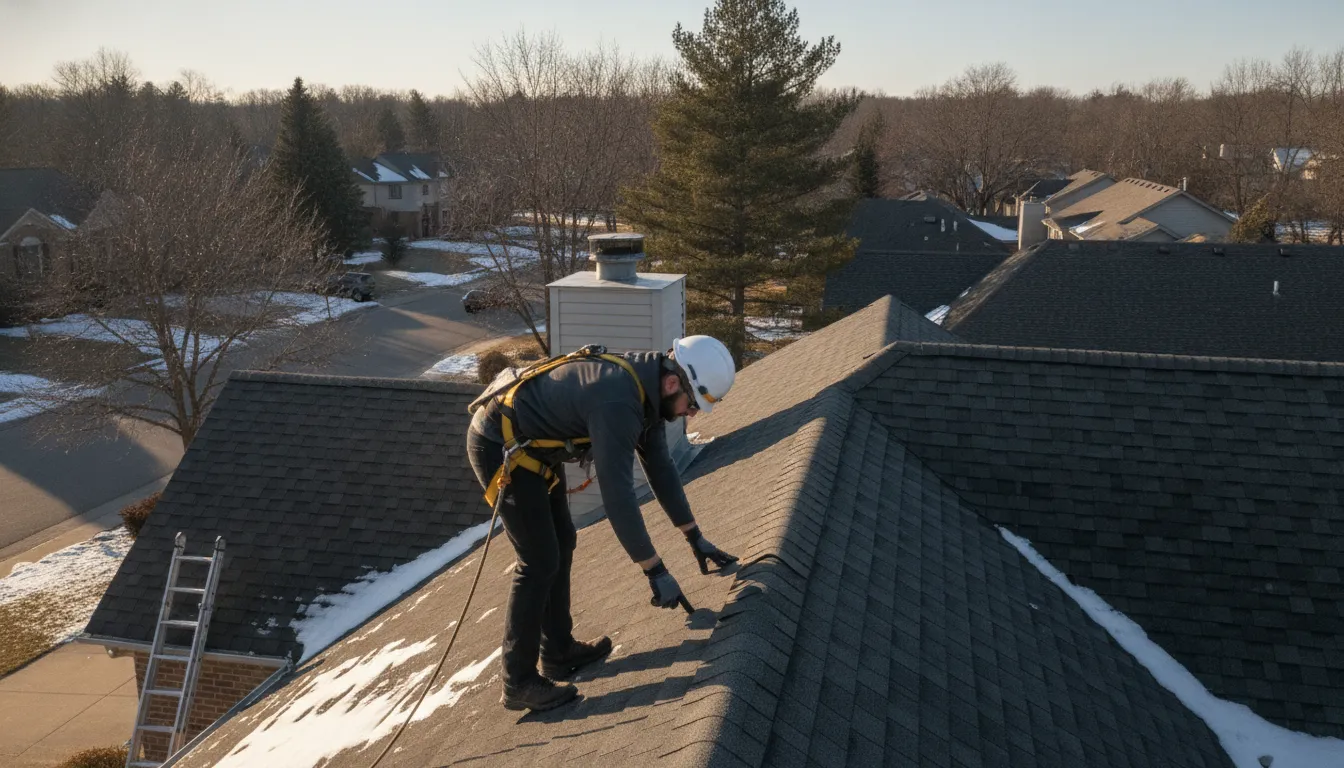
Minnesota Roofing Company provides Minnesota roof repair services; its scope should follow an assessment of the actual condition, not an assumption that winter weather requires a new roof. Consider asking:
What did you observe, and which areas were you able to inspect?
What evidence points to the likely water entry or roof concern, and what remains uncertain?
Is a repair appropriate, and what conditions would change that recommendation?
Can you explain the proposed work and provide the scope in writing?
These questions help clarify both the finding and its limits. For more help choosing a roof leak inspection contractor, review the hiring guide. If a problem is left unresolved, it may continue to affect the roof or interior; learn more about the risks of delaying roof repairs. The goal is to understand what is happening and choose a proportionate next step, not to assume a diagnosis from one sign.
How Can Owners Reduce Future Freeze-Thaw Stress?
Keep drainage paths clear without getting onto the roof
Prevention is about reducing avoidable moisture and heat problems, not promising that a roof will never experience freeze-thaw conditions. Before winter, look at gutters and downspouts from the ground for leaves, sticks, or other debris that could obstruct drainage. The National Weather Service notes that clear gutters and downspouts let roof snowmelt drain through them, and recommends keeping them clear of snow and icicles during winter. If a gutter is high, icy, or difficult to reach safely, arrange qualified help rather than climbing a ladder in hazardous conditions.
After a thaw or storm, you can make another visual check from the ground for blocked or sagging gutters. Unusual water spilling over an edge, and drainage that appears directed toward the building. These observations are clues to follow up, not proof of a roof defect. Do not climb onto a snowy or icy roof to inspect or clear it. If a large snow load concerns you, seek professional advice. The National Weather Service says reducing heavy roof snow can lower the chance of ice-dam formation and weight-related roof failure, but roof access and removal carry real risks. Massachusetts safety guidance warns that the combination of ice and height makes snow removal dangerous and recommends considering professionals.
Ask about attic conditions and safe snow management
Recurring ice at the eaves, indoor moisture, or attic frost may call for an evaluation of the roof and attic. Heat escaping from the home can warm roof areas and contribute to snowmelt that refreezes at colder overhangs. The National Weather Service recommends evaluating attic insulation and ventilation. Its guidance explains that insulation limits heat loss while ventilation helps keep attic air cold. The Building America Solution Center also identifies air sealing and insulation at the ceiling plane as measures for vented attics.
Those systems need to work with the home's design. Rather than blocking vents, adding insulation over wiring, or sealing openings yourself. Ask a qualified professional to check for air leakage and review insulation and ventilation as a system. They can determine whether a change is appropriate and how to make it without creating a new moisture or ventilation problem. The Building America Solution Center also advises against locating HVAC equipment in an attic as part of its ice-dam guidance.
If you are considering roof snow removal, do not use a shovel, metal tool, or other improvised method from the roof. Massachusetts guidance warns that metal tools can damage roof coverings and that standing on a roof or placing heavy equipment on it can create hazards. A professional can assess conditions and discuss safer options; no single measure prevents every freeze-thaw problem. For broader context on how roof materials perform in cold weather, see our guide to roofing materials for Minnesota winters.
What Should You Do if You Notice a Leak or Structural Warning?
When water is actively entering the home, focus first on people and belongings, not on finding the roof opening. Move furniture, electronics, and other valuables away from the wet area if you can do so without entering a hazardous space. Place a bucket or container under a steady drip only when it is safe. And keep people clear of wet floors and any ceiling material that appears loose or swollen.
If water is near a light fixture, outlet, or electrical equipment, do not touch the wet area or the equipment. Keep clear and contact a qualified electrician or emergency services as appropriate. Do not puncture or press on a bulging ceiling, since water or weakened material may release suddenly. If the leak is manageable and the area is safe, dry wet surfaces and contents promptly. University of Minnesota Extension advises drying damp areas to help limit mold and mildew; its guidance on water intrusion and drying after ice-dam leaks explains why moisture should not be left to linger.
Make a simple record from a safe location: note when the leak began, what weather or thaw conditions preceded it. Which rooms or surfaces are affected, and whether the water is still coming in. Photographs of the damage can help an inspector understand what you observed, but do not delay safety steps to document it. Avoid climbing onto an icy, snow-covered, or wet roof to locate the source or clear snow. Massachusetts safety guidance warns that ice and height make roof snow removal dangerous. Leave roof access and any necessary snow or ice work to qualified professionals using appropriate safety controls.
Take possible structural warnings seriously without trying to diagnose their cause. A visibly sagging ceiling or roofline, new or widening cracks, shifting materials. Or unusual popping sounds during heavy snow or water accumulation are reasons to move people away from the affected area. If a collapse seems imminent, leave the building and contact emergency services. Do not re-enter until it has been assessed as safe. For less immediate concerns, arrange a prompt roof assessment rather than waiting for another thaw. Recurring stains or damp insulation can indicate moisture that is not obvious from outdoors. Learn what can happen when storm damage repairs are delayed, and review practical steps to take after roof damage.
Frequently Asked Questions
How can repeated thawing and refreezing lead to a roof leak?
When snow melts on a warmer part of a roof and refreezes near a colder edge, backed-up water may work beneath shingles through openings in the roof covering. The National Weather Service notes that repeated melt-freeze cycles can allow water to reach the attic. That is one possible pathway, not proof that every cycle damages a roof. National Weather Service guidance
Which signs mean I should request a professional inspection?
Ask for an assessment if you notice a recurring ceiling stain, active dripping. Damp or frosty attic surfaces, or shingles that appear cracked or displaced from a safe ground-level view. These observations can point to moisture or roof-surface concerns, but they do not establish the cause or extent. University of Minnesota research notes that attic performance problems can be difficult to identify without proper evaluation. University of Minnesota research
Can a small roof leak wait until spring?
Do not assume a leak will stay small while you wait. Water entering the home can wet ceilings, walls, or insulation, and damp materials should be dried promptly. If you see active water, protect belongings from a safe location and arrange an assessment; avoid climbing onto a snowy or icy roof. UMN Extension advises drying wet areas promptly
Do visible signs tell me whether the roof needs replacement?
No. A stain, shingle change, or attic moisture is a reason to investigate, not a diagnosis or a replacement decision. A qualified inspection can assess the roof and related moisture conditions, then explain whether a repair or broader work is appropriate. Never go onto a roof to check it, especially when snow or ice may be present.
Freeze-thaw conditions can leave signs that are difficult to evaluate from the ground, and a visible symptom does not always show the full extent of an issue. If you would like a professional assessment of your roof, contact Minnesota Roofing Company and get started with the instant-estimate page.


Comments