
Minnesota Roof Maintenance Checklist for Homeowners
A roof maintenance checklist Minnesota homeowners can follow should make routine care manageable without encouraging anyone to climb onto a roof. A few planned checks from the ground and inside the home can help you notice changes, keep water moving away from the house, and decide when it is time to ask for qualified help. Use this guide to build a year-round routine, not to diagnose damage yourself.
Quick answer: Check the roofline, gutters, downspouts, attic, and ceilings from safe locations at least seasonally and after severe weather. Keep dated notes and photos from the ground. Do not walk on a steep, icy, wet, or otherwise unsafe roof; ask a qualified roofing professional to review concerns that need closer inspection.
On this page
How do you build a roof maintenance routine?
Make upkeep a repeatable calendar task instead of waiting until you see a ceiling stain. A useful routine has three parts: observations from safe places, basic care for drainage and nearby vegetation, and a record of what you noticed or arranged. This is not the same as a technical roof inspection. It gives you an organized way to catch visible changes and communicate them.
- Choose recurring times.
Add a short visual check to your spring and fall home-maintenance calendar. Pick a clear, dry day when you can see the roofline from the ground. You can also make a brief check after a major storm has passed and conditions are safe.
- Use the same viewpoints.
Look from several ground-level positions around the home. Consistent views make it easier to notice a new change, such as a sagging gutter, loose-looking trim, or a visible change in the roof surface.
- Check water paths.
Look at gutters, downspouts, and where runoff exits. Water should not be visibly spilling over the gutter or pooling persistently beside the foundation.
- Look inside for signs of moisture.
From a safe, accessible area, note any new ceiling discoloration, dampness, musty odor, or attic change. Do not enter an unsafe attic or disturb wiring, insulation, or other building materials.
- Record and follow up.
Write down the date, location, and what changed. If something seems concerning, arrange a qualified review rather than attempting a roof repair yourself.
Make the routine realistic. A homeowner may be able to observe a roofline and keep a simple record, but roof access, repairs, and close examination of roofing materials involve risks and require appropriate expertise. When in doubt, leave the roof alone and ask for help.
What belongs on a Minnesota seasonal roof plan?
Minnesota's changing seasons make timing important. The goal is not to perform the same work in every season. Instead, use each transition to check whether water can drain, whether visible components have shifted, and whether a concern needs professional attention. Weather and property conditions vary, so treat this as a planning framework rather than a promise that a specific task is safe on a particular day.
When | Safe homeowner tasks | When to escalate |
Spring | From the ground, look for visible changes after winter; check the gutter line and downspout outlets; look indoors for new water marks. | Contact a roofing professional if you see a changed roofline, displaced-looking materials, water entry, or damage you cannot assess safely. |
Summer | Observe roof and trim from the ground on a clear day; keep nearby branches from rubbing the roof by arranging safe tree care as needed; note any drainage problems. | Ask for a review if a leak, loose component, or other concern persists. Do not climb to investigate. |
Fall | Check visible gutters and downspouts; clear ground-level debris from accessible areas; look for branches or leaves that may interfere with drainage. | Arrange help for blocked or damaged components that cannot be reached safely, or for roof concerns needing closer examination. |
After severe weather | Wait until conditions are safe, then observe from the ground and indoors; take photos from a safe location and note the date. | If you see a leak or apparent storm damage, seek a professional review. Avoid walking on the roof or making a risky temporary repair. |
Use the table as a reminder, not a fixed inspection schedule. Snow, ice, wind, rain, and other conditions can make outdoor checks unsafe. If visibility is poor or the area is slippery, postpone the check. A delay is safer than stepping onto an icy roof or ladder. During winter, do not climb up to remove snow or ice, chip at roof-edge ice, or try to clear a drainage path from a roof. Those tasks can expose you to falls and can damage roof materials. Instead, check ceilings and accessible rooms for new moisture, and view the exterior only from a safe place. If you see active leaking or a roof-edge condition that concerns you, keep clear of the area and ask a qualified professional what can be done safely. After a thaw, record any new signs you noticed and revisit the usual ground-level checks when the weather permits.
What should you check without climbing?
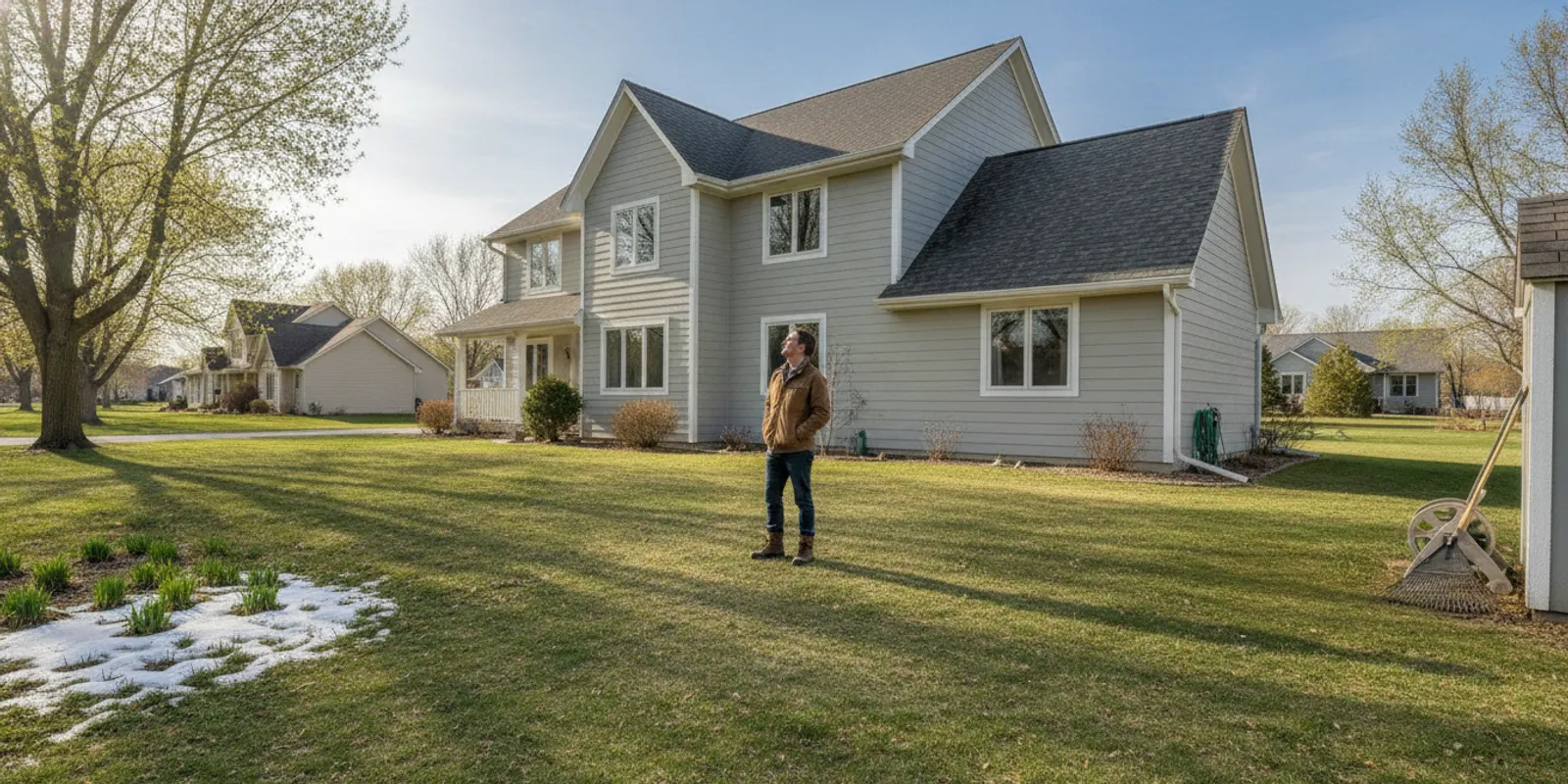
Start with the parts visible from the ground. Walk around the home at a safe distance and scan the roofline, eaves, gutters, downspouts, and nearby trees. You are looking for a change or a reason to request a closer review, not trying to decide exactly what is wrong.
- Roofline:
Note visible sagging, an uneven outline, or a section that appears different from your earlier photos. Do not use a ladder to get a closer look.
- Roof surface:
From the ground, look for an area that appears altered, missing, lifted, or covered in debris. Ground-level views cannot confirm the condition of shingles, flashing, or underlayment.
Edges and trim:
Look for visible changes around the eaves, fascia, and soffit. A property-maintenance checklist from the City of Golden Valley includes soffits and fascia among the items to watch, including signs of deterioration or displaced vents (
Golden Valley property maintenance checklist
).
- Gutters and downspouts:
Notice visible separation, sagging, overflowing water, or a downspout that has shifted. Check whether discharge is directed away from the building rather than collecting beside it.
- Nearby vegetation:
Look for limbs touching the roof or debris collecting near roof edges. Do not cut branches from a ladder or work close to electrical lines; use appropriate tree-care help.
- Ground below the roof:
After wind or hail, note any visible material on the ground that might have come from the roof, but do not assume its source or climb up to investigate.
Be careful not to turn a visual check into a repair attempt. Roof surfaces may be steep, slick, fragile, or otherwise unsafe. Even a seemingly small task can involve a fall hazard. If you are uncertain whether something is loose or damaged, document what you can see and arrange a closer professional review.
How do you keep roof drainage working?
Moving water away from the roof and home is a central part of routine exterior care. Gutters and downspouts can collect leaves and other debris, shift out of position, or show wear. From a safe location, notice whether water appears to flow through the intended route during rain and whether it spills over or gathers near the house.
When cleaning is needed, use a method that does not require unsafe ladder or roof access. If the gutter is high, damaged, difficult to reach, or close to electrical hazards, arrange qualified help. Do not lean out from a window or climb onto a roof to clear a blockage. For more about how these components fit into exterior upkeep, see the company's gutter service information and siding, gutters, and exterior services.
Also pay attention to where the downspout releases water. If water repeatedly pools beside the foundation, address the drainage path rather than assuming the roof itself is the source. Landscaping and ground conditions influence runoff, so a roof checklist cannot diagnose every drainage issue. Keep notes about where and when you see pooling, especially after rain or snowmelt.
If gutter problems occur alongside roof concerns, describe both when you ask for help. The location of overflow, visible sagging, or a loose-looking section can help focus the conversation. A photograph taken from a safe place may also be useful.
What should you watch for inside?
Some clues are easier to notice indoors than from the yard. Check accessible ceilings and upper-floor rooms for new stains, bubbling paint, damp areas, or a musty smell. In an attic that is safe and easy to enter, look for visible signs of moisture or a change from what you have seen before. Do not climb over stored items, step between joists, handle wiring, or move insulation to search for a leak.
A stain or damp area tells you that something merits attention, but it does not prove where water entered. Water can travel before it becomes visible, and other building conditions can resemble a roof leak. Record the room, approximate location, date, and whether the area changes after rain or a thaw. If water is actively entering, protect people and belongings if you can do so safely and contact an appropriate professional promptly.
For concerns that appear to involve the roof, Minnesota Roofing Company's roof repair service information can help you understand the relevant service path. If you see signs that may relate to a storm, its storm-damage roofing information is also relevant. These pages do not replace an assessment of your particular home.
What should you do after severe weather?
Wait until the storm has passed and outdoor conditions are safe. From the ground, look for obvious changes such as debris, a visibly altered roofline, or a component that appears displaced. Check indoors for water entry. Take a few photos from stable ground if it is safe, and record the date and the areas you observed. Do not climb onto the roof to confirm what happened.
If you suspect hail or wind damage, avoid deciding from a distance that the roof is either fine or beyond repair. Some conditions are not visible from the ground, while marks on other surfaces may not tell the full story of the roof. A qualified roofing professional can review the concern more closely. Minnesota Roofing Company has a guide on how to identify possible hail damage and information about when to consider an insurance claim conversation.
Keep observations factual when describing an event. Note when the storm occurred, where you saw a change, whether water entered, and what photographs you have. Do not make a repair on a wet or damaged roof or remove material that may be unsafe. For a roof that is actively leaking, focus first on keeping people clear of the affected area and getting qualified assistance.
How should you document maintenance?
A simple home-maintenance log makes seasonal checks more useful. It can show what changed, what did not, and when you asked for help. You do not need specialized equipment or a complicated spreadsheet. A dated note and a few safe photos are enough to make your own observations easier to recall.
- Date and conditions:
Record when you checked and whether it was after rain, wind, hail, snow, or a thaw.
- Location:
Identify the side of the house, room, or gutter section where you noticed something.
- Observation:
Describe what you saw without guessing at the cause. For example, write “water appeared over the north-side gutter during rain,” rather than naming a roof defect.
- Photos:
Take pictures from a safe ground-level position or indoors. Keep the view and framing similar when you want to compare changes over time.
- Follow-up:
Note who you contacted, what you were advised, and any next step you plan to take.
Keep maintenance notes with other home records, such as roofing or exterior project documents you already have. Before a service conversation, gather the relevant dated observations and photos. If you have seen a concern over more than one season, include when it first appeared and whether it has changed. That context may help a roofing professional understand what you are reporting.
For background on common roof concerns, you can also read Minnesota Roofing Company's homeowner guide to signs of a damaged roof and its information about what to do after roof storm damage. Use those resources to prepare questions, not as a substitute for a professional review of your property.
When should you ask for roofing help?
Ask for help when a concern needs a closer look than you can safely provide, when you see active water entry, or when visible roof components appear changed. A professional review is also a sensible next step if you cannot tell whether a recurring stain or drainage problem is related to the roof. Do not wait for a small visible clue to become a larger repair before seeking guidance, but do not assume that every mark means the roof needs replacement.
For a roof that appears to need repair, ask what the person will review, what they can and cannot determine, and what follow-up is recommended. If a roof has broader age or condition concerns, a review can help clarify whether repair or replacement is worth discussing. Learn more about Minnesota Roofing Company's roof replacement service and residential roofing options. The right next step depends on the condition of your specific roof; this checklist cannot make that determination.
When preparing to talk with a roofing company, gather your maintenance notes, photos, the approximate roof age if known, and a clear description of the issue. Ask how the review will be handled and what information you will receive. Minnesota Roofing Company provides roofing services across Minnesota and offers a fast, free instant estimate. An estimate is a useful starting point for a conversation, not a substitute for a detailed diagnosis of hidden conditions.
How do routine care and a professional review compare?
Homeowner maintenance and professional roofing work serve different purposes. Use routine care to notice changes and keep records. Use an experienced roofing professional when a close review, repair, or project planning requires roof access or technical judgment.
Approach | What it can help with | Important limit |
Ground-level homeowner check | Noticing changes to the roofline, visible debris, gutters, or nearby trees. | Cannot confirm hidden damage or safely assess every roof surface. |
Interior observation and notes | Recording stains, dampness, or changes in an accessible area. | A visible mark does not establish the source of water. |
Routine drainage care | Keeping an eye on gutter flow and downspout discharge. | High, damaged, or unsafe-to-reach areas call for qualified help. |
Professional roof review | Closer evaluation of a concern and discussion of appropriate next steps. | The scope and findings depend on the roof and the service arranged. |
Put homeowner checks on your calendar and keep them simple. If you notice a change, stop at observation and documentation. A qualified professional can determine whether further investigation or work is appropriate. Keep the roof type and any prior project details in your home records, if you have them, so you can share useful context later. The record might include the product or material description, the date of previous work, and any care instructions you received. Do not guess at a material based on a distant view; simply share what you know and let the roofing professional verify it. If a property includes more than one roof area or an addition, note which part you are asking about. That small detail can make a service conversation more focused without requiring you to climb up or diagnose the issue.
Frequently asked questions
How often should I use a roof maintenance checklist in Minnesota?
Use a visual checklist seasonally, such as in spring and fall, and after severe weather once conditions are safe. The exact timing depends on your home and weather. Do not inspect from a roof or ladder when conditions are wet, icy, or otherwise unsafe.
Can I inspect my roof myself?
You can observe visible areas from the ground and check accessible interior spaces for changes. Do not walk on the roof or attempt a close examination that requires unsafe access. A qualified roofing professional should review concerns that cannot be assessed safely from the ground.
What should I do if I find a leak?
Keep people away from any unsafe or affected area, protect belongings if you can do so safely, and contact a qualified professional. Record where and when you noticed the water. Do not climb onto a wet, icy, or damaged roof to find the source.
Does a maintenance checklist tell me whether I need a new roof?
No. A checklist helps you notice and record changes; it cannot determine the condition of hidden materials or decide whether repair or replacement is appropriate. Ask a roofing professional to review concerns specific to your roof.
Consistent, safe observations can make roof upkeep less stressful and help you explain concerns clearly. Keep water paths in view, document changes, and leave roof access and repair decisions to qualified professionals.

Comments