
Fall Roof Inspection Minnesota: Prepare Before Snow
This fall roof inspection minnesota guide gives homeowners a practical way to review visible roof concerns before snow and winter weather make access and repairs more difficult. The goal is not to climb onto the roof or predict every winter problem. It is to document what you can safely observe, identify questions that need a professional review, and make a plan for issues that may need attention.
On this page
When to Schedule a Fall Roof Inspection in Minnesota
Fall provides a useful opportunity to look over the roof before snow and winter weather become the immediate concern. Leaves may have collected in gutters, branches may have shifted after summer storms. And visible changes to roofing materials can be easier to notice while the ground and roof edges are not covered by snow. A review can help you gather information before deciding whether to request maintenance, discuss a repair, or plan larger work.
There is no single calendar date that fits every Minnesota property. The right timing depends on the roof's materials, age, drainage, prior repairs, recent weather, and whether you have noticed a change. Schedule the review while conditions still allow a safe assessment and before a known concern is made harder to evaluate by snow or ice.
A fall review is not a guarantee against leaks, ice dams, or storm damage. Weather can change quickly, and a roof that looks normal from the ground may still have concerns that require a closer professional evaluation. Treat the review as an opportunity to note visible conditions and ask informed questions, not as a promise that the roof will remain problem-free through winter.
Timing matters most when you already have a reason to look closer, such as a ceiling stain. Missing or lifted material noticed from the yard, loose flashing, water spilling over a gutter, or debris affecting drainage. Ice dams can block meltwater and allow it to enter a home. So visible moisture concerns should not be put off simply because the issue was first noticed outside the usual fall-planning window. If you notice active water entry, protect the interior if it is safe to do so and arrange a professional assessment rather than waiting for a seasonal checklist.
For signs that may point to storm-related roof issues, see Minnesota Roofing Company's storm damage roofing information. A ground-level review can identify useful questions, but it cannot establish the full condition of the roof or determine whether damage is covered by insurance.
What a Fall Roof Inspection in Minnesota Covers
A useful review considers the roof as part of a connected exterior system. It can document visible conditions and identify questions for professional follow-up, but it cannot establish every cause of a leak or confirm the remaining life of a roof. The exact scope depends on the property's roof type, access, and condition. A professional should explain what was observed, what could not be checked, and which items merit further evaluation.
- Roof covering:
Look for visible areas of missing, cracked, curled, loose, dented, or displaced material. The relevant signs differ between shingles, metal panels, and low-slope roofing.
- Edges and transitions:
Review roof edges, valleys, wall intersections, chimneys, vents, skylights, and other places where materials meet. Gaps, lifted components, or signs of water entry may warrant a closer look.
- Drainage:
Check whether gutters and downspouts appear attached and clear enough to carry water away. Note visible clogs, sagging sections, disconnected downspouts, or water marks below the roof edge.
- Interior clues:
If safely accessible, look for new ceiling stains, damp areas, peeling paint, or attic changes such as visible moisture or daylight where it should not appear. Do not step onto ceiling surfaces or disturb insulation or wiring.
- Nearby trees and debris:
From the ground, note branches touching or overhanging the roof and any visible debris accumulation. Do not climb or reach over a roof edge to remove it.
Observation is not the same as diagnosis. A Minnesota State roofing standards manual discusses roof observation and testing in the context of addressing construction challenges. Including workmanship and weather conditions, and providing feedback to a contractor. That construction-oversight guidance reinforces the need to record observations and interpret them in context. A visible mark may identify a concern, but determining its source and appropriate repair can require a closer professional evaluation. See the Roofing Design Standards Manual.
What can you check safely from the ground?
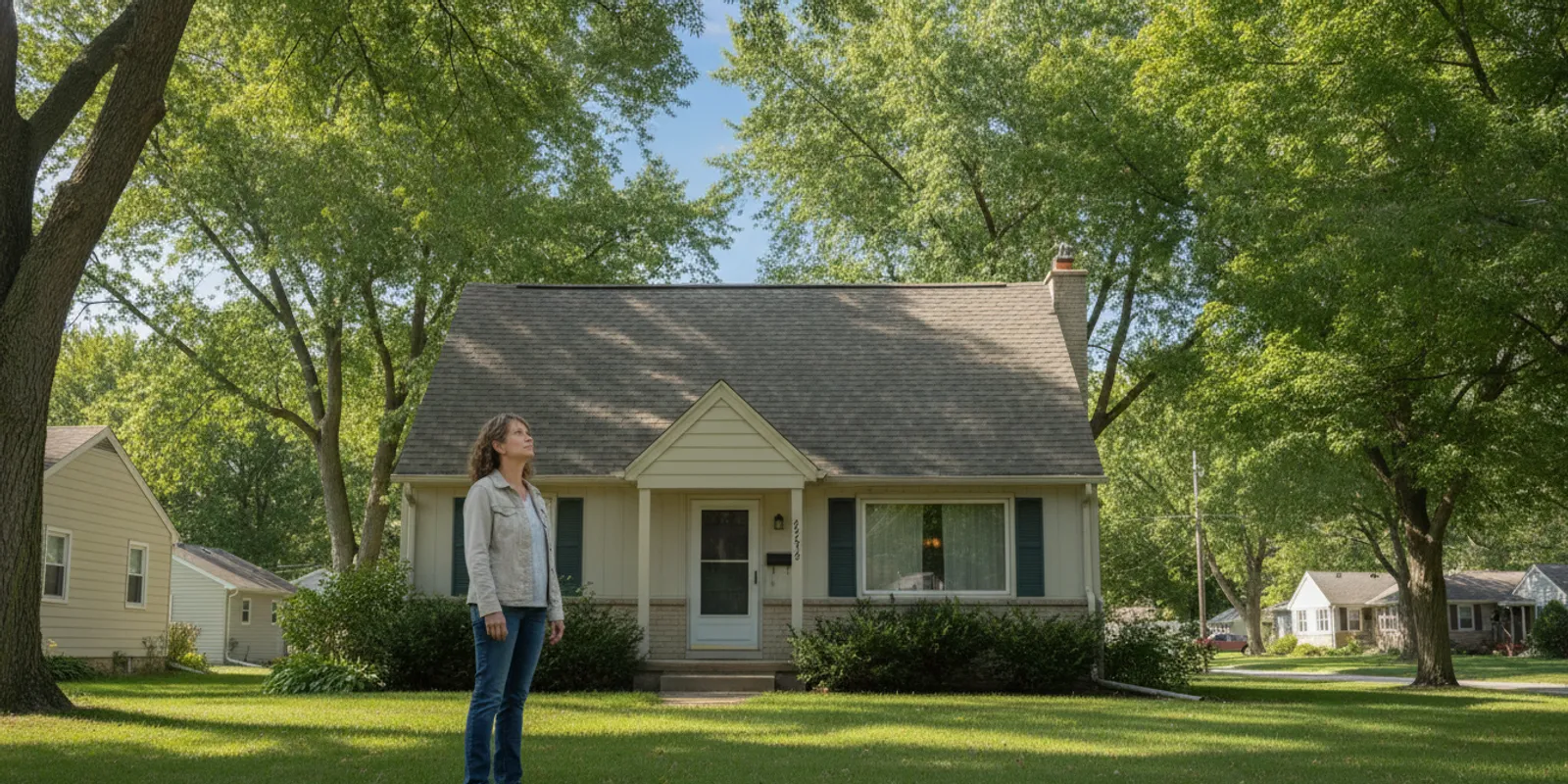
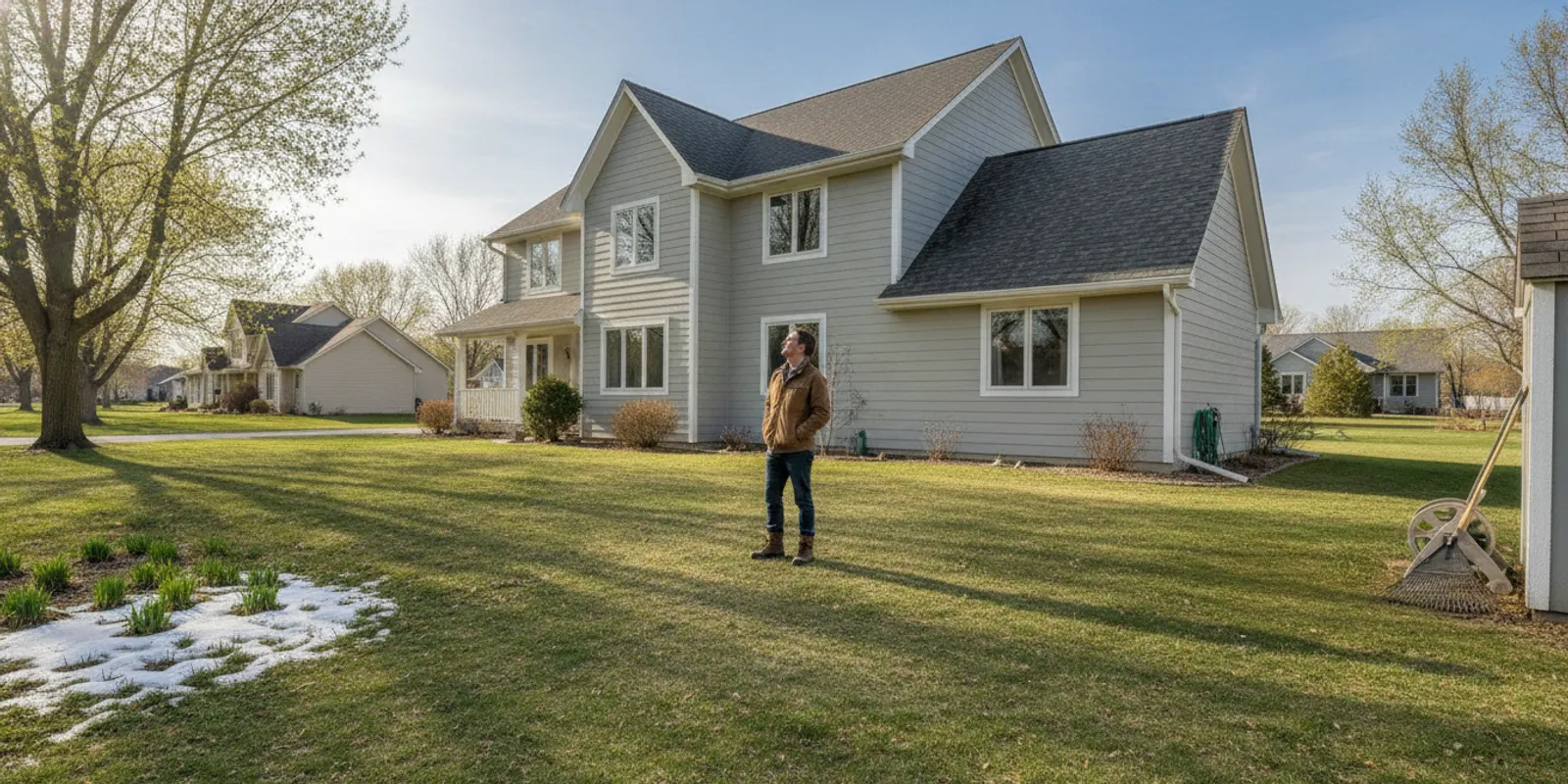
You can make a useful first pass without getting onto the roof. Choose a stable place in the yard or driveway, keep clear of ladders and overhead wires, and use binoculars or a phone camera with zoom if needed. Do not climb onto a snowy, icy, wet, or steep roof. Roof work involves fall hazards, and an uncertain view is a reason to ask for professional help, not a reason to climb closer.
- Walk the perimeter.
Look at each roof slope from a safe position. Note areas that appear different from nearby sections, visible gaps, loose-looking material, or objects resting on the roof.
- Check the roofline.
Look for visible sagging or uneven lines from several angles. A roofline that appears changed deserves professional attention, especially if the change is new or accompanied by interior symptoms.
- Observe gutters and downspouts.
Look for packed leaves, sections pulling away, or visible overflow marks. Photograph the condition before cleaning or arranging work.
- Review the exterior walls and ground.
Note stains, scattered roofing pieces, or marks that seem to follow a path from the roof edge. These signs do not establish a cause, but they can help direct a closer review.
- Check inside for changes.
Look at ceilings and upper-floor rooms for new discoloration or dampness. If you can safely access the attic, observe from the access area without stepping on joists or moving materials.
- Record date and location.
Write down the side of the home or building, the approximate area, and what you saw. Take pictures from safe locations, then compare them with earlier photos if available.
Do not try to test a suspicious area by walking on it, lifting roofing material, pulling at flashing, or spraying water onto the roof. These actions can create damage or expose you to a fall. Keep the notes factual: "water mark below the north eave" is more useful than assuming the cause is a roof leak.
It can help to make a short property log rather than relying on memory. Record the date, recent weather if known, which side of the building you were viewing, and whether the condition is new or recurring. Take wide photos to show location, then closer photos only from a safe position. For interior symptoms, note the room and whether the mark changes over time. Do not use photos to diagnose the roof; use them to help explain what you observed.
How can you organize your observations?
A simple record makes it easier to describe a concern without turning a quick visual check into a diagnosis. Use one entry for each observation. For example, write "October 12: dark mark on the living-room ceiling near the exterior wall. First noticed after rain" rather than "roof is leaking at the edge." The first note separates what you saw from what you suspect. A contractor can then consider the symptom alongside the roof's layout and other findings.
For outside observations, identify the side of the building and a nearby reference point, such as the chimney, a window, or a downspout. If you photograph the area, take one wider image that shows where it is and, if safe, a closer view. Save the original image and date it. Avoid standing under a ladder, leaning over a railing, or entering a restricted area just to improve the camera angle.
Keep separate notes for conditions that need different follow-up. A clogged-looking gutter is not the same item as a ceiling stain, even if both are on the same side of the house. Record whether each condition seems new, repeats after rain, or has changed since an earlier photo. If you do not know, write that you are unsure instead of filling in a cause. A small factual log gives a roofing professional a clearer starting point and helps you track what still needs an answer.
For a business or multi-unit property, record the building or unit, the affected area, and who first reported the concern. If more than one person has noticed symptoms, note whether the reports describe the same location or separate areas. Keep the log and photographs with existing roof records so you can refer to them during a review and afterward.
How can you prepare for a professional review?
A few simple details can make a service conversation more productive. Before contacting a contractor, gather what you know, but do not delay if water is actively entering the building.
- Describe the concern.
Note when you first noticed it, whether it changes after rain or wind, and which room or roof area is involved.
- Collect existing records.
If available, keep prior roof work descriptions, product or warranty paperwork, repair invoices, and photographs. Do not assume that a prior warranty applies to a new concern.
- Make access safe.
Clear a path to the home or building entrance and identify any access limitations. Do not remove snow or ice from a roof to prepare for a visit.
- List your questions.
Ask what areas will be reviewed, whether the reviewer can safely access the roof, what was not visible, and which findings need prompt attention versus continued monitoring.
- Ask how findings will be explained.
Request a clear description of the observed condition, its location, and the proposed next step. If repair is suggested, ask what the work addresses and whether other options are appropriate.
A review should distinguish observed facts from assumptions. For example, a professional may identify a loose or damaged component and describe a recommended repair, while the cause, extent, or responsibility may require further evaluation. If you are comparing a repair and a roof replacement, ask what condition supports each option and what additional inspection may be needed before choosing.
For a roof that may need repair, review the company's roof repair information. If the discussion points to replacement rather than a limited repair, its roof replacement information can help you frame questions about the next step. A roof concern may also connect to drainage, so homeowners can review gutter services and information about ice dams when those subjects apply.
What should the findings explain?
A useful inspection conversation should leave you with more than a list of roof parts. Ask the reviewer to connect each observation to its location and explain whether it calls for prompt action, a repair estimate, further investigation, or monitoring. If the person cannot see a particular area safely, ask that limitation to be noted instead of assuming the whole roof was evaluated equally.
- Observed condition:
What was seen, and where? A description such as "loose-looking flashing at the chimney" is clearer than "roof issue.
- Scope and limits:
Which roof areas and transitions were checked? Were weather, access, or covering conditions a barrier?
- Recommended next step:
Is the recommendation to monitor, investigate further, repair a defined area, or consider broader work? What supports that recommendation?
- Timing and protection:
Is there a concern that should be addressed soon to limit exposure, or can the property owner plan the work? What safe steps, if any, are appropriate while waiting?
- Documentation:
Can the findings be provided in writing with relevant photos or a marked location? Keep the summary with your property records.
If two options are presented, ask what each includes and what it does not address. A repair and a replacement are not interchangeable scopes, and an estimate should make the proposed work understandable before you decide. Do not feel you need to diagnose the cause yourself; your role is to describe symptoms and ask for a clear explanation of the recommendation.
For example, suppose you see a ceiling mark near a roof-to-wall transition, but there is no visible issue from the yard. The useful outcome is not a guess based on the stain alone. Ask whether that transition could be viewed safely, what other areas should be checked, and whether the interior symptom calls for additional investigation. In another case, you may see a small area of visibly displaced roofing material but no interior stain. Ask whether the finding is localized, whether nearby material or flashing also needs review, and what the recommended scope would address. These questions help you compare a defined repair with broader work without assuming in advance which one is appropriate.
It is also reasonable to ask how the reviewer will communicate a finding that cannot be confirmed during the visit. A clear explanation may identify what is known, what remains uncertain, and what observation or follow-up would help resolve the uncertainty. That distinction is useful when planning work and keeping a record for the next season.
How does the review differ by roof type?
The same basic approach applies across roof types: observe safely, record concerns, and ask what the findings mean for the specific system. However, the visible clues and maintenance questions vary. This comparison is a conversation guide, not a do-it-yourself diagnostic chart.
Roof type | What to note from a safe viewpoint | Useful question for a review |
Asphalt shingles | Missing, lifted, curled, cracked, or visibly displaced shingles; exposed areas; concerns around roof penetrations. | Are the visible areas isolated, or should nearby slopes and transitions be reviewed too? |
Metal roofing | Panels or trim that appear displaced, visible damage, unusual gaps, or concerns at seams and roof edges. | Which panel, seam, flashing, or attachment detail needs attention, if any? |
Low-slope or flat roofing | Visible debris, ponding that remains after conditions have changed, separated-looking edges, or signs of interior moisture. | What does the review show about drainage, seams, and transitions, and what areas were accessible? |
Mixed or complex roof | Different materials or slopes meeting at walls, additions, valleys, or roof penetrations. | How do the transitions between systems affect the recommended scope? |
For more information about different systems, visit the pages on shingle roofing, metal roofing, and flat roofing. Commercial property owners may also want to see the company's commercial roofing services or its page about TPO roofing. A commercial review should account for the specific building and roof assembly rather than rely on a residential checklist.
For a shingle roof, a ground-level view may reveal a missing or lifted-looking section. But it will not show the condition of every shingle or the layers beneath it. On metal systems, a panel's appearance from below may not make a seam or attachment detail easy to evaluate. Low-slope roofs can have drainage patterns or details that are not apparent from the ground. In each case, use the visible sign to direct questions, not to conclude that the entire roof has one uniform condition.
Building use also changes what a useful review should address. A homeowner may focus on a ceiling stain or a gutter concern. While a property manager may need to connect reports from several suites or coordinate access to roof areas. Ask the reviewer to identify which areas were accessible and how the written findings relate to each reported symptom. If the building has more than one roof system, ask that each be described separately so the recommended work is not vague.
How Should You Prioritize What You Find?
Sort observations by urgency, not by how easy they are to photograph or explain. A ground-level review can help you decide what to do next, but it cannot establish the cause or extent of a roof problem. Use this order to stay practical and avoid unsafe roof access.
- Address active water entry or safety concerns first.
If water is entering the home, protect belongings and catch drips only when you can do so safely. Keep people away from visibly unstable areas, wet electrical components, and any roof edge or surface that could create a fall hazard. Do not climb onto the roof, open a ceiling, pull at materials, or attempt an emergency repair. Note where the water or concern appears and arrange professional help promptly.
Arrange a closer review for visible damage or persistent symptoms.
Prioritize new ceiling stains, damp areas, loose-looking or displaced roofing materials, damaged flashing, recurring drainage problems, or conditions that remain after the weather changes. Take dated photos from a safe location and record the room, roof side, or nearby reference point. A stain or visible defect does not reveal the full source by itself. So describe what you observed rather than diagnosing the problem or assuming a surface patch is the right solution. If storm-related concerns are present, Minnesota Roofing Company's
guide to identifying possible hail damage
can help you prepare questions.
- Keep routine observations for planned follow-up.
Minor conditions without active water entry, a safety concern, or a persistent symptom can be documented for routine maintenance. Record the date, location, and any change you notice, then compare later observations without treating an earlier clear view as proof that the roof is sound. If an item worsens, begins affecting the interior, or becomes a safety concern, move it into a more urgent category and seek professional guidance.
This order is an organizing tool, not a diagnosis or an insurance coverage decision. Keep your notes factual so a roofing professional can evaluate the concern in context.
Frequently asked questions
When should I schedule a fall roof inspection in Minnesota?
Consider arranging a review before winter weather becomes a barrier to safe access. Especially if you have noticed a leak, visible material concerns, drainage problems, or possible storm damage. There is no single date that fits every property. If water is entering now, seek help promptly rather than waiting for a seasonal appointment.
Can I inspect my roof myself?
You can make ground-level observations and check for visible interior clues, but do not climb onto a wet, snowy, icy, or steep roof. A professional review is appropriate when you need a closer look, cannot identify a concern safely, or see symptoms that may need repair.
Does a fall inspection prevent ice dams or leaks?
No inspection can promise that a roof will not develop a leak or ice dam. A review may identify visible conditions or maintenance questions before winter, but the result depends on the roof system, the building, and future weather. Ask the reviewer to explain the limits of what was examined.
What should I do if I find a ceiling stain?
Note the room and location, take a photo, and check whether the area is damp without disturbing it. If water is actively entering, protect belongings if safe and arrange professional help. Do not assume the visible stain marks the exact source of the water.
What happens after the inspection?
Ask for a clear explanation of what was observed, what could not be checked, and which next steps are recommended. Depending on the findings, you may discuss monitoring, a repair, or replacement planning. An estimate helps you understand a potential scope, but the appropriate work depends on the roof and the findings.
A careful fall review can help you turn visible roof concerns into clear questions and a practical plan. Stay off the roof, document what you can safely see, and seek professional guidance when a condition needs a closer look.

Comments