
Roof Leaking After Rain Minnesota: What to Do
A roof can look fine from the driveway and still let water into your home. Rain may enter around flashing, vents, chimneys, wall junctions, or damaged shingles, then travel along the roof structure before appearing as a ceiling stain. That is why the visible drip is not always directly below the entry point.
If you have a roof leaking after rain minnesota, Minnesota homeowners should first contain interior water if it is safe, move belongings away, and avoid climbing onto the roof. Look for visible ceiling or wall damage, but do not assume the source from the stain alone. A roof leak should be investigated to determine its cause, and faulty or improperly applied flashing is a common possibility, according to municipal roofing guidance.
Quick interior protection can limit additional damage, while a careful inspection helps separate a localized repair from a larger roof or moisture problem. The next step is understanding the common paths rain takes before it reaches your living space.
In this guide.
What a Roof Leaking After Rain in Minnesota Can Mean
Rain does not always enter a home directly above the stain it creates. Water can move beneath roofing materials, along flashing, or across roof decking before gravity carries it into a ceiling or wall. A stain may appear several feet from the entry point. Dripping can also continue after the rain has stopped. A leak that appears only after rainfall still deserves investigation to determine its cause.
Flashing and roof penetrations are common starting points
Flashing seals transitions and vulnerable areas around chimneys, vents, walls, skylights, and other roof penetrations. If flashing is faulty, improperly applied, loose, or deteriorated, rain can enter at that transition and follow the underlying roof layers. The leak may not become visible indoors until enough water collects or reaches an opening in the ceiling.
Municipal roofing guidance identifies bad or misapplied flashing as a common cause of roof leaks. It also recommends looking for water stains near vents, chimneys, and vertical wall elements above the roof. Those observations can help an inspector trace the path, but they do not prove which component is failing. A homeowner should avoid climbing onto a wet or damaged roof or attempting to remove flashing.
The roof surface may also be involved
Cracked or curled shingles, exposed nails, holes, previous patches, and exposed underlayment or sheathing can allow water beneath the roof covering. Wind or severe weather may create damage that is difficult to see from the ground. Repeated Minnesota weather cycles can make an existing weakness more noticeable during rain. A recurring stain, musty odor, or drip after otherwise ordinary rainfall is a reason to arrange a closer inspection rather than assume the problem has dried up.
For broader background, see our general leaking-roof guide. If you need help evaluating service options, our guide to choosing a roof leak contractor covers questions to ask before work begins. Neither a ceiling stain nor a ground-level view can provide a reliable remote diagnosis, so persistent or worsening signs should be assessed by a qualified roofing professional.
What to Do First When Water Appears Indoors
When rain reaches the ceiling or wall, focus first on safety and moisture control rather than trying to find the roof entry point yourself. Water can travel along framing before it becomes visible, so the stain or drip may not sit directly below the damaged area. Stay indoors or at ground level, and do not climb onto a wet roof, ladder, or damaged attic structure.
- Keep people away from the affected area.
If the ceiling is bulging, sagging, cracking, or making unusual sounds, leave the room and avoid standing beneath it. If water is near lights, outlets, appliances, or wiring, avoid contact and use caution around the area. Call an electrician or emergency services when there is an immediate electrical or structural hazard.
- Contain dripping water if it is safe.
Place a bucket or other container under a controlled drip, and use towels to limit spreading water on finished floors. Do not puncture a ceiling or open a wall to release water unless a qualified professional directs you and the area is confirmed safe.
- Move belongings out of the wet area.
Relocate furniture, electronics, rugs, and other items only if you can do so without walking through standing water or approaching an electrical hazard. Blot moisture from accessible wood surfaces promptly. The EPA recommends removing moisture immediately and using suitable drying methods for wet wood.
- Document what you can see.
Take photos from a dry, safe position, note when the leak began, and record whether it appears during rain or afterward. Do not enter the attic just to investigate. A professional can inspect roof penetrations, flashing, and concealed areas using safer methods.
- Start drying and arrange an assessment.
Dry affected materials as soon as practical. EPA guidance notes that responding to water damage within 24 to 48 hours can help avoid conditions that support mold growth. Depending on the size of the area, professional help may be needed to dry it thoroughly.
For more detail on the indoor side of the problem, review these steps for ceiling water damage. Once the immediate area is safe, preserve your photos and observations for the roof inspection.
Common Roof Leak Clues You Can Observe From the Ground
You do not need to climb onto a wet roof to gather useful information. From the yard, look for shingles that are missing, cracked, curled, or visibly out of place. You may also notice exposed nails, holes, old patches, or areas where the protective surface appears worn. These clues do not prove where water is entering, but they help explain why a roof leaking after rain in Minnesota deserves a closer look.
Flashing deserves special attention from a safe distance. This thin material seals transitions around chimneys, vents, skylights, and walls. Faulty or improperly applied flashing is a common cause of roof leaks, according to New Brighton's roofing guidance. From the ground, look for flashing that appears bent, lifted, rusted, or separated from the surrounding roof. Do not pull on it or attempt a repair from a ladder.
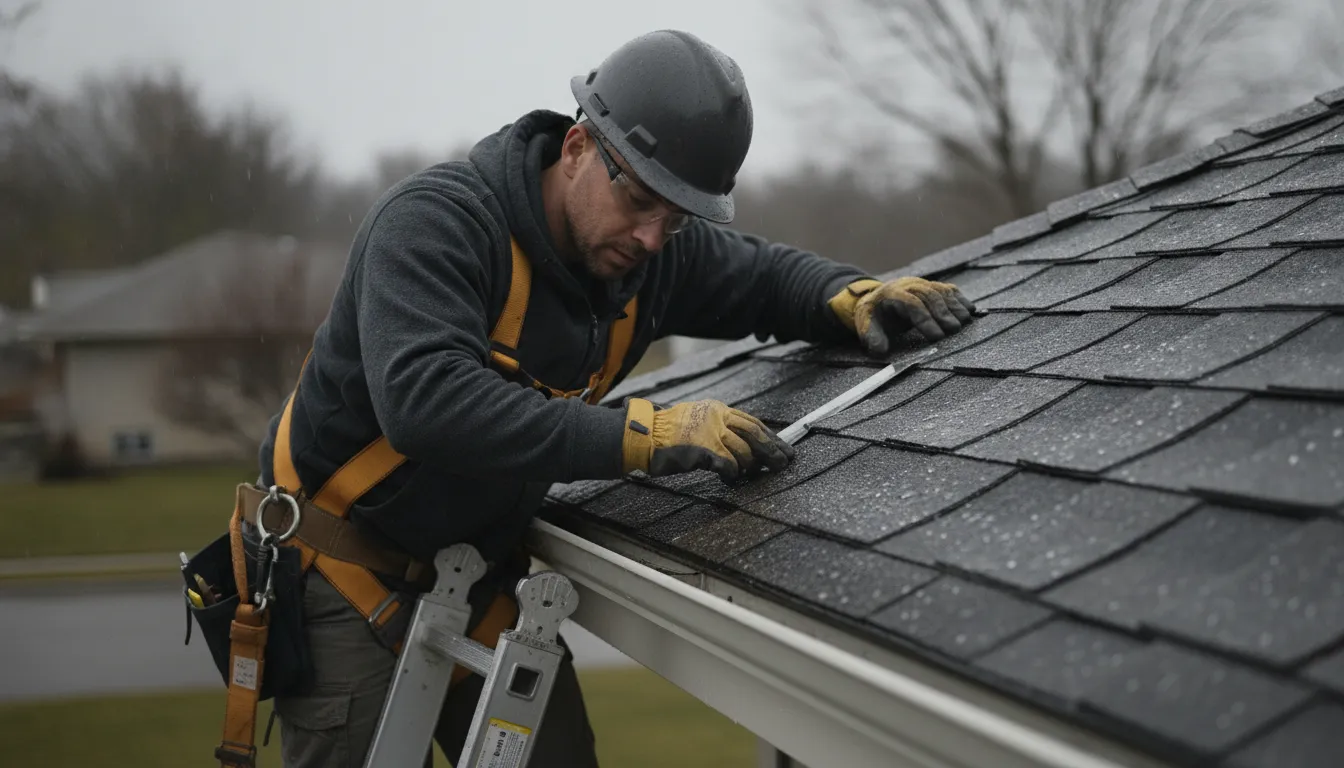
Gutters and downspouts can provide another clue. Watch for water overflowing at one spot, a downspout that is disconnected, or granules and roofing debris collecting near an outlet. A blocked or damaged drainage path may not be the original roof defect, but it can help direct water where it should not go.
Indoors, check ceilings, upper walls, and rooms below roof penetrations after the next rainfall. Yellow or brown stains, fresh dampness, peeling paint, bubbling drywall, or a musty odor can indicate recurring moisture. A stain may not sit directly below the entry point because water can travel along roof framing or other building materials. If the same area becomes wet after multiple rains, record the date, weather, location, and size of the stain.
Some damage remains hidden from ground-level view. Hidden roof storm damage can require a professional inspection, especially when stains return, shingles or flashing look damaged, or the ceiling begins to sag. Avoid attic or roof access if conditions are wet or unsafe. An inspection is the appropriate next step when visible clues point to a leak but cannot identify its source.
How Minnesota Weather Can Expose a Roof Problem
A roof leak may become visible after rain even when the underlying weakness started months earlier. Snow, ice, repeated freeze-thaw cycles, and strong storms can put changing stress on shingles, flashing, fasteners, and the roof layers beneath the surface. Water can then follow the roof deck, insulation, or framing before it reaches a ceiling, so the indoor stain does not always sit directly below the entry point.
Flashing deserves particular attention. It seals transitions around chimneys, walls, vents, and other roof penetrations. A local roofing source notes that repeated exposure to rain, ice, and snow can cause metal to expand and contract. Minnesota snow, freeze-thaw, and storm conditions can accelerate flashing failure. These observations are clues, not a remote diagnosis. A flashing issue can look similar to other roof or wall moisture problems, so the source of the water should be investigated.
Winter conditions can also make the roof system's layers relevant. Municipal guidance explains that multiple roofing layers add weight and can affect a roof's ability to bear winter snow. The same guidance says a properly installed, ventilated, and undamaged roof can last 20 years or more, but ventilation and condition still need to be evaluated together. If a roof is opened or replaced, concealed decking defects or attic condensation problems may be revealed during tear-off.
Code and permit requirements are part of that evaluation, too. Minnesota roofing materials must be installed according to the applicable residential code and manufacturer instructions. The cited municipal guidance states that re-roofing existing dwellings requires a building permit, although requirements can vary by project and jurisdiction. A contractor should explain what work is proposed and what approvals apply, rather than treating every post-rain leak as a simple patch.
For practical context, see the risks of unrepaired storm damage and repair versus replacement after storms. Both can help frame why a recurring leak deserves a documented inspection.
When Is a Roof Leak an Emergency?
A roof leak needs urgent attention when water is entering faster than you can safely contain it or when the leak may be affecting the building's electrical or structural systems. A small stain after one rain can still warrant an inspection, but active, uncontrolled water should not wait for a convenient repair window.
Signs to treat as urgent
- Water is actively spreading.
Multiple buckets, dripping light fixtures, wet walls, or water moving across the ceiling can indicate that interior materials are continuing to absorb moisture.
- The ceiling is sagging or bulging.
A water-filled ceiling area may fall without warning. Keep people and furniture away from it, and do not press, puncture, or climb beneath a damaged section.
- Water is near electrical components.
If water is around lights, outlets, switches, or wiring, avoid contact and use only a safe, accessible shutoff if you know how to do so. Contact a qualified professional when electrical safety is uncertain.
- Large areas or several materials are wet.
Saturated drywall, insulation, flooring, wood, or furnishings require prompt drying and assessment. EPA guidance notes that professional assistance may be needed to dry a water-damaged area quickly and thoroughly.
- The leak returns after each rain.
Recurring water intrusion means the cause has not been resolved. Do not assume a dried stain means the roof is safe, especially when the source may be above a different part of the ceiling.
If it is safe, contain drips, move belongings, and take photos from the ground or indoors. Avoid walking on a wet or damaged roof. EPA guidance emphasizes responding to water damage within 24 to 48 hours, because undiscovered or ignored moisture can create conditions where mold grows. Moisture should be removed promptly, but cleanup does not replace finding the entry point.
For active damage or uncertainty about the next step, a Minnesota roof repair service can assess the visible symptoms and determine whether the problem needs immediate repair, further drying, or a more detailed inspection.
Repair or Replacement? How an Inspection Helps
A leak that appears after rain does not automatically mean the entire roof needs to be replaced. The right scope depends on where water is entering, how far the damage extends, the roof's overall condition, and whether an earlier repair addressed the underlying problem. An inspection connects the interior evidence to the exterior roof system instead of treating one ceiling stain as a complete diagnosis.
Flashing is one example of why a careful assessment matters. Municipal roofing guidance notes that faulty or improperly applied flashing is a common cause of leaks. Flashing can sometimes be repaired or replaced without installing a whole new roof (municipal roofing guidance). A localized repair may be appropriate when the surrounding shingles, underlayment, and roof structure remain serviceable.
Repair may fit | Replacement may be considered |
A defined flashing failure or other localized entry point. | Leaks that keep returning in multiple areas. |
Limited damage with sound surrounding roofing materials. | Widespread wear, deteriorated supporting materials, or incompatible prior repairs. |
A repair that can address the cause without leaving major known risks. | Hidden roof-deck defects or attic condensation discovered during the work. |
Repeated leaks or widespread wear can make replacement more practical than continuing with isolated patches. The inspection should also consider repair history, material compatibility, and the condition of the surrounding roof, rather than relying on roof age alone. If tear-off becomes necessary, defects in the roof deck may be revealed. The same process can expose attic condensation problems that need to be addressed as part of the project. Otherwise, a new roof could leave the moisture source unresolved.
Ask for the proposed work to identify preparation, materials and accessories, protection of the property, cleanup, concealed-condition procedures, and the limits of the work. That documentation helps you understand what is known before work begins and what would require approval if hidden conditions change the scope. For related guidance, review Minnesota Roofing Company's Minnesota roof repair service and its article on repair versus replacement after storms.
How Minnesota Roofing Company Investigates a Roof Leaking After Rain in Minnesota
After a recurring rain leak, an inspection should give you a clearer picture of what is visible, what still needs investigation, and what options make sense for the property. Minnesota Roofing Company is a family-owned contractor based in Spring Lake Park. It has more than 30 years of Minnesota experience serving homeowners and property owners across the Twin Cities metro.
The assessment can start with the roof areas associated with the leak, including visible shingles, flashing, roof penetrations, and other details that may help explain why water appears after rain. Because an indoor stain is not always directly below the entry point, the inspection should connect the exterior condition with the interior symptoms rather than relying on the stain alone. You can review the company's Minnesota roof repair service for more context on professional repair options.
Documentation and scope discussion
If storm damage may be involved, Minnesota Roofing Company can provide storm damage assessment and documentation support, including photography and reports. That information can help you keep a record of visible conditions and discuss the next step with your insurer, but it does not guarantee coverage or claim approval. For a recurring leak, ask which conditions were observed, which areas could not be confirmed safely, and whether the recommended scope is limited repair, further evaluation, or possible replacement.
Protection and cleanup should also be part of the scope conversation. Before work begins, clarify how the crew will protect the property and what cleanup is included in the proposed work. The goal is a practical plan based on the observed condition, not a remote promise about the source or outcome. If the leak followed severe weather, the resource on hidden roof storm damage can help explain why visible ground-level clues may not tell the whole story.
The Fast + Free Instant Estimate provides a convenient way to begin discussing a roof replacement project. For repair or emergency concerns, confirm the appropriate service and scope when scheduling rather than assuming every inspection is free.
Frequently Asked Questions
Why does my roof leak only after it rains?
Rain can enter through failed flashing, roof penetrations, damaged shingles, or another small opening, then travel along the roof deck before appearing indoors. The ceiling stain may not be directly below the entry point, so the visible location does not identify the cause by itself.
What should I do when I find water inside after rain?
Move belongings away from the area, place a container under an active drip if it is safe, and document stains or damaged materials with photos. Avoid climbing onto the roof or entering an unsafe attic. If water is near electrical fixtures, keep clear and contact a qualified professional promptly.
Can a roof leak be repaired without replacing the whole roof?
Sometimes. A localized flashing failure or limited area of damage may be repairable. The right scope depends on the leak cause, repair history, surrounding roof condition, and any concealed damage. An inspection is more reliable than deciding from the roof's age alone.
When should a leaking roof be treated as an emergency?
Request urgent help when water is actively spreading, the ceiling is sagging, electrical components may be wet, or insulation and other building materials are becoming saturated. Prompt moisture control also matters because ignored water problems can create conditions that support mold growth.
Ready to Get Help With a Persistent Roof Leak?
If your roof keeps leaking after rain, a professional assessment can help clarify where water may be entering and what next step makes sense. Minnesota Roofing Company serves homeowners across the Twin Cities metro with a practical, transparent approach to roof concerns.


Comments