
Asphalt Shingles vs Metal Roofing Minnesota Guide: Tips
Updated: Sep 15
Minnesota homeowners comparing a new roof usually start with two practical options: asphalt shingles and metal roofing. This asphalt shingles vs metal roofing minnesota comparison explains how each option fits Twin Cities homes. Snow, ice dams, hail, wind, roof pitch, and neighborhood appearance all matter. So do maintenance expectations and the length of time you plan to own the home.
Practical guide for Twin Cities homeowners.
By Chuck Lowe, Owner of Minnesota Roofing Company.
Asphalt shingles are usually the simpler, more accessible choice for a Minnesota roof replacement. Metal roofing can offer a longer service life and strong snow-shedding performance. The right decision depends on your roof design, weather exposure, budget, appearance preferences, and long-term plans.
For a broader look at options, start with the best roofing materials for Minnesota winters. Then use this comparison to prepare better questions for a roofing contractor. Minnesota Roofing Company has more than 30 years of local experience and installs both asphalt shingles and metal roofing for Twin Cities homeowners.
What Does an Asphalt Shingles vs Metal Roofing Minnesota Comparison Reveal?
The most useful comparison is not simply which material is stronger. It is which complete roofing system fits the house. The roof deck, underlayment, flashing, ventilation, edge metal, fasteners, workmanship, and maintenance plan affect performance just as much as the visible covering.
Consideration | Asphalt shingles | Metal roofing |
Initial project planning | Familiar product and installation process with many style choices. | Requires careful system selection, detailing, and compatible accessories. |
Service-life planning | Often has a shorter replacement cycle than metal, depending on product, ventilation, exposure, and installation. | Can provide a longer service life when the panel system and details are installed correctly. |
Winter performance | Performs well when the roof has sound flashing, ventilation, and ice-dam protection. | Can shed snow readily, so snow-slide planning and secure edge details matter. |
Repairs | Individual damaged shingles can generally be replaced without changing the whole roof. | Repairs depend on the panel profile, fastener system, seams, and source of the damage. |
Appearance | Works with many Twin Cities neighborhood styles and offers varied colors and profiles. | Creates a distinct look with options such as standing seam and exposed-fastener panels. |
There is no universal winner. A good contractor should explain why a recommended system suits your roof instead of steering you toward a material based only on a sales pitch. You can also compare the basic differences in this shingle roof versus metal roof guide before scheduling an inspection.
What Should You Know About Asphalt Shingles in Minnesota?
Asphalt shingles remain a common Minnesota roofing choice because they offer a familiar appearance, broad product availability, and a straightforward repair process. Architectural shingles can complement many Twin Cities homes. Damaged areas are often easier to match and repair than a specialized metal panel profile.
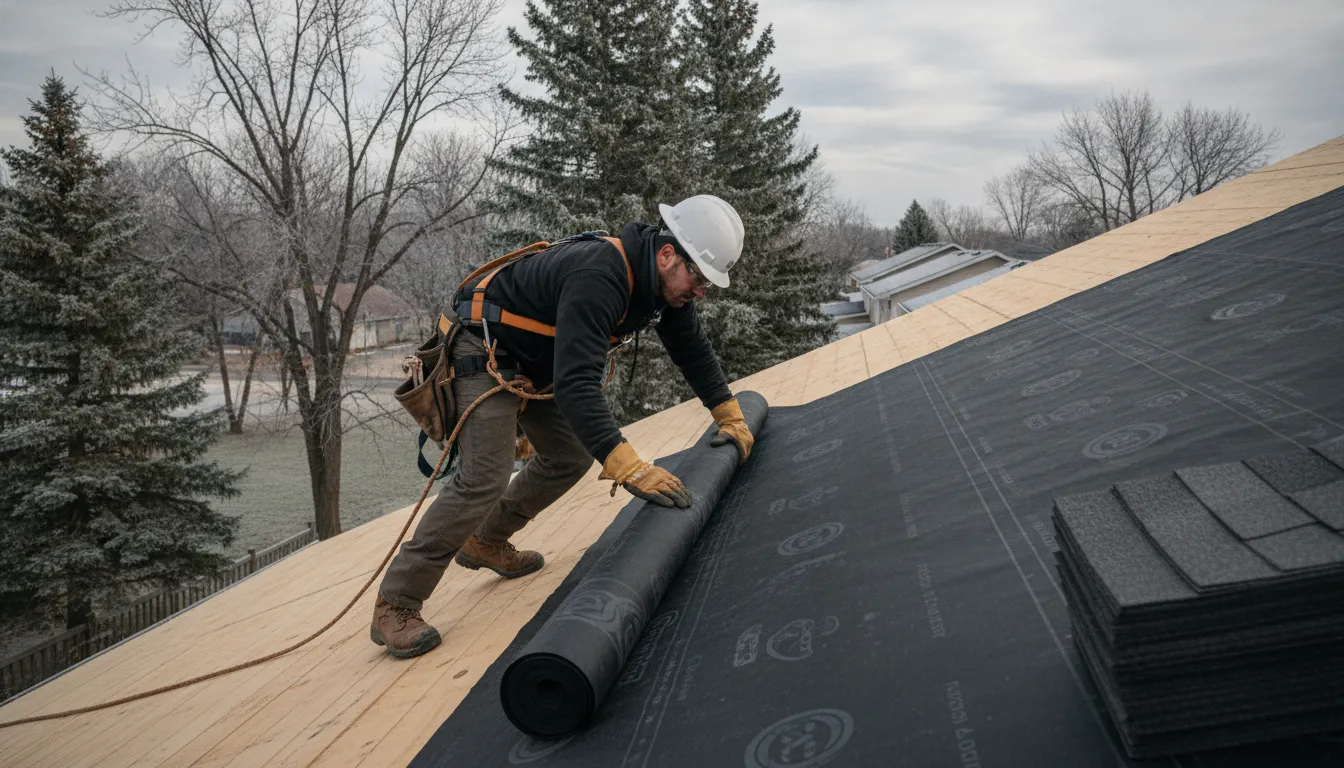
The material still needs a complete system around it. Proper underlayment and ice-water protection help address vulnerable eaves, valleys, and wall intersections. Adequate attic ventilation helps manage heat and moisture. Step flashing, chimney flashing, pipe boots, and roof-to-wall transitions deserve close attention because leaks often begin at details rather than in the middle of an intact shingle field.
Hail and wind exposure should influence product selection. Minnesota Roofing Company offers asphalt shingles with extra hail protection options, but no shingle is damage-proof. After a significant storm, look for missing granules, bruised or cracked shingles, lifted edges, damaged flashing, and debris impact. Some damage is difficult to see from the ground. A professional inspection is safer than walking on a roof or assuming that no indoor leak means no exterior damage.
Asphalt may fit a homeowner who values a traditional look, accessible maintenance, or a replacement plan that matches the home's expected ownership period. It may also be the better fit when the existing roof design, nearby roof sections, or community appearance strongly favor shingles. Review the roofing shingle selection guide for product questions, but avoid choosing from a generic dollar range. Actual project scope depends on measurements, layers, decking condition, ventilation, flashing, access, and selected products.
What Is Different About Metal Roofing Systems in Minnesota?
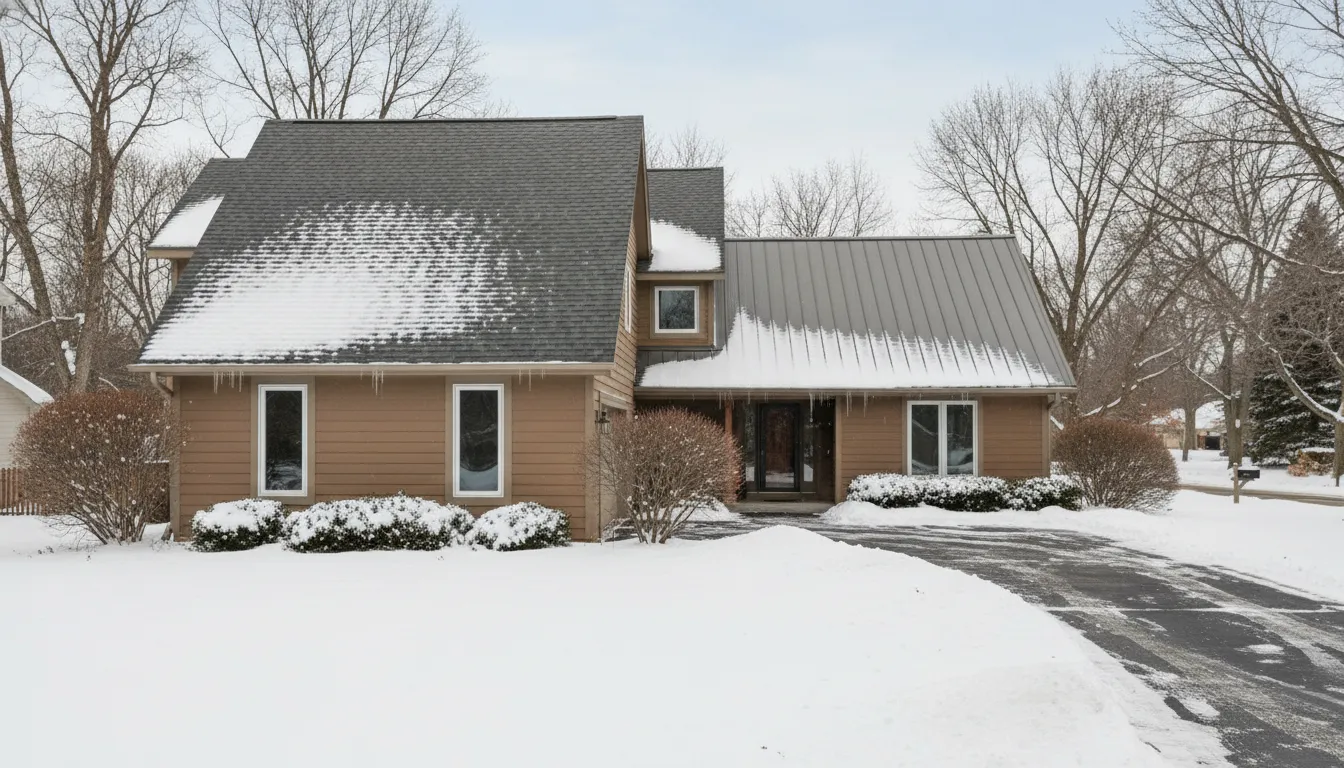
Metal roofing is a system, not one single product. Standing seam panels hide or protect their fasteners and create long, continuous lines. Exposed-fastener panels use visible fasteners and have different maintenance and detailing considerations. The right choice depends on roof geometry, panel specifications, expansion and contraction allowances, penetrations, snow management, and the installer's experience with that system.
A metal roof can be attractive for a homeowner who wants a long-term roof covering, a distinctive appearance, or efficient snow shedding. Snow shedding can be useful, but it can also create a hazard over entrances, walkways, decks, and lower roof sections. Snow guards, layout, gutters, and property use should be discussed during design rather than added as an afterthought.
Metal roofing does not eliminate every winter concern. Fasteners, seams, valleys, penetrations, flashing, and transitions must be detailed for Minnesota weather. Dissimilar metals can create compatibility problems. Poorly planned additions can interfere with panel movement. Ask who will install the system, which panel profile is proposed, how penetrations will be flashed, and how future repairs will be handled.
For a closer explanation of standing seam construction, read the standing seam metal roof guide. Minnesota Roofing Company offers metal roofing in several variations. The recommendation should be tied to the home's roof shape and the owner's priorities, not just the word metal.
How Do the Materials Handle Snow, Ice Dams, Hail, and Freeze-Thaw Cycles?
Minnesota weather tests the entire roof assembly. The visible material matters, but water control at the eaves, valleys, walls, chimneys, and penetrations is equally important. A well-installed asphalt roof can manage winter conditions. A well-installed metal roof can manage them too. An incomplete installation can fail with either material.
Snow and ice dams require system planning
Ice dams form when heat loss, snow cover, and uneven roof temperatures allow meltwater to refreeze near colder eaves. Roofing material alone does not solve the cause. Air sealing, insulation, ventilation, underlayment, and careful eave detailing all play a role. Read the Minnesota ice dam damage guide for prevention and repair considerations.
Hail and wind can affect either material
Hail can bruise asphalt shingles, dent metal panels, damage flashing, and affect other exterior components. Metal may resist some impacts well, but it can still dent or experience finish damage. Asphalt products may offer impact-resistance options, but the specific rating and warranty terms should be verified for the product being proposed. After a storm, document conditions from the ground and arrange an inspection if you see suspicious damage.
Freeze-thaw movement stresses details
Repeated temperature changes stress flashings, sealants, fasteners, and transitions. A careful installation leaves room for the system to perform as designed and uses compatible materials. The contractor should inspect existing decking and explain what happens if concealed damage is found. Never approve a proposal that hides the scope behind a vague material label.
For storm-related concerns, this guide to choosing a Minnesota roofing contractor after a storm covers documentation, credentials, and warning signs to discuss before work begins.
Does Metal Roofing Lower Heating Bills in a Minnesota Home?
Metal roofing can reflect more solar energy than some dark roofing surfaces, but that does not create a guaranteed heating-bill reduction. Minnesota homes need heat during long cold periods. Winter comfort depends heavily on insulation, air sealing, ventilation, windows, equipment, and occupant behavior. A roof material is only one part of the building envelope.
Ventilation should not be treated as a substitute for insulation or air sealing. The goal is to manage heat and moisture in the attic while keeping conditioned air inside the living space. A contractor evaluating a replacement should look for moisture staining, blocked vents, inadequate intake, compressed insulation, and areas where warm air may escape into the attic.
Metal may support a homeowner's broader energy and durability goals when the roof assembly is designed correctly. Asphalt can also perform well when paired with sound underlayment, ventilation, and installation details. Ask for a system-level explanation instead of a promise that one material will automatically reduce utility costs.
How Should You Budget for an Asphalt Shingles vs Metal Roofing Minnesota Project?
Start with the house and the project, not with a material trend. A qualified evaluation should consider these factors:
- Roof geometry:
Low-slope areas, complex valleys, dormers, skylights, and multiple additions change the detailing requirements.
- Weather exposure:
Open lots, mature trees, wind corridors, and areas with frequent hail can change product and maintenance priorities.
- Ownership plans:
A long-term homeowner may weigh service life differently than someone planning to sell or renovate soon.
- Appearance:
Shingles can blend into traditional neighborhoods, while metal can create a more defined architectural look.
- Maintenance:
Every roof needs inspections and attention to flashing, drainage, penetrations, and storm damage.
- Installation quality:
Manufacturer training, local experience, licensing, insurance, and a detailed scope matter more than a material name alone.
Homeowners comparing asphalt shingles vs metal roofing minnesota options should request comparable proposals. Each proposal should identify tear-off assumptions, underlayment, ice-water protection, flashing, ventilation, decking allowances, gutters or snow guards where relevant, cleanup, warranty terms, and who handles inspection questions. Do not compare two bids if one describes a complete system and the other lists only the visible roof covering.
Minnesota Roofing Company is a family-owned local contractor with more than 30 years of experience. The company is a certified installer for GAF and Owens Corning and holds Tamko Diamond Level Contractor status. Those credentials do not replace a project-specific inspection, but they give homeowners useful questions to ask about manufacturer requirements and installation practices. See the manufacturer comparison guide for more context.
What Should a Minnesota Roof Replacement Inspection Include?
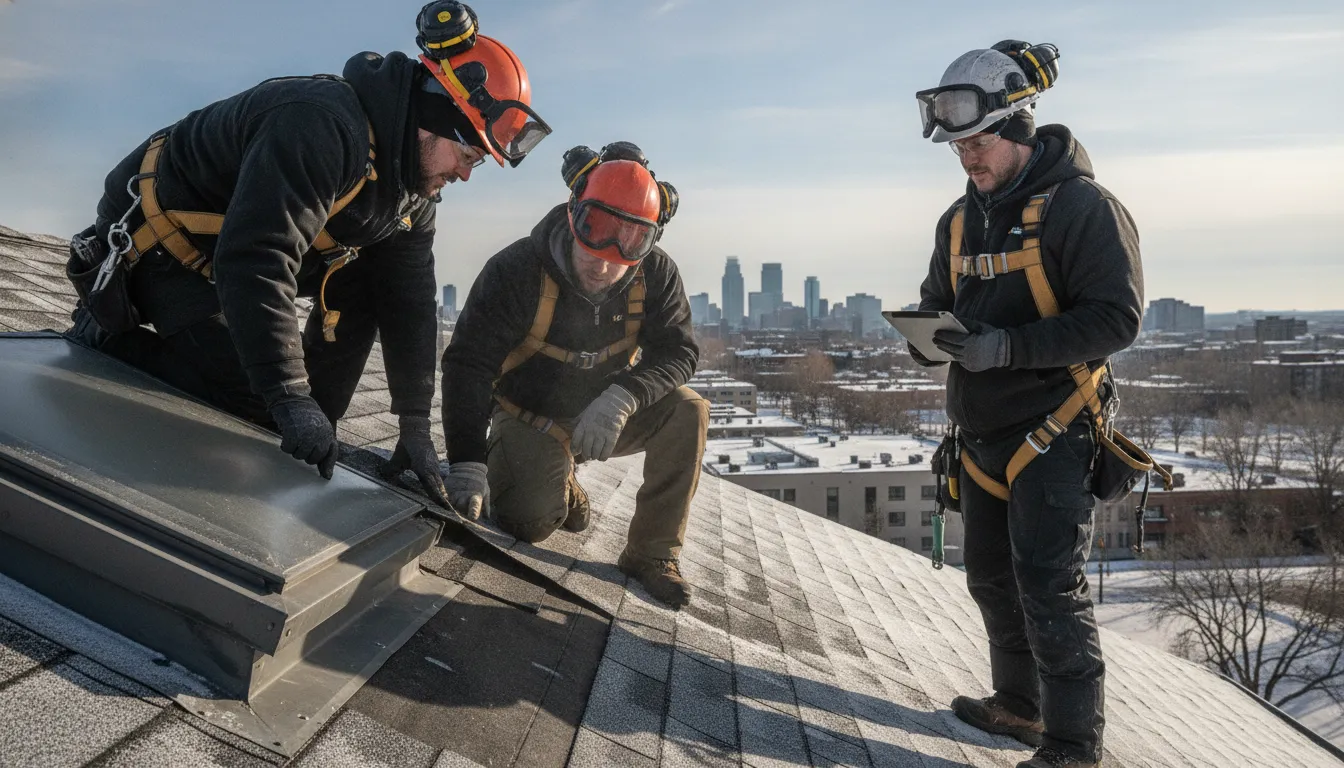
A useful inspection starts with the roof's current condition and the home's goals. The contractor should examine visible roof planes, flashing, penetrations, drainage, attic ventilation, accessible decking, and signs of moisture. The discussion should also cover whether a repair, partial replacement, or full replacement is appropriate.
Before approving work, ask for a written scope that identifies the proposed system and the conditions that could change the work. If concealed decking damage is found, the contractor should explain where it is, why it matters, and how the added work will be documented. A clear process protects both sides and makes proposals easier to compare.
Review the roof's age, condition, pitch, drainage, and visible flashing.
Compare complete system specifications, not just shingle or panel names.
Ask how the proposal handles ice-water protection, ventilation, decking, and snow management.
Confirm warranty terms, cleanup responsibilities, and the process for concealed conditions.
Use the Minnesota roof replacement process guide to prepare for scheduling, material delivery, tear-off, installation, cleanup, and final inspection. You can also review the roof replacement planning guide, but a website article cannot determine the price of a specific home. A site inspection and written scope are the appropriate way to understand project cost.
For related planning, homeowners can review Minnesota Roofing Company's metal roofing service page and the shingle roofing service page. These pages explain the company's service options without replacing a project-specific evaluation.
Frequently Asked Questions
Are asphalt shingles or metal roofing better for Minnesota snow?
Either can work when the complete roof system is designed and installed correctly. Metal may shed snow more readily, which makes snow guards and protected walkways important. Asphalt depends on sound underlayment, eave protection, ventilation, and flashing. The roof pitch and building layout should guide the recommendation.
Does metal roofing last longer than asphalt shingles?
Metal roofing can have a longer service life than many asphalt shingle systems. The result depends on the panel system, coating, fasteners, flashing, installation, weather exposure, and maintenance. Compare the specific products and warranty documents rather than relying on a broad material claim.
Is metal roofing more expensive than asphalt shingles?
Metal roofing often has a higher initial project cost because the material, accessories, detailing, and installation process differ. Minnesota Roofing Company does not publish a one-size-fits-all price because roof size, layers, decking, access, design, and selected products change the scope. Request a project-specific estimate instead of using an unsupported online range.
Can hail damage both asphalt shingles and metal roofs?
Yes. Hail can affect shingles, metal panels, flashing, vents, gutters, siding, and other exterior components. The visible signs are not always obvious from the ground. After a severe storm, schedule a professional inspection and document conditions before repairs begin.
For a longer roof lifespan, material selection and installation details should work together. If you are weighing the two options for a Twin Cities home, Minnesota Roofing Company can review the roof's condition. The team can explain the tradeoffs without forcing a generic answer.
Comments