
Roof Decking Replacement in Minnesota: When It Is Needed
Roof decking replacement in Minnesota may be needed when the structural panels or boards beneath the shingles or other roof covering are damaged, weakened, or no longer provide a sound surface for installation. The visible roof does not always show the full condition of the deck, so the decision usually depends on an inspection and, in some cases, what is found after the old roofing is removed.
Quick answer: A roofer may recommend replacing an area of roof decking when it is soft, deteriorated, broken, delaminated, or otherwise unable to hold roofing fasteners or support the roof covering as intended. The affected area, material, repair access, and applicable project requirements determine the scope. Do not assume every roof replacement requires new decking, and do not assume a sound-looking shingle surface proves the deck is sound.
On this page
What is roof decking, and why does its condition matter?
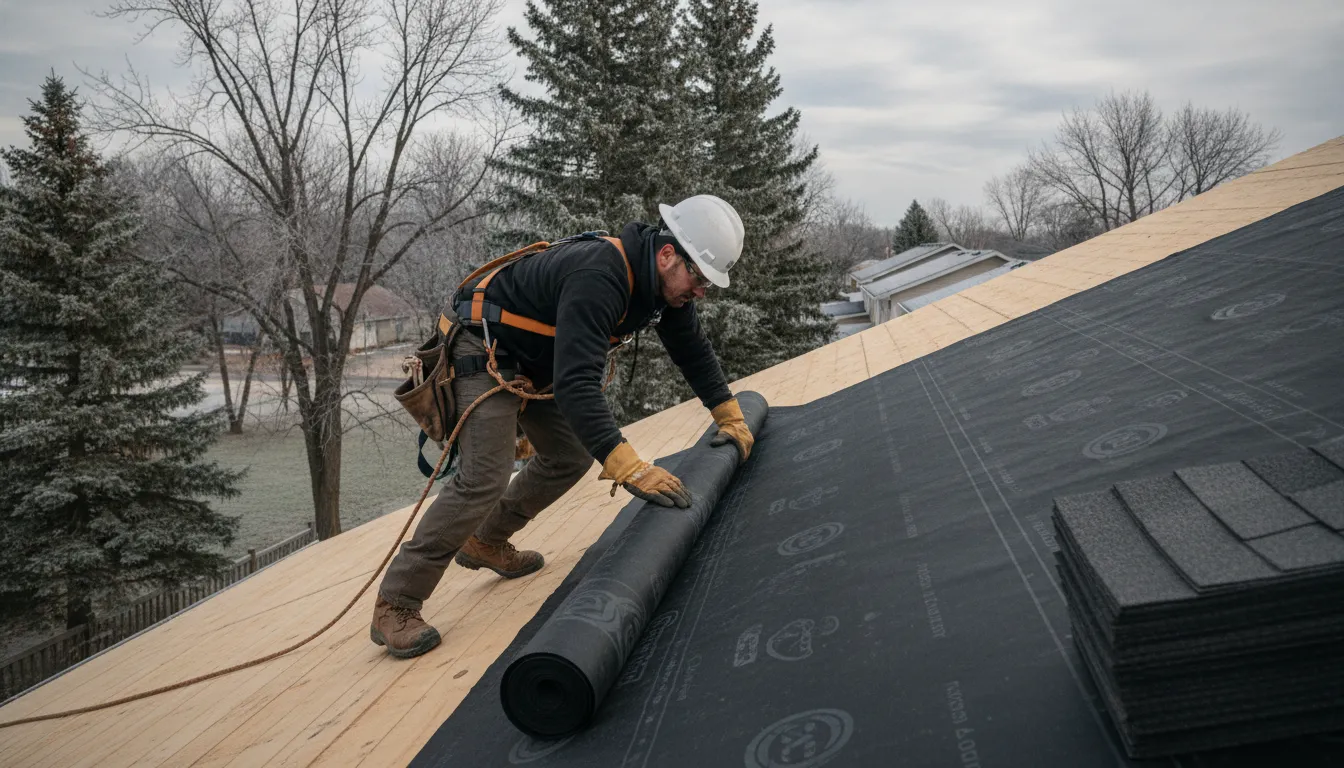
Roof decking, also called roof sheathing, is the layer attached to the roof framing beneath the underlayment and finished roofing material. On many homes, it is made of wood panels or boards. The exact material and layout vary by building. Decking provides a surface to which components of the roofing system are installed, so it needs to be sufficiently sound for the planned work.
It helps to separate the parts of a roof when discussing a repair:
- Roof covering:
shingles, metal panels, or another visible finished surface.
- Underlayment and related layers:
materials below the covering that form part of the roof assembly.
- Decking:
the sheathing or boards installed over the framing.
- Roof framing:
the rafters or trusses that support the deck and the roof structure.
A problem in one layer does not automatically mean another layer must be replaced. For example, a damaged shingle can sometimes be addressed as a roof-covering repair, while a leak that has affected the wood below may require more extensive work. Roof deck work also differs from replacing framing. If a contractor sees a concern beyond the sheathing, ask what was observed and whether a separate structural evaluation is appropriate.
For a broader overview of how a full project is planned, see Minnesota Roofing Company's roof replacement information. If the concern appears limited to a leak or localized damage, its roof repair information can help you understand the service distinction.
When might roof decking replacement be needed in Minnesota?
Decking replacement may be considered when an inspection finds that part of the existing material is not suitable to remain under the new roofing. The reason should be tied to observable conditions, not just to the age of the roof or a general assumption that all decking must be changed.
Moisture damage or decay
A leak can expose the deck to moisture. If water has caused deterioration, soft areas, or loss of material, a roofer may recommend removing and replacing the affected section. The source of the leak also matters. If the water entry point is not addressed, new material alone will not prevent the same problem from returning. Ask the contractor to explain both the damaged area and the repair needed to limit further water intrusion.
Soft, broken, or weakened panels
A deck should not be treated as sound simply because it is hidden from view. During a professional assessment, a roofer may find a section that is soft, cracked, broken, or visibly deteriorated. These findings can affect whether the new roofing can be installed over that area as planned. Homeowners should not walk on a roof to test it; hidden weak spots can create a fall-through risk.
Problems found during tear-off
Before the old roof covering is removed, the full deck may not be visible. A contractor can give a preliminary scope based on available observations, but concealed conditions may become clear only once the layers above the deck are taken off. This is why a written estimate should explain how unanticipated decking damage will be documented, priced, and approved before additional work proceeds.
A public roof-replacement project scope from the U.S. Forest Service lists removal of rooftop equipment and curbs, infilling roof-deck openings, and full or partial tear-off as separate work items. That project document is not a residential repair rule, but it illustrates why roof covering, deck openings, and other work should be described distinctly in a project scope: Forest Service Lab Roof Replacement Project.
Damage associated with a storm or repeated water entry
Hail or wind can damage the roof covering, and water can then reach materials beneath it if the assembly is compromised. A storm does not prove that roof decking needs replacement, but it can be a reason to have the roof assessed, especially if there is a leak or visible interior staining. Start with a safe ground-level look and avoid climbing onto the roof. Minnesota Roofing Company has additional guidance about storm damage to a roof and signs that may indicate hail damage.
For a home in Columbia Heights, use the same basic approach: note when the issue appeared, where you see water or damage, and whether the problem followed a storm. The company's Columbia Heights service-area page provides a local starting point for a service conversation. A visible mark on a ceiling or wall can help identify where to investigate, but it does not by itself pinpoint the roof defect.
How is roof decking inspected?
The inspection process depends on the roof, the reported concern, and whether the roof covering will be removed. A preliminary review can identify visible concerns and help define the likely work, but it may not confirm the condition of every concealed section. The contractor should be clear about what was inspected and what remains unknown until tear-off.
- Describe the symptoms.
Tell the roofer about active leaks, past repairs, interior stains, or storm events. Share when the problem began and whether it changes during rain or snowmelt.
- Review accessible evidence.
A qualified roofer may inspect visible roof areas and relevant attic or interior areas when safely accessible. Ask which areas were examined and what the findings do or do not establish.
- Separate confirmed damage from potential hidden damage.
A proposal should distinguish conditions already observed from conditions that may only be discovered after roofing is removed.
- Agree on the change process.
Ask how the contractor will notify you, show the affected area, explain the proposed fix, and receive approval for added work.
- Document the completed work.
Keep the proposal, approved changes, and project records together for future maintenance or a property sale.
When the concern began after a storm, record what you can see from the ground and preserve relevant communications. For more context, review the company's article on storm damage that may not be obvious. If you are considering an insurance claim, its guide to when to file an insurance claim for roof damage can help you prepare questions. Coverage decisions depend on the policy and insurer; a roofing contractor does not determine insurance coverage.
How do repair and replacement options compare?
The right scope depends on the location and extent of damage, the condition of nearby material, and the roofing system being installed. This comparison is a discussion aid, not a diagnosis. The contractor should explain which option fits the actual findings on your roof.
Option | When it may fit | What to clarify |
Repair the roof covering only | The issue is limited to the visible roofing material, and the deck beneath is found to be suitable for the repair. | What caused the problem, whether nearby materials were checked, and how the repair ties into the existing roof. |
Replace a localized deck section | Damage is confined to a specific area and the surrounding deck is suitable to remain. | Where the affected section begins and ends, how it will be secured, and whether the source of moisture will also be addressed. |
Replace multiple deck sections | Inspection or tear-off reveals more than one affected area, or damage extends beyond the initially visible location. | How each added area will be documented and approved, and what conditions would change the scope again. |
Broader roof or structural work | Findings extend beyond the roof covering or deck, or the proposed roofing project requires related work. | Which components are included, who evaluates any framing concern, and what is specifically outside the roofing proposal. |
There is no universal amount of decking that should be replaced on every Minnesota home. The quantity depends on the observed condition. Ask for a clear explanation rather than relying on a blanket promise that the entire deck will, or will not, need replacement.
What can change the roof decking scope?
The amount of work is not always clear from the first look. These practical factors can affect what a contractor recommends, so discuss them before the project starts and revisit them if tear-off reveals concealed damage.
How far the damage extends
A stain in one room does not necessarily map directly to the area of damaged decking above it. Water can travel along roof components before becoming visible indoors, and separate areas may have different causes. Ask the roofer to connect each proposed deck repair to a specific finding. If more damage appears after removal, ask for a fresh explanation of the affected location rather than assuming that one visible problem accounts for the entire roof.
Whether adjacent material can remain
A localized repair may depend on the condition of the deck around the damaged area. A contractor should explain why the proposed boundary makes sense and whether the surrounding material provides a suitable surface for the planned roofing work. The answer may vary across one roof; a single damaged section does not automatically establish that every other section is sound or defective.
Roof layout and access
Roof shape, transitions, penetrations, and access can affect how a crew reaches and completes a repair. They can also affect what needs to be removed to inspect or replace a section. Ask what areas of the roof are included in the work and whether the estimate assumes removal beyond the visibly affected spot. Do not infer the extent of needed repairs from the size of an interior stain or a ground-level view alone.
What the written estimate includes
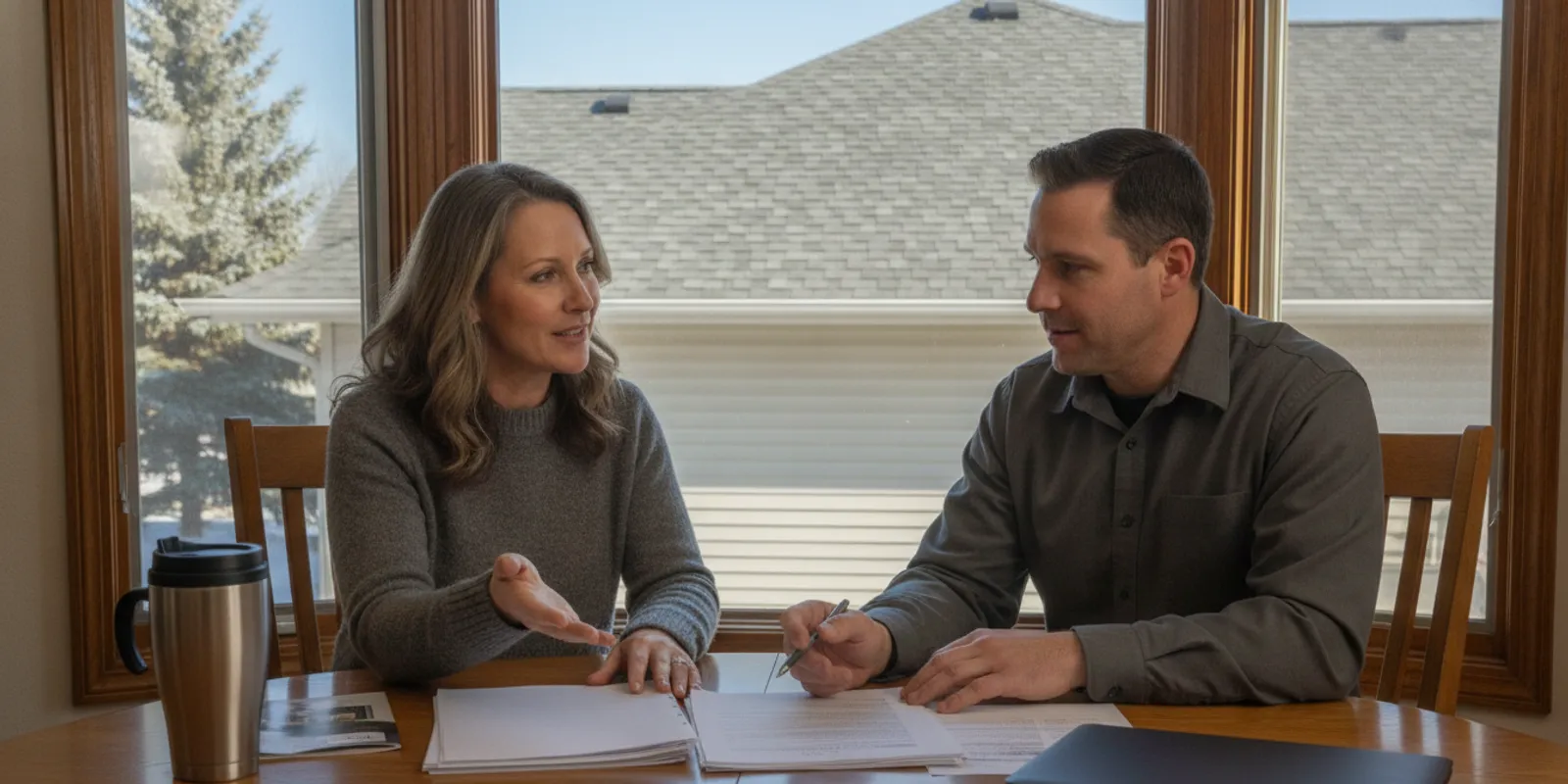
An estimate may describe a defined scope, an allowance for concealed conditions, or a process for approving additional work. Those are not interchangeable. Before signing, ask what the stated amount covers, how the contractor will calculate any added work, and whether you will receive photos or other documentation before authorizing a change. If part of the roof cannot be evaluated until tear-off, ask the contractor to identify that uncertainty in plain language.
It can help to keep a short record as the project moves forward:
Save the original proposal and any revised scope.
Write down the location of each newly identified area and the explanation given.
Keep copies of approvals or change orders and the related project communications.
Ask which installed materials or components are covered by the project paperwork.
This record does not replace the contractor's inspection or your agreement. It helps you follow the decisions made when the expected scope changes and provides a clearer reference for later maintenance questions.
What happens during decking replacement?
When decking replacement is part of a roofing job, the work generally needs to be coordinated with the removal and installation of the roof covering. The precise sequence depends on the project. Ask your contractor to explain the planned approach for your property.
- Confirm the work area and access.
Discuss where crews and materials will be staged, how the property will be protected, and how the work area will be kept orderly.
- Remove the roofing layers needed to expose the deck.
The amount removed depends on the project and the affected area. Tear-off may reveal conditions not visible beforehand.
- Review and document concealed damage.
If additional weak or damaged material is found, request an explanation and documentation before approving a change to the original scope.
- Remove and replace the agreed deck material.
Ask what material and thickness are included in the proposal and how the replacement section will connect to the existing deck.
- Continue with the roofing assembly.
The underlayment and roof covering are installed according to the agreed project scope and the selected roofing system.
- Review the closeout.
Ask what work was completed, whether the final scope differed from the estimate, and what project records you should keep.
For homes with shingles, the shingle roofing page explains that roofing option. If the project involves metal, see the company's metal roofing information. Material choice and deck condition are related project questions, but choosing a new roof covering does not by itself answer whether existing sheathing is suitable.
What can you do while waiting for a roof review?
If you suspect roof damage, focus on observations and safe steps rather than trying to inspect or repair the roof yourself. A short, organized record can help a roofer understand what changed and where to look.
- Note timing and weather.
Write down when you first noticed a leak or stain and whether it followed rain, snowmelt, or a storm. This information can help frame the inspection, although it does not establish the cause.
- Record what you can see safely.
Take photos from the ground or from inside a safe, dry area. Do not climb a ladder, step onto the roof, or enter an attic that is difficult to access or appears unsafe.
- Protect belongings if practical.
If water is entering, move items away from the affected area only when you can do so safely. Avoid touching wet electrical fixtures or standing water near electrical equipment.
- Keep prior paperwork together.
Save prior roofing proposals, repair notes, and any relevant project records. Tell the roofer what work was done, if you know, rather than guessing at hidden conditions.
- Ask what happens next.
Confirm what the roofer can assess at the initial visit and what may remain uncertain until roofing is removed. If the situation appears urgent or unsafe, explain that when you contact the company.
These steps help you communicate the problem; they do not substitute for an inspection. Do not apply a temporary patch or attempt to remove roofing material unless a qualified professional has advised a safe, appropriate course for your specific situation. The goal is to reduce avoidable risk and give the contractor useful context, not to diagnose the roof from inside the house.
What should you ask before approving a roof decking replacement?
A useful proposal makes it easier to understand what is included and how hidden conditions will be handled. Before work begins, ask questions such as:
What specific signs or observations led to the decking recommendation?
Is the damage confirmed now, or might it only be visible after tear-off?
Does the estimate include a defined amount or area of deck replacement, and how is any additional work handled?
How will you show me the damaged area and obtain approval before doing work beyond the agreed scope?
What material and installation details are included in the proposed replacement?
Will the source of any leak or moisture exposure be addressed as part of the project?
Does the proposed work include only decking, or are other roof components included?
What will be documented when the job is complete?
Compare written scopes rather than comparing a single line item without context. One proposal may describe a limited replacement allowance, while another may address a different project scope. Ask each contractor to explain the same conditions, assumptions, and approval steps. If a storm may be involved, keep the roofing assessment separate from any decision about policy coverage. The company's hail damage information and residential roofing service page are additional resources for discussing a home roofing project.
If moisture has affected other parts of the home, such as insulation, ask whether that issue is part of the roof scope or needs separate attention. Minnesota Roofing Company also provides information about attic insulation. Do not assume that work on one building component automatically includes repairs to another.
When you are ready to discuss a roof concern, Minnesota Roofing Company offers a Fast + Free Instant Estimate. Use the instant estimate tool to start the estimate process, or use the contact page to raise questions about your project.
Frequently asked questions
Can roof decking be replaced without replacing the whole roof?
Sometimes a damaged deck section can be replaced as part of a localized repair, depending on the condition of the surrounding roof and how the work can be accessed. In other cases, decking work is performed during a larger roof replacement. A contractor needs to assess the specific roof and explain why the proposed scope is appropriate.
Can a roofer tell if decking needs replacement before removing shingles?
An inspection may identify visible or accessible concerns, but concealed decking cannot always be fully evaluated while the roofing layers remain in place. Ask the roofer to distinguish confirmed findings from conditions that may be discovered after tear-off, and to explain how any added work will be approved.
Does a roof leak always mean the decking is damaged?
No. A leak can have different causes, and the condition of the deck must be assessed rather than assumed. Finding and addressing the water-entry source matters as well as determining whether any material below the roof covering needs repair.
Should I inspect the roof deck myself?
No. Do not climb onto a roof or step on a soft-looking area to test it. A roof can be slippery or unstable, and concealed damage may create a fall hazard. Note what you can see safely from the ground or inside the home and share that information with a qualified roofing professional.
What if decking damage is discovered after the estimate?
Ask the contractor to pause the added work when practical, show and document the condition, explain the proposed repair and its cost, and obtain your approval before expanding the scope. The process should be stated clearly in the project agreement or change-order procedure.
Sound roof decking gives the roofing system a stable base, but replacement should be based on the condition found and the needs of the project. A clear inspection explanation and written scope help you make an informed decision before work begins.
Comments