
Roof Replacement Timeline Minnesota: What to Expect
A roof replacement timeline Minnesota homeowners can use starts before the first shingle is removed. The project usually moves through inspection, written scope, material planning, scheduling, installation, final review, and cleanup. Understanding each stage helps Twin Cities homeowners ask better questions and plan around weather, access, and work at the property.
A roof replacement timeline Minnesota property owners can rely on starts with a careful inspection and written estimate, then continues through preparation, installation, final inspection, and cleanup. The actual schedule varies with weather, roof size and complexity, materials, permits, and concealed conditions discovered after tear-off. So a contractor should confirm timing for the specific project rather than promise a fixed duration.
Use this guide to follow the process from the first inspection through the final walkthrough. It also covers planning decisions that keep the work organized and conditions that may change the schedule.
How Long Does a Roof Replacement Take in Minnesota?
The short answer depends on whether you mean time spent on the roof or the full project from inspection through final walkthrough. For many standard residential roofs, industry sources describe active installation as about one to two days. Larger, steeper, or more complex roofs can take three days or longer. Those are general ranges, not a schedule or guarantee for a particular Minnesota home.
Active installation is only one part of the timeline
The complete roof replacement timeline in Minnesota also includes the work that happens before and after the crew is on the roof. A Twin Cities contractor describes the broader process as often stretching from one to three weeks between the estimate and final walkthrough. While noting that conditions can change the schedule. Weather, material availability, roof size, permits, access, and concealed damage all matter.
In practical terms, the sequence commonly looks like this:
- Inspection and scope:
The roof condition, materials, ventilation, flashing, and potential repairs are evaluated. Minnesota Roofing Company uses the inspection to develop a detailed written scope and estimate.
- Planning and scheduling:
Material selections, delivery, permits where required, crew availability, and weather conditions are coordinated. Specialty products may have longer lead times than standard materials.
- Installation:
The existing roofing is removed as needed, the decking is checked, and the new system is installed according to manufacturer specifications and applicable code. Damaged decking discovered during tear-off may require additional work.
- Inspection and closeout:
Required local inspections, a quality check, cleanup expectations, and the final customer walkthrough complete the project.
Stage | What it covers | Timing variables |
Inspection and scope. | Condition review, measurements, and written estimate. | Access, roof complexity, and concealed conditions. |
Planning and scheduling. | Materials, permits, delivery, and crew coordination. | Material availability, local procedures, and weather. |
Installation and closeout. | Tear-off, roofing work, inspection, cleanup, and walkthrough. | Decking repairs, required approvals, and site conditions. |
Minnesota permitting rules state that permitted work is subject to building-official inspection. The work must remain accessible and exposed until approved. Local procedures determine which inspections are required and how they are requested, so a permit-related step can affect the overall schedule even when the on-roof work is straightforward. Minnesota inspection requirements provide the governing context.
Before comparing dates, homeowners should clarify what the estimate includes, how schedule changes will be communicated, and what happens if tear-off reveals hidden damage. This residential roof replacement resource explains the service context, while these questions to ask a Minnesota roofer can help you evaluate the proposed scope and timeline.
What Happens During the Inspection and Estimate?
The inspection is where a general roofing concern becomes a defined project. A Minnesota Roofing Company inspector reviews the roof's condition, identifies visible problem areas, and clarifies whether replacement, repair, or additional evaluation is appropriate. The goal is not to rush you into a decision. It is to give you enough accurate information to understand the work before scheduling begins.
From roof condition to project scope
The visit typically starts with an assessment of the existing roofing system. That can include the roof covering, flashing, vents, visible drainage components, and areas showing wear or storm damage. Measurements and roof layout help establish the size and configuration of the project. If conditions beneath the roof covering cannot be confirmed until tear-off, that limitation should be explained clearly rather than treated as a surprise.
Findings are then translated into a scope of work. The scope may address removal of existing materials, underlayment, flashing, ventilation, decking concerns, and the roofing material selected for the replacement. Minnesota Roofing Company works with options including asphalt shingles, cedar shake, and metal roofing. The right choice depends on the home's needs, the roof design, and the homeowner's priorities. Manufacturer installation instructions and applicable Minnesota requirements also matter when the final system is planned.
What the written estimate should clarify
A written estimate should make the proposed work understandable. Minnesota Roofing Company bases its estimates on the inspection and provides detailed material and labor breakdowns. Review what is included, what is excluded, how possible concealed damage will be handled, and which decisions could affect scheduling. Specialty materials may require different ordering lead times, while weather, permits, roof complexity, and availability can change the eventual start date. Competitor research sometimes publishes inspection or estimate ranges, but those are variable industry examples, not a promise for every Minnesota home.
Before accepting an estimate, ask who will obtain required permits, how changes will be documented. What warranty coverage applies to materials and workmanship, and how updates will be communicated. For a broader checklist, review these questions to ask a Minnesota roofer. You can also use this guide to understand the factors behind Minnesota roof replacement costs without treating an online figure as a quote. Clear answers at this stage make the rest of the roof replacement timeline easier to plan.
How Do Permits, Materials, and Preparation Affect the Schedule?
Planning is the part of a roof replacement timeline that happens before shingles are delivered or a crew arrives. Permit rules, inspection checkpoints, material selection, and site access can all determine whether the project moves smoothly from an approved scope to installation. Requirements are local, so a rule that applies in Saint Paul may not apply in the same way in every Minnesota city.
- Confirm the local permit requirements.
Ask which permits and inspections apply to the property and who will coordinate them. Minnesota rules state that permitted work is subject to inspection by the building official, and local officials identify the inspections required for the job. Some municipalities require a permit for a reroof, while others may have different procedures. Do not assume a statewide process covers every city or county.
Plan around inspection checkpoints.
Required work must remain accessible and exposed until it is approved, and work cannot proceed beyond an inspection point before the building official gives approval. The Minnesota rule also requires an inspection record card to be posted or otherwise available before permitted work begins and kept available until final approval. These checkpoints can affect the sequence of tear-off, underlayment, flashing, and roof covering installation. Sources:
Minnesota inspection requirements
.
Review the city-specific roofing guidance.
Saint Paul guidance, for example, directs contractors to follow manufacturer installation instructions and calls for contacting the building inspector before reroofing so flashing and underlayment can be checked. That is useful planning guidance for Saint Paul projects, but it should not be presented as a universal rule for every Minnesota location. Review the applicable city or county instructions for the property. See the
for that jurisdiction's details.
- Choose materials early.
Asphalt shingles, cedar shake, and metal roofing have different installation requirements and availability. Specialty products, colors, metal systems, or cedar may require more ordering lead time than commonly stocked materials. Confirm the selected product, color, manufacturer requirements, delivery timing, and any accessories before setting an installation date.
Prepare the property and schedule access.
Clear driveways and areas where materials or equipment may need to be staged. Discuss landscaping, gates, pets, occupants, and any access limitations with the contractor. Property managers should also coordinate tenant notices, deliveries, and business access. For a low-slope or larger commercial property, review the separate guidance on
commercial roof replacement in Minnesota
.
A well-defined scope helps, but it cannot eliminate weather delays or conditions hidden beneath the existing roof. Keep communication open if an inspection, delivery, or preparation step changes. For homeowners, the related guide on questions to ask a Minnesota roofer can help organize those scheduling and scope questions before work begins.
What Happens on Roof Replacement Installation Day?
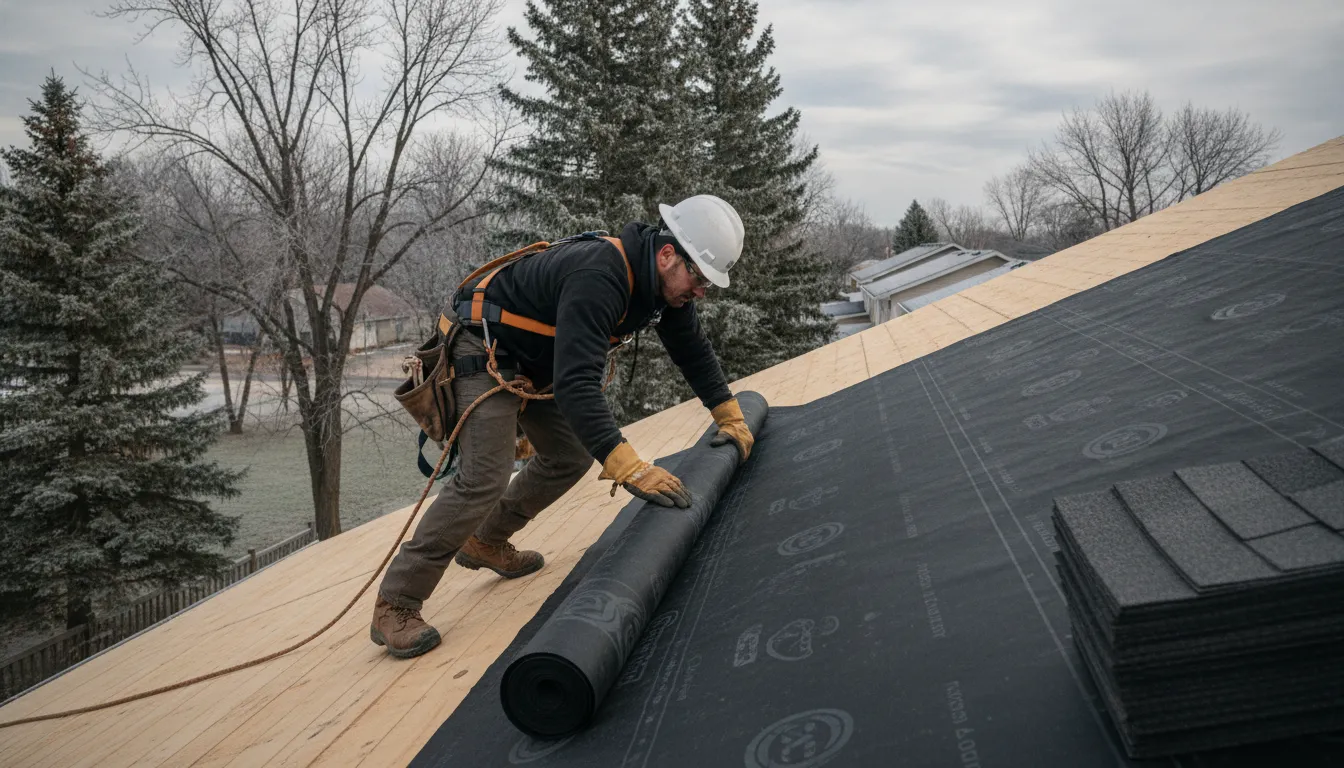
Installation day is the point when preparation becomes visible progress, but the sequence still depends on the roof's condition and the approved scope. A professional crew should keep you informed if conditions found beneath the old roofing require a decision before work continues. That is especially important in Minnesota, where the roof assembly must be installed for the actual structure, materials, and local requirements rather than treated as a one-size-fits-all job.
From tear-off to a finished roof
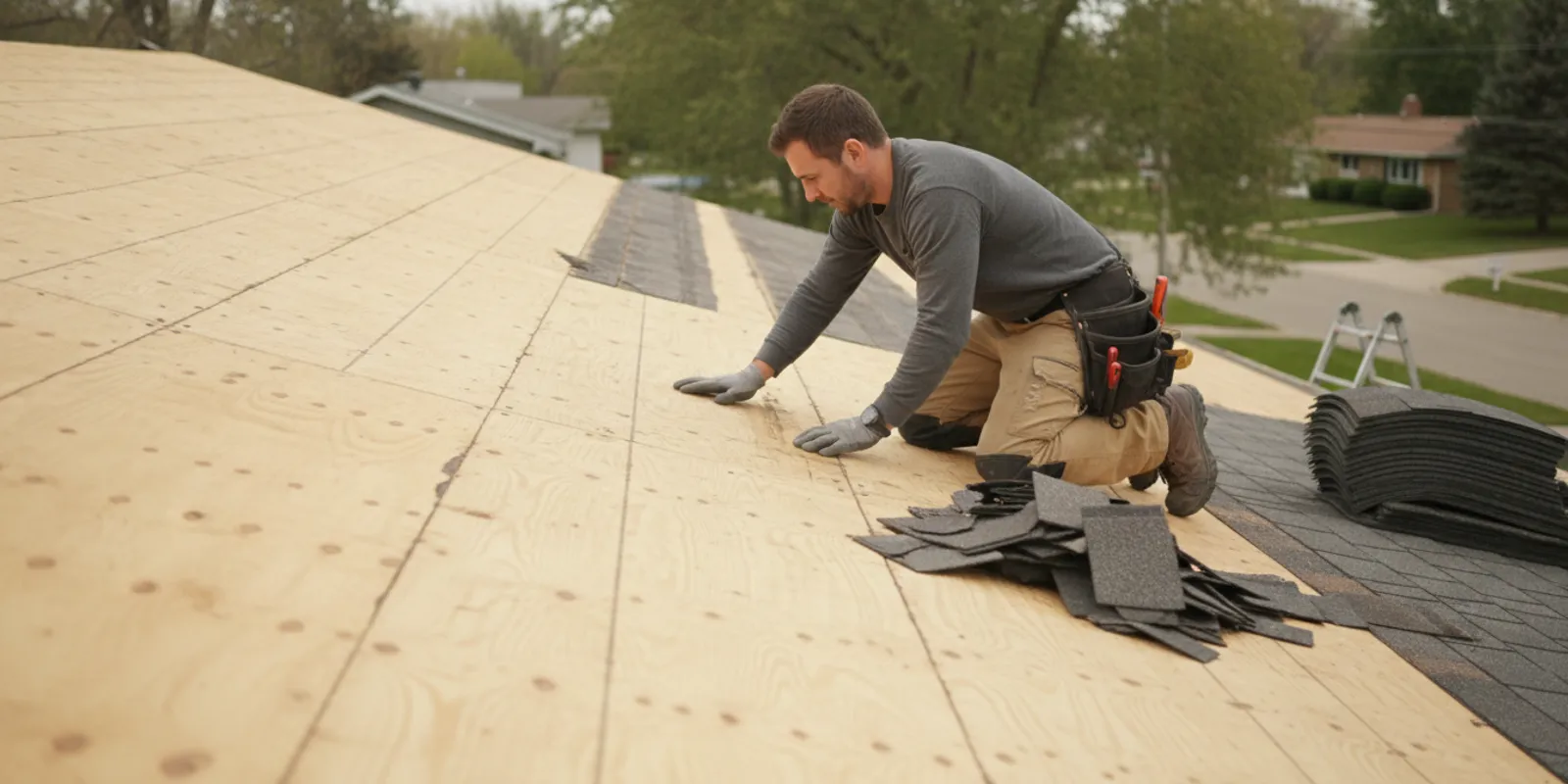
The crew generally begins by protecting work areas and removing the existing roof covering according to the project plan. Once the old material is exposed, the decking can be examined. Decking is the structural surface beneath the roofing layers. If it is damaged or deteriorated, it may need replacement before new roofing is installed. Lakeville's reroofing guidance, for example, states that damaged or deteriorated decking must be replaced. This condition can change the scope, materials, and schedule, so ask how any added work will be documented and approved.
- Decking inspection:
The crew checks the exposed roof surface for soundness and identifies areas that need repair.
- Underlayment and flashing:
These water-management components are installed or repaired as specified for the roof design. In some jurisdictions, an inspector may need to review them before they are covered.
- Roof covering installation:
Shingles, metal, cedar, or another selected material is fastened according to the manufacturer's instructions and applicable code.
- Safety and communication:
The crew manages ladders, materials, tools, and ground-level hazards while communicating material findings or scope changes.
Manufacturer instructions matter because fastening, flashing, ventilation, and weather-detail requirements can vary by product. Saint Paul roofing guidance specifically directs contractors to follow manufacturer installation instructions and to contact the building inspector before starting so flashing and underlayment can be checked when required. Local inspection procedures also determine whether work must remain accessible until approval. You can review Minnesota Roofing Company's residential roof replacement services for more context on the materials and work involved.
For homeowners, the most useful expectation is not a guaranteed number of hours. It is a clear sequence, a defined point of contact, and prompt notice when hidden conditions affect the plan. Confirm in advance how the crew will handle exposed areas if weather changes and how you will approve necessary decking repairs. That communication helps keep the roof replacement timeline in Minnesota understandable while the work is underway.
How Do Cleanup, Final Inspection, and Walkthrough Finish the Project?
The last stage of a roof replacement is more than packing up the tools. It is the point when the roofing work is reviewed, any required local approval is completed, and you have an opportunity to ask questions about the finished project. The exact sequence can vary by city, permit requirements, roof scope, and weather, so your written project scope should remain the reference point.
What is checked before the project is closed?
Minnesota Roofing Company uses a multi-point inspection and a final customer walkthrough as part of its quality-assurance process. The review should cover the visible roofing work, details around penetrations and edges, and any agreed scope items. If a local building official requires a final inspection, permitted work may need to remain accessible until approval. Minnesota rules also state that work cannot proceed beyond a required inspection point before the building official approves it. Review Minnesota inspection requirements for the applicable rule language.
Cleanup deserves the same clarity as the roofing scope. Debris collection, protection of landscaping, handling of leftover materials, and the condition in which surrounding areas are left can differ by project. Do not rely on a general assumption that every cleanup detail is included. Ask what is covered, when cleanup will occur, and how concerns should be reported. A written estimate and a list of questions can make that conversation easier, especially if you are comparing Minnesota roof replacement costs as a planning resource.
What documents and warranties should homeowners keep?
At the walkthrough, request copies of relevant project documentation, including the final scope, approvals or inspection information when applicable, product details, and care or maintenance guidance. Manufacturer warranties generally apply to roofing materials, while workmanship warranties apply to the installation. Those protections are not identical, and coverage can differ by product and project. Ask which warranty applies, who administers it, and what homeowner responsibilities or exclusions are listed.
Before considering the project complete, walk the property with the contractor, note any open questions, and confirm how follow-up items will be handled. This documented handoff helps separate final approval, cleanup expectations, and warranty coverage instead of treating them as one promise.
What Can Delay a Minnesota Roof Replacement Timeline?
A roof replacement schedule can change even after the scope is approved. In Minnesota, wind, rain, and cold snaps may interrupt safe installation or affect conditions needed for shingles to seal properly. These are general scheduling considerations, not a guaranteed weather window or a promise of a particular completion date.
Common schedule variables to discuss early
- Weather:
Wind and rain can make roof work unsafe, while freezing temperatures may affect installation conditions. A contractor may need to pause and reschedule part of the work rather than rush it.
- Roof size and complexity:
A large roof, steep slopes, multiple roof planes, limited access, or detailed flashing can require more labor and coordination than a straightforward roof.
- Material availability:
Standard materials may be easier to schedule than specialty colors, impact-resistant products, metal, or cedar. Confirm that the selected materials are ordered before an installation date is treated as firm.
Permits and inspections:
Requirements vary by city and county. Minnesota rules provide for building-official inspections on permitted work, and work may not proceed beyond a required inspection point until approval is given.
Read the Minnesota inspection requirements
.
- Concealed decking damage:
Tear-off can reveal damaged or deteriorated decking that was not visible during the initial inspection. That decking may need replacement before new roofing is installed, changing the scope and schedule.
Storm-related projects can also require careful documentation and coordination. If that applies to your home, review this guide to documenting storm damage for insurance. It explains the documentation process without promising that a claim will be approved.
Homeowner checklist for a more predictable schedule
Ask which weather conditions would postpone the work and how schedule changes will be communicated.
Confirm the selected material, color, delivery status, and any specialty-product lead time.
Ask whether permits and required inspections are included in the project plan.
Discuss how concealed decking damage will be documented and approved if discovered.
Confirm access requirements, staging areas, cleanup expectations, and the next scheduling milestone in writing.
These questions help turn an estimated roof replacement timeline into a plan that accounts for the actual home, materials, local requirements, and conditions found during the work.
How Should Homeowners Prepare for Replacement Day?
A little preparation can make replacement day safer and less disruptive. Your contractor should confirm the planned arrival, access needs, and communication process ahead of time. But homeowners can also clear the areas around the home and make arrangements for people and pets.
Complete these practical steps before the crew arrives
- Move vehicles.
Park cars, trailers, and other vehicles away from the driveway and work area. This gives the crew room for equipment and helps prevent vehicles from being blocked during the project.
- Protect outdoor items.
Move patio furniture, grills, toys, planters, and decorations away from the house. Secure items that cannot be moved, and close windows and doors before tear-off begins.
- Secure pets and plan for children.
Keep dogs, cats, and other pets indoors or somewhere away from the work zone. Roofing involves active work overhead, falling debris, and open gates, so children should not enter the work area.
- Expect noise and vibration.
Tear-off and installation can be loud. If anyone in the household works from home, sleeps during the day, or is sensitive to noise, arrange an alternate space when possible.
- Make access clear.
Confirm where the crew can park, which gates they may use, and where exterior utilities or fragile landscaping are located. Tell the project contact about access limitations before work begins.
Confirm communication.
Ask who will provide updates, how weather-related changes will be handled, and when you should expect a progress check or final walk-through. The
questions to ask a Minnesota roofer
can help you cover these details before the scheduled date.
Keep the project contact's information available and avoid scheduling important deliveries or outdoor gatherings around the anticipated work window. These steps do not remove every variable from a roof replacement timeline in Minnesota, since weather, roof conditions, materials, and scope can affect scheduling, but they help the installation begin with fewer avoidable interruptions.
Frequently Asked Questions
How long do roofs last in Minnesota?
There is no single lifespan for every Minnesota roof. Material, installation quality, ventilation, snow and ice exposure, storm damage, maintenance, and the roof's condition all matter. Asphalt shingles, cedar shake, and metal roofing can perform differently. An inspection is the best way to determine whether repair, maintenance, or replacement makes sense.
What can change a roof replacement schedule?
Weather, roof size and complexity, material availability, permit requirements, and concealed damage can all affect timing. A tear-off may reveal damaged decking or flashing that needs attention before new roofing is installed. Your written scope should identify the planned work and explain how unexpected conditions will be handled.
Do I need a permit for roof replacement in Minnesota?
Permit requirements depend on the local authority and the scope of work. When a permit applies, required inspections and access for the building official become part of the schedule. Ask which permits and inspections apply to your property before installation begins, especially if you live in a Twin Cities municipality with its own procedures.
What should I confirm about cleanup after the work?
Confirm the cleanup scope, final inspection, and customer walkthrough before the project starts. Ask how the contractor will address roofing debris, inspect the completed work, document any changes, and provide warranty information. A clear closeout conversation helps ensure that the project is complete from both the contractor's and homeowner's perspectives.
Get Started With a Clear Roof Replacement Plan
A professional inspection can clarify your roof's condition, project scope, and next steps before work begins. Share your property details through Minnesota Roofing Company's instant estimate form so the team can discuss a practical path forward for your Minnesota home or building.
Comments