
Roof Replacement Cleanup Expectations Minnesota
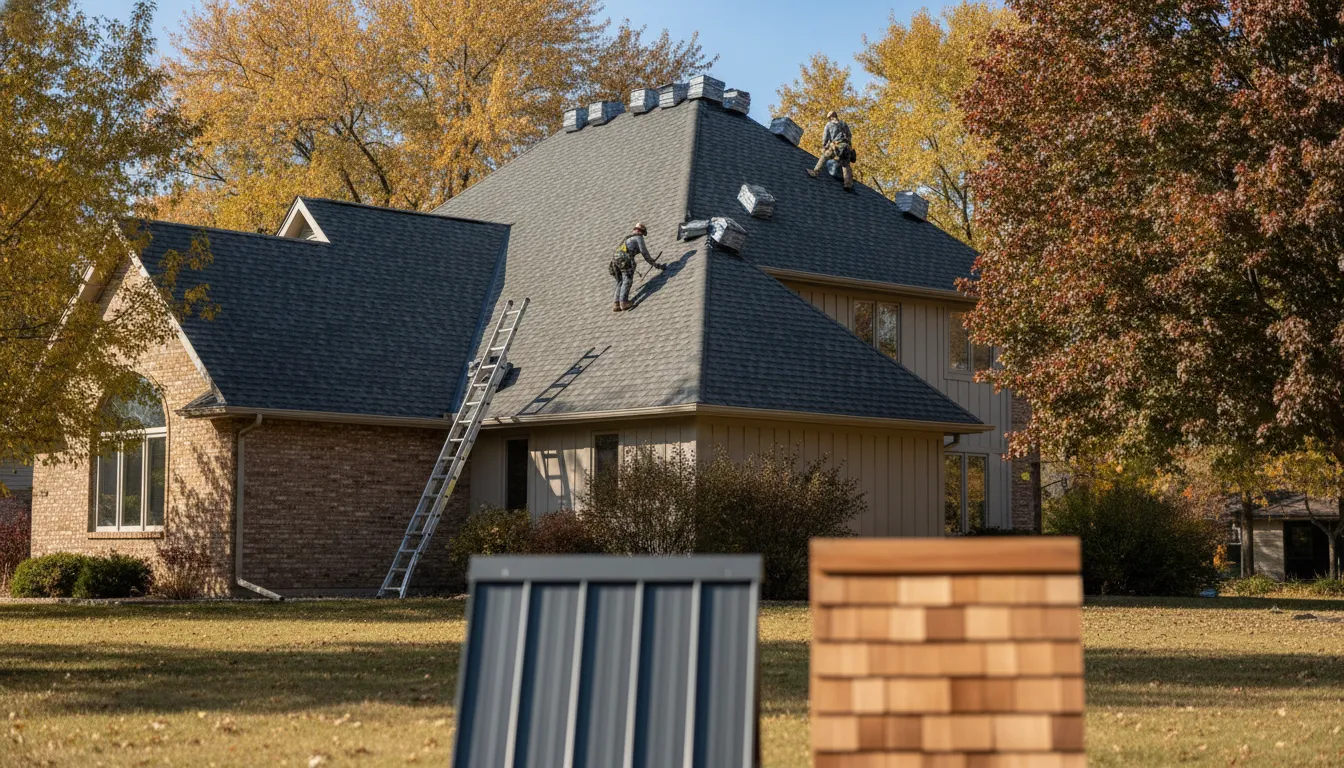
Minnesota homeowners should set clear roof replacement cleanup expectations Minnesota crews can follow. Protect the property before work begins, keep debris managed as the roof comes off, and finish with a careful check of accessible areas around the home. Cleanup is not a cosmetic extra. Shingle scraps, loose packaging, and roofing nails can affect the driveway, lawn, garden beds, and the paths your household uses every day.
On this page
What should you plan before roof work starts?
A productive cleanup starts with a conversation before the first shingle is removed. Every property has different access, landscaping, outdoor features, and places where materials can be staged. Walk the exterior with the project contact and point out features that may need attention. That list may include a narrow side yard, a recently planted bed, a patio set, a play area, a garden, or a driveway that must remain accessible.
Agree on where the crew will enter and exit, where materials will be placed, and where roofing waste will be collected. Ask whether a disposal container or delivery vehicle will need space in the driveway or street. If the crew needs to use a gate, check that it opens freely and mention any access instructions. A clear plan helps the crew avoid unnecessary trips through sensitive areas and gives you a fair basis for checking the property afterward.
Move vehicles, bicycles, grills, planters, and lightweight furniture away from the roof edges and planned work areas when possible. Close windows near the work zone, and bring in items that could be affected by dust or falling scraps. If moving a large object is not practical, show it to the project lead and ask what protection is appropriate. Do not assume a tarp will cover every item or every direction where debris could travel.
Tell the project contact about pets, children, mobility needs, and daily access requirements. Decide in advance which door or walkway should stay open, if any. Keep children and pets indoors or away from the active work zone while work is underway. Roofing involves overhead activity and loose materials; a route that was safe yesterday may be restricted during removal.
It can also help to take a few baseline photographs before work starts. Capture the lawn, driveway, patio, garden edges, and any existing damage or delicate features. These pictures are not a substitute for a conversation, but they make it easier to describe the starting condition accurately if a question comes up later. Ask whom to contact during the project if access, protection, or cleanup needs to change.
Before the crew arrives, review the agreed scope for your roof replacement timeline and ask how debris removal and final site cleanup fit into the closeout. If you are weighing the broader work, the company's roof replacement information is a useful place to start the conversation. Do not treat cleanup as an assumed detail: confirm the plan in plain language.
How can the crew protect the property during removal?
Protection should reflect the home, the roof shape, and the access around it. A crew may use tarps, ground coverings, or designated collection areas near active sections. The exact setup depends on the project. A steep roof, a close property line, a garage addition, or shrubs near the eaves can change where materials land. Limited equipment access can change how the site is organized.
During tear-off, old shingles and other roofing layers are removed in manageable sections. The work area should be organized so that debris is directed toward collection and removed from areas where people need to walk. Ask the project lead how the crew will handle the sides of the home with the most landscaping or the least room for equipment. This is especially useful if one side yard is narrow or if a walkway passes close to a roof edge.
Protection is not only about covering plants. It includes selecting suitable places for material staging, keeping access routes clear where possible, and telling household members where not to walk. Some vibration from roof work can be noticeable indoors. If fragile items sit on shelves or in an attic near the work area, secure them beforehand and mention any special concern to the project contact.
Do not walk beneath roofers or enter an area where material is being removed, even for a quick question. Use the agreed contact method instead. OSHA's workplace safety resources are a general reminder that active work areas can present hazards (Occupational Safety and Health Administration). Keep household members and visitors outside the work zone while the crew is working. The crew's instructions and the barriers or boundaries set for your project should guide where you can safely go.
On the day of work, pay attention to changes in the plan. A delivery, a shift in wind, or a change in the work sequence may require a different staging area. If you see an uncovered item or an access concern, raise it promptly with the project lead rather than moving a covering or approaching the crew yourself. Quick communication is generally easier than trying to reconstruct the situation after the work is complete.
What should roof replacement cleanup expectations Minnesota cover?
Removing the old roof material from the property is only one part of cleanup. The crew should also collect loose roofing debris and packaging from accessible work areas, check the routes used to carry materials, and leave staging areas in orderly condition. A final pass should look beyond the center of the driveway: small scraps can land in lawn edges, planting beds, gravel, and spaces beside fences or foundations.
Area to review | Cleanup check | Why it deserves attention |
Roof edges and eaves | Ask the project contact whether loose material has been cleared from accessible roof-edge areas and work surfaces. | Leftover scraps can shift or fall, and some areas may not be safe for a homeowner to inspect. |
Driveway and walkways | Look for nails, shingle fragments, packaging, and debris along commonly used paths. | Household members, visitors, and vehicles use these areas repeatedly. |
Lawn and planting beds | Check visible ground around the home, including grass edges, mulch, shrubs, and garden borders. | Small dark scraps or nails can be hard to notice against soil or greenery. |
Patio and outdoor living areas | Inspect seating areas, grills, decks, and the space around outdoor equipment. | These places may be outside the main debris collection route but are still part of the property. |
Staging and access locations | Check where materials, tools, or waste containers were placed and where workers walked. | Packaging or small fragments may remain beyond the immediate roof perimeter. |
Gutters and drainage paths | Ask whether the project scope includes checking or clearing debris in gutters and nearby drainage areas. | Roofing work and gutter work are not automatically the same scope, so responsibilities should be clear. |
Roofing nails deserve particular attention because they are small and can be difficult to spot. A magnetic roller can collect ferrous nails from suitable surfaces, but it cannot certify that every fastener has been found. It may not work equally well over all terrain or surfaces, and it does not replace a visual inspection. A careful cleanup approach uses the tools suited to the property and includes a human check of accessible areas.
It helps to distinguish project debris from ordinary yard material. Leaves, twigs, and old landscaping waste may already be present before the roof work begins, while packaging, shingle fragments, and roofing fasteners are the items to flag as related to the project. The before-work photographs and walk-through notes can help clarify what was already on the property. If you are unsure whether a particular piece came from the roof, point it out and ask the project contact to review it rather than making assumptions.
Also think about where small material could collect instead of checking only open ground. Shingle pieces can be easy to miss beside a foundation, near the base of a downspout, under the edge of a shrub, or where lawn meets a paved walk. Do not reach into a tight or concealed space to retrieve anything. Note the location and let the project contact decide how it should be checked or removed safely. The purpose of a homeowner walkthrough is to identify concerns, not to take on work in a hazardous area.
Ask what the crew's final cleanup pass includes and whether it covers both the main work zone and the routes used for access. Ask how leftover materials will be handled and whether the disposal container will be removed when the work is finished. These are practical closeout questions, not demands for a spotless yard down to the last leaf. The goal is to collect project debris, identify concerns, and leave the property in an orderly state.
Some tasks may be separate from roof replacement cleanup. For example, gutter replacement, gutter cleaning, or siding work may not be included unless the project scope says so. If your plans include those components, review the company's information about gutter services and siding services, and confirm which work is part of this project. A clear scope prevents confusion about who is expected to address a separate item.
How do you complete a safe final walkthrough?
Wait until the project contact says the active work area is safe before walking around the house. Do not climb onto the roof, step into a roped-off zone, or reach under equipment to inspect. A ground-level review is enough to identify many visible concerns. If something on the roof needs checking, ask the project contact to explain how it will be reviewed; climbing up yourself is not a safe way to verify the work.
Make the walkthrough methodical instead of rushing around the nearest door. Start with the driveway and the routes your household uses most. Continue around the accessible perimeter, then check the patio, lawn, garden edges, and places where the crew staged materials. Look for packaging, broken shingle pieces, exposed nails, or other material that clearly appears related to the work. Be careful around shrubs and do not put your hands into areas you cannot see.
Use a short closeout routine:
Ask the project lead to confirm that active work is finished and that the designated walk areas are safe to enter.
Check the driveway, front walk, side paths, and other daily routes before resuming normal use.
Walk the accessible perimeter and look at lawn edges, planting beds, patios, and staging areas.
Check the agreed areas for coverings, tools, packaging, and surplus materials that should have been removed or accounted for.
Photograph and note the location of any concern, without touching a sharp object or entering an unsafe area.
Share the concern with the project contact and ask what follow-up is appropriate before assuming the matter is closed.
Consider the difference between a visible cleanup issue and a question about the roof installation. Loose packaging on the ground is easy to describe and photograph. A roof detail may not be visible from the ground, and a photo from a ladder or roof edge creates an unnecessary risk. Ask the project contact to explain the closeout process and how you can raise questions about the finished work.
For a larger property or a home with several entrances, divide the walkthrough into practical zones. For example, check the front approach and driveway first, then move to each accessible side of the house, and finish with the patio or other outdoor living area. This simple route makes it less likely that you will forget a narrow passage or a staging area. If another household member is helping, agree on which areas each person will review so that the same obvious spot is not checked twice while another is missed.
Keep the review focused on visible conditions. Look for material that is out of place, but do not pull on a covering, reach into a gutter, lift equipment, or step over a barrier to get a closer view. If something is hidden by a tarp, parked vehicle, or remaining material, mention that to the project lead and ask when it can be checked. A clear note such as "small scrap beside the gate on the east side" is more actionable than a general report that the yard needs another look.
If your project included a particular roofing material, use the relevant information as a reference for the conversation, not as a reason to inspect the roof yourself. The company describes options such as shingle roofing and metal roofing. Ask which materials and work were included in your agreement and who can answer questions about them.
How can Minnesota weather affect cleanup?
Minnesota weather can change how a roofing project is sequenced and when the crew can safely complete outdoor work. Wind can move lightweight packaging or scraps, while rain or snow can make ground surfaces slippery and affect when a final walkthrough is practical. Conditions may also require the crew to secure materials or adjust the work plan. Ask the project lead how weather-related changes will be communicated and when it makes sense to review the property.
Do not assume that a cleanup concern can be evaluated safely while it is raining, icy, or windy. Wait until the crew has finished and conditions allow a careful ground-level check. If weather interrupts work, ask which parts of the site remain active, whether any areas should stay clear, and when cleanup and closeout will resume. Avoid moving materials or coverings yourself, particularly if the roof or work zone may still be active.
Debris may also be less visible after dark, under snow, or in wet grass. If visibility is poor, make a note to complete the review later rather than searching with a flashlight near equipment or stepping into a muddy or icy area. Keep pets and children away from places that have not yet been checked. A delayed but safe inspection is more useful than a hurried one that creates another hazard.
What should you do if you find debris afterward?
Finding a nail or small scrap after the crew has left does not tell you by itself how or when it arrived. Treat it as a practical issue to report. Keep people and pets clear of the spot, and do not kick, pick up, or drive over an object that could be sharp. Take a photo from a safe position if it helps show the item and its location, then contact the project lead promptly and ask what follow-up is appropriate.
Be specific in your message. Say where you found the item, when you noticed it, and whether the location is a walkway, play area, driveway, or garden. If you found several pieces in one area, mention that too. Clear details help the project contact understand what you are asking them to review. If you also noticed a concern with a plant, fence, outdoor feature, or surface, document it separately and describe what you observed without guessing at the cause.
Keep the project paperwork and contact information available until you are comfortable that open questions have been addressed. It can help to refer to the agreed scope and the notes from your pre-work walk-through. If something seems to require a different service or a separate repair, explain the issue and ask whether it falls within the completed project or needs a separate discussion. The company's roof repair information can help you frame a conversation about a roof concern, while questions about storm-related damage can be directed to its storm damage roofing information.
If the concern is a possible leak or a roof detail, note what you see from inside or from a safe ground-level position and when it occurs. Do not climb up to look for the source. Tell the project contact what happened and ask what next step is appropriate. If you need to discuss a new project or the scope of work, Minnesota Roofing Company's Fast + Free Instant Estimate is the direct way to start.
A simple closeout record can prevent details from getting lost: keep the date of your walkthrough, a short list of any findings, the photos you took, and the response you received. You do not need a complicated form. One note on your phone can capture the facts while they are fresh. If the crew returns to address a concern, repeat the ground-level check of the relevant accessible area afterward and confirm that the agreed follow-up is complete.
Frequently asked questions
Should I expect to find a few nails after roof replacement?
A cleanup pass is intended to collect roofing debris, including nails, but a ground sweep cannot promise that every small fastener has been found. Check accessible areas carefully after the work zone is released. If you find a nail later, keep people and pets away and contact the project lead with its location.
Should I move my car before the roofers arrive?
When possible, move vehicles away from the planned work, delivery, and material-staging areas. This helps keep the vehicle clear of overhead activity and leaves room for access. Ask the project contact where the crew expects materials or equipment to be placed, and confirm where you can park during the work.
Does roof replacement cleanup include gutters and landscaping?
Cleanup of roofing debris and separate gutter or landscaping work are not necessarily the same scope. Ask whether gutters will be checked or cleared and what protection is planned for landscaping. If you notice damage or leftover debris, document its location and contact the project lead promptly.
Can I inspect the roof after the crew finishes?
Do not climb onto the roof to check the work. Ask the project contact to explain the closeout steps and address any questions about areas that cannot be seen from the ground. You can inspect accessible ground-level areas once the crew says they are safe.
What if weather delays the final cleanup check?
Ask the project contact which areas remain active and when it will be safe and practical to complete the walkthrough. Keep household members and pets away from unchecked work areas in the meantime. Do not move coverings or materials yourself.
A clear plan, a careful ground-level walkthrough, and prompt communication help bring a roof replacement to an orderly close. If something is unclear, raise the question with the project contact and keep the agreed scope and follow-up notes together.


Comments