
Wind Damage Roof Claim Minnesota: A Homeowner's Guide
Updated: Sep 15
A strong Minnesota storm can damage shingles even when the roof looks intact from the ground. Acting quickly helps protect your home and creates a clearer record for your insurer.
Get a free wind damage roof inspection from Minnesota Roofing Company. Request your instant estimate online.
A wind damage roof claim minnesota usually depends on covered storm damage, timely notice, clear photos or video, and an inspection that separates wind-related damage from age or wear. Minnesota homeowners should report the loss promptly, document conditions before cleanup, make only temporary repairs, and keep receipts and claim communications. The Minnesota Department of Commerce recommends documenting damage before cleanup and preserving damaged property until an adjuster approves disposal: review the state claim guidance.
Start with Minnesota Roofing Company's guide to storm damage and roof insurance claims, then look closely at the roof itself. The type, location, and pattern of visible damage can help determine whether a recent wind event may support further evaluation.
What Counts as Wind Damage on a Minnesota Roof?
Wind damage is not limited to shingles scattered across a yard. Strong, sustained wind can break the seal between shingles, lift edges, crease tabs, or drive debris into the roof surface. The National Weather Service reports that sustained winds of 45 to 55 mph can cause significant damage to residential roofing systems. It classifies thunderstorm wind gusts of 58 mph or higher as severe. Review the National Weather Service wind guidance when matching storm conditions to the timing of visible damage.
On standard Minnesota HO-3 and HO-5 homeowners policies, wind is generally a named peril. Coverage still depends on the specific policy, exclusions, deductibles, maintenance history, and the cause of loss. A roof inspection can help separate storm-created damage from ordinary aging, but only the insurer determines coverage under the policy.
Common signs of wind damage
Look for these conditions from the ground first. Do not climb onto a wet, steep, or visibly damaged roof after a storm.
- Missing shingles:
Gaps, exposed underlayment, or shingles found in the yard can indicate that wind tore materials from the roof.
- Lifted or creased shingles:
Raised edges, folded tabs, and sharp creases can show that wind broke the shingle seal or stressed the material.
- Granule loss:
Bare patches on shingles or unusual granules collected in gutters may signal surface damage, especially when concentrated in a storm-facing area.
- Debris impact:
Broken, punctured, or cracked shingles, vents, flashing, siding, or gutters may result from branches and other windblown objects.
Wind damage can be subtle. A shingle may remain in place while its adhesive bond has failed, leaving the roof vulnerable to later rain and additional wind. Photograph the roof, exterior, yard, and any fallen branches before cleanup. Minnesota Roofing Company can assess the visible condition and help document the loss without promising claim approval or a particular settlement.
For a broader overview of inspection, documentation, and policy steps, use this Minnesota storm damage guide. If you suspect storm damage, schedule an inspection promptly and protect exposed areas with a temporary repair when needed.
How Do Insurance Companies Evaluate Wind Damage Roof Claims in Minnesota?
An insurance adjuster is looking for evidence that connects the reported loss to a specific, covered event. The evaluation usually considers the condition of the roof before the storm, the type and location of damage, the storm timeline, and the terms of the policy.
The deductible is separate from the repair estimate
Many Minnesota policies apply a separate wind and hail deductible rather than the standard all-peril deductible. That amount is typically 1% to 5% of the dwelling coverage limit, according to the Minnesota storm-claim guidance reviewed for this article. For example, a 2% deductible on $400,000 of dwelling coverage would be $8,000. Check your declarations page so you understand your potential responsibility before approving work.
A deductible is not a discount that a contractor can simply erase. Minnesota Roofing Company recommends asking your insurer how the deductible applies and getting the answer in writing.
What the adjuster compares during the inspection
Adjusters distinguish sudden storm damage from conditions that developed gradually. They may look for lifted, creased, or missing shingles; exposed fastening areas; impact from wind-driven debris; and damage patterns on other roof slopes or exterior surfaces. They also consider whether the observed condition is consistent with the reported storm or with long-term wear, weathering, poor maintenance, or an older roofing system.
Age matters because some carriers may settle roofing systems that are 20 years old or more using Actual Cash Value. ACV accounts for depreciation, so the payment may reflect the roof's age rather than the full cost of a new roof. Your policy language controls, and coverage can vary by carrier and endorsement. Do not assume an inspection guarantees approval or a particular settlement.
Why the roofer should meet the adjuster
Minnesota homeowners should wait for the insurer's instructions before permanent repairs. The Minnesota Department of Commerce advises waiting for the company's adjuster before calling someone to repair or replace the loss. Temporary measures, such as a tarp, may be appropriate to prevent additional damage, but document the condition first and keep receipts. Source: Minnesota Department of Commerce residential claim guidance.
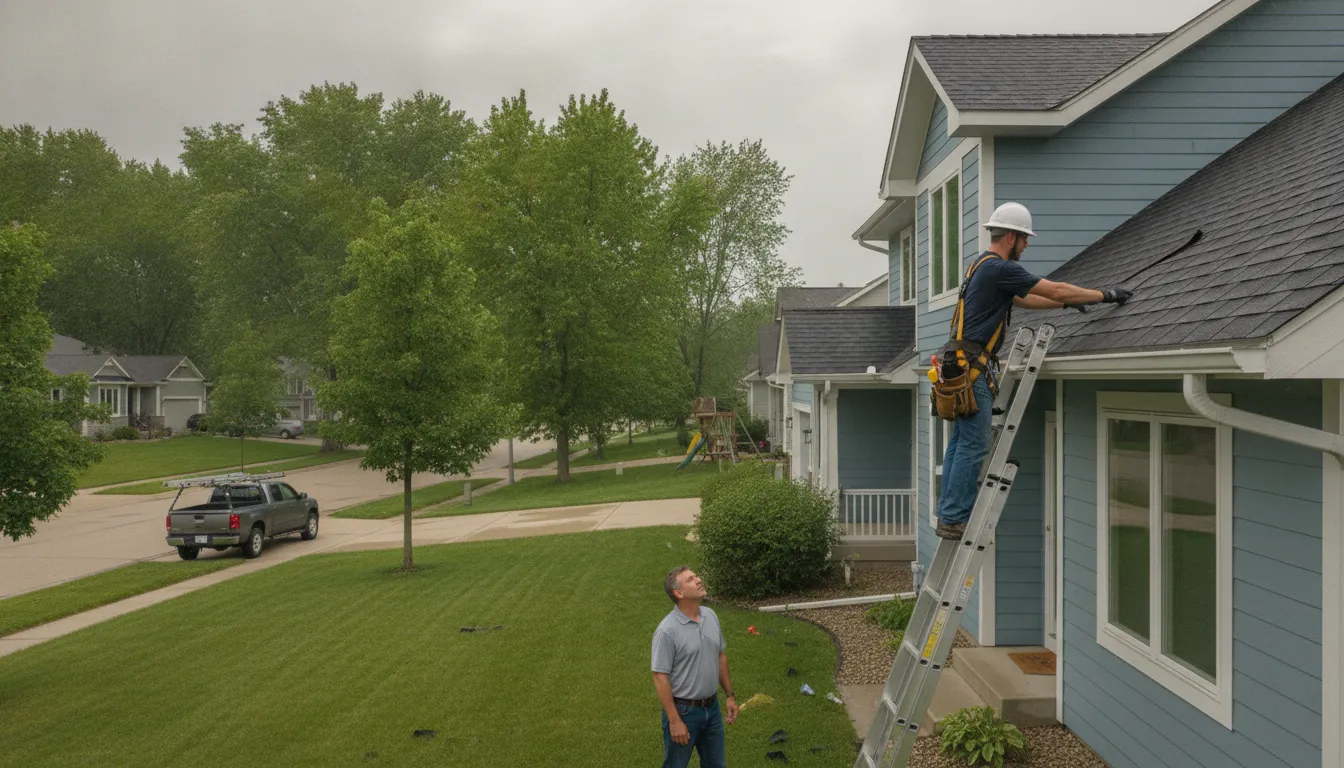
Ask a licensed roofer to attend the inspection when possible. The roofer can point out storm-related details, explain the repair scope, and identify items the adjuster may need to examine more closely. For a practical checklist, see what insurance adjusters look for in roof damage. A second professional perspective does not replace the policy review, but it can help ensure the inspection is based on the roof's full condition.
How to Document Wind Damage for Your Insurance Claim
Good documentation gives your insurer a clear record of what happened, when it happened, and what you did to protect the property. Follow these steps before permanent repairs begin.
Photograph and record the roof before cleanup
Take timestamped photos and video as soon as it is safe to do so. Capture wide views of every roof plane, then take close-ups of lifted or creased shingles, missing material, exposed underlayment, granule loss, bent flashing, and visible debris. Photograph related damage to siding, gutters, vents, windows, and interior ceilings. Do not climb onto a wet or unstable roof. From the ground, use a zoom lens or ask a professional to document areas that cannot be reached safely. The Minnesota Department of Commerce recommends photographing or recording all storm damage before cleanup begins. Review the state's residential claim guidance.
Record the storm date and damage timeline
Write down when the storm occurred, when you first noticed damage, and when you took each set of photos. Aim to document the condition within 72 hours. Include weather observations, fallen branches, water entry, and any changes you see after the initial inspection. A dated timeline helps separate storm-related damage from later deterioration and gives the adjuster useful context.
Arrange a professional inspection
Ask a reputable roofing professional to inspect the roof and prepare a written inspection report. The report should identify the affected areas, describe visible wind damage, include supporting photos, and distinguish observed storm damage from conditions that need further evaluation. A professional inspection can also identify less obvious issues, such as creased shingles or displaced components, without requiring you to walk the roof. This evidence can support a supplemental roof insurance claim request when the initial scope does not reflect documented damage.
Prevent additional damage with temporary repairs
Make only temporary, inexpensive repairs needed to protect the home, such as placing a tarp over an exposed roof area. Keep receipts and photograph the temporary work before and after it is completed. Minnesota guidance notes that homeowners should prevent further damage because additional damage may not be covered if reasonable temporary measures were not taken. Do not begin permanent repairs until you understand your insurer's inspection requirements.
Keep your claim file organized
Create one folder for original photos, videos, the inspection report, invoices, receipts, emails, claim numbers, and adjuster correspondence. Maintain a contact log with the date, representative's name, phone number, and a brief summary of every conversation. Keep damaged shingles, siding, or other property until the adjuster has inspected it and approves disposal. Organized records make it easier to answer questions throughout the claim review.
Partial vs. Total Loss: How Wind Damage Claims Are Settled
A wind damage roof claim in Minnesota may be settled as either a partial loss or a total loss. The classification depends on the documented scope of covered damage, the roof's condition, and the policy's settlement terms. It does not automatically mean the insurer will replace every roof surface after a storm.
Settlement method | How the payment is calculated | What to expect |
Replacement Cost Value (RCV) | Uses today's reasonable cost to replace covered damage with comparable materials, subject to the policy limit and deductible. | The initial payment may hold back depreciation. The recoverable depreciation is generally released after the covered work is completed and documented. |
Actual Cash Value (ACV) | Starts with replacement cost, then subtracts depreciation based largely on the roof's age and condition. | The settlement reflects the roof's estimated current value. A later completion payment may not be available under an ACV provision. |
When is wind damage a total roof loss?
A total loss generally means covered damage is extensive enough that repairing isolated areas is not a reasonable way to restore the roof. The adjuster may consider how widespread the damage is, whether matching materials are available, and whether removing damaged sections would compromise the remaining system. A roof can have significant wind damage without qualifying for full replacement, so the inspection report and policy language matter.
Insurance companies often require an adjuster's visual inspection before permanent repairs proceed. Keep the damaged materials available until the adjuster approves disposal, and coordinate temporary protection to prevent additional damage. Minnesota homeowners can review the step-by-step guide to filing a roof insurance claim in Minnesota for the broader process.
Why supplements may change the approved scope
The first estimate may be based on visible conditions before tear-off. Once work begins, hidden damage or required installation details can become clear. Common scope gaps include ice and water shield at eaves, step flashing, or other components needed to complete the repair properly. A contractor can document those findings with photographs, measurements, and a revised estimate for the insurer's review.
Supplements are not a guarantee of additional coverage. They are a request to reconsider documented work that was not included in the original scope. For context, see our filing a supplemental roof insurance claim guide.
Choosing a Licensed Roofer for Wind Damage Repairs in the Twin Cities
After a storm, the contractor you choose can affect the quality of the repair, the clarity of your documentation, and your experience with the insurer. Start with a Minnesota roofing company that is licensed, insured, established locally, and willing to explain each step before work begins.
You choose the contractor, not the insurance company
Minnesota homeowners generally have the right to choose who performs repairs, and your insurance company may recommend a vendor without compelling you to use it. In practice, you can compare licensed local roofers and select the company you trust. A reputable roofer should respect that choice and coordinate with the adjuster without pretending to control the claim outcome.
Ask whether the contractor will inspect the roof, document visible wind damage, explain the proposed scope, and communicate with your carrier when appropriate. These services can help facilitate a well-supported claim, but no contractor can guarantee coverage or approval. For more context on coverage questions, read does homeowners insurance cover roof replacement.
Verify licensing, insurance, and local accountability
Before signing, verify the contractor's Minnesota license through the state's licensing resources. Request proof of current general liability and workers' compensation insurance. Confirm that the business has a physical Minnesota presence, a track record in the Twin Cities, and references for completed storm restoration projects.
Local accountability matters after the crew leaves. An out-of-state storm chaser may disappear when you need warranty support, a supplement review, or help addressing a workmanship concern. Minnesota Roofing Company is a family-owned roofer serving the Twin Cities for more than 30 years. The company also holds manufacturer certifications, including Tamko Diamond Level, GAF Certified Installer, and Owens Corning Preferred Contractor.
Know the protection available if a contractor defrauds you
Minnesota's Contractor Recovery Fund, established under Minn. Stat. section 326B.89, subdivision 5, provides limited protection to eligible homeowners who were defrauded by a contractor licensed under Minnesota law. Where a claim is approved, the fund may pay compensation of up to $100,000 per licensee, subject to statutory requirements and available funds. It is not a substitute for checking credentials before hiring.
Be cautious of anyone who pressures you to sign immediately, asks for unclear cash payments, or offers to waive your insurance deductible. Waiving a deductible is illegal in Minnesota. Get the agreement, scope, warranty details, and payment schedule in writing. If your insurer denies or limits the claim, review what happens if your roof insurance claim is denied before accepting a rushed decision.
Document your wind damage with help from Minnesota Roofing Company. Request your instant estimate online.
Frequently Asked Questions
How do I file a wind damage roof claim in Minnesota?
Photograph and record the damage before cleanup, then report the loss promptly to your insurance agent or carrier. Ask about the claim number, deductible, inspection process, and any deadline for submitting estimates. For the full sequence, follow our filing process for Minnesota roof claims. The Minnesota Department of Commerce recommends reporting a residential loss as the first step in the claims process: Minnesota residential claim guidance.
What documentation is needed for a roof insurance claim?
Keep dated photos and videos of missing, lifted, creased, or damaged shingles, roof edges, exterior walls, interior leaks, and storm debris. Save repair estimates, receipts, inspection notes, and a written log of insurer contacts. Do not discard damaged materials before the adjuster approves disposal. The Minnesota Department of Commerce specifically recommends documenting damage before cleanup and preserving damaged property for inspection: official documentation guidance.
Can I tarp my roof before the insurance adjuster arrives?
Yes, make temporary, inexpensive repairs that prevent additional damage, such as placing a tarp over an exposed area. Photograph the condition first, keep receipts, and avoid permanent repairs or replacing the roof until your insurer explains its inspection requirements. Temporary repairs may help prevent additional damage that your policy might not cover, according to the Minnesota Department of Commerce.
Can my insurance company choose my Minnesota roofing contractor?
No. Minnesota law protects a homeowner's right to choose a contractor, so you can compare licensed local roofers and select the company you trust. Be cautious of anyone offering to waive your deductible, because Minnesota law prohibits contractors from waiving insurance deductibles under Minn. Stat. section 325E.66.
Ready to Get Started With Your Roof Claim?
A professional roof inspection can help identify storm-related damage and organize the documentation you may need for your insurer. Minnesota Roofing Company can assess your roof and explain practical next steps without promising claim approval or coverage.
Schedule your free roof inspection and claim documentation help. Get your instant estimate online.
Comments