
Should You Get a Roof Inspection Before Buying a Minnesota Home?
If you are buying a house, a roof inspection before buying a home in Minnesota can help you understand a major part of the property before you commit. A roof-focused review is especially useful when the general home inspection notes a possible concern, the roof looks worn, or you want clearer information about likely repairs. It is not a guarantee that every hidden condition will be found, and it does not replace a full home inspection.
Short answer: Consider a roofer's review when the general inspection flags roof concerns, the roof's age or condition is unclear, or you need more detail about visible roofing materials and components before your inspection contingency or other purchase deadlines pass. Ask what the review covers, request written findings, and coordinate access with the seller. A roofing contractor's estimate can help you understand a possible project, but it is not the same as a comprehensive home inspection, a repair warranty, or an insurance determination.
When should a buyer arrange a roof-focused review?
You do not necessarily need a separate roofing visit for every purchase. Start with the general home inspection and the information already available from the seller. A targeted review can be helpful when you need a closer look at the roof system or a clearer explanation of an observation that may affect your plans.
- The inspection report calls out a roof concern.
Notes about missing or damaged shingles, exposed fasteners, damaged flashing, a suspected leak, or soft areas deserve follow-up. Ask the inspector what they observed and whether a roofing specialist's assessment would answer an open question.
- The roof's age or history is uncertain.
Ask the seller for installation records, permits if available, repair invoices, and any manufacturer or workmanship paperwork. If records are missing, an on-site review may help describe visible condition, though it may not establish the installation date.
- You can see signs of wear from the ground.
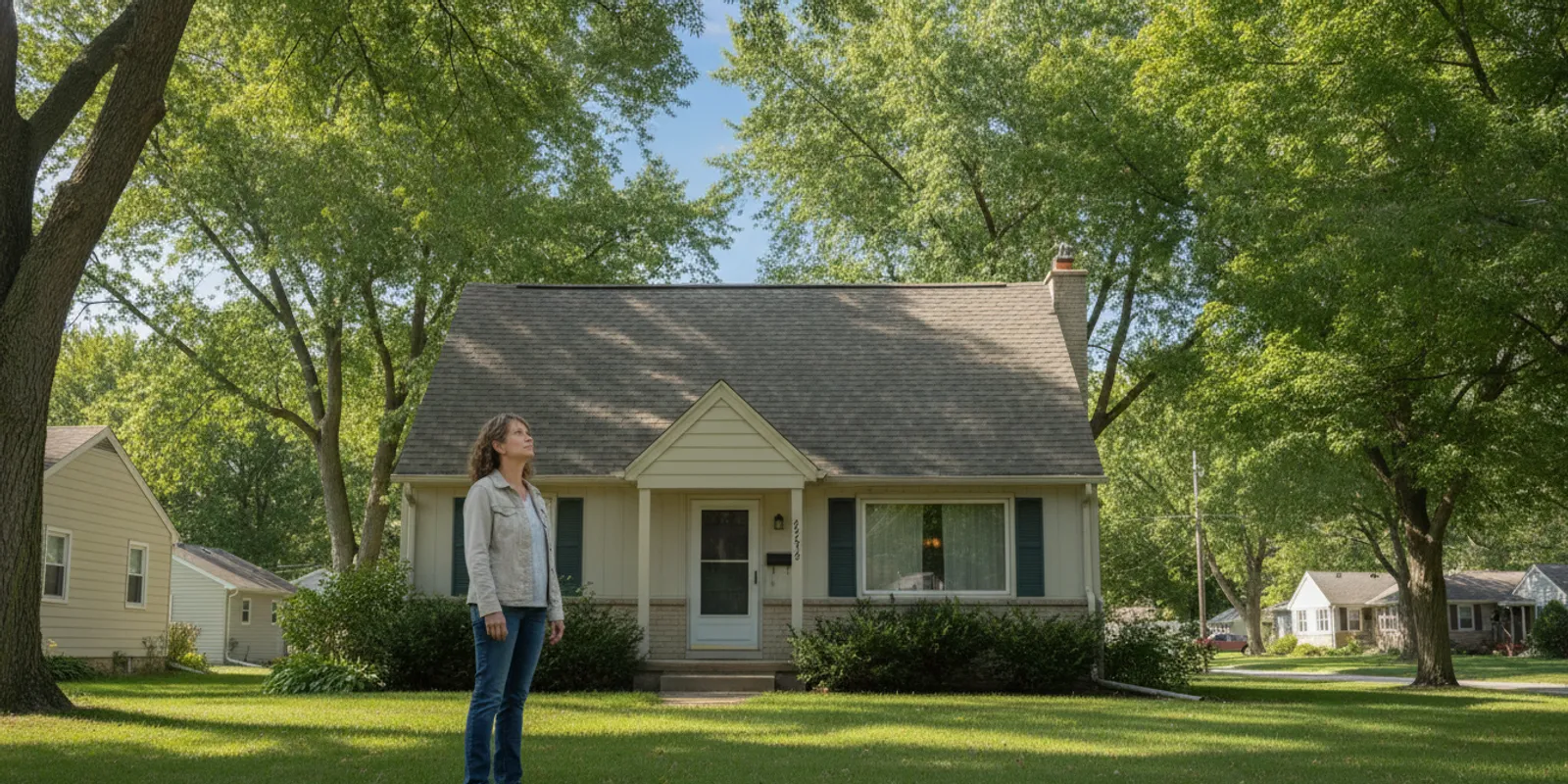
Uneven roof lines, visibly missing shingles, deteriorated edges, or damaged gutters may justify further questions. Do not climb onto the roof yourself to investigate.
- There are signs of water inside.
Stains on ceilings, damp attic materials, peeling paint, or a musty smell can have more than one cause. A roof professional can examine roof-related possibilities, while the general inspector or an appropriate specialist may need to investigate other sources.
- The home has a complex or less familiar roof system.
A steep roof, multiple valleys, roof additions, or a low-slope section may make it useful to ask someone experienced with that system to explain what is visible.
- A recent storm is part of the property's history.
Ask for records and clarify whether repairs were made. A storm-related mark is not, by itself, proof that a roof needs replacement or that an insurer will cover work.
Timing matters. Purchase agreements and inspection contingencies have deadlines. If you want a roofing review, ask your real estate professional and the seller about access promptly, and confirm the schedule with the contractor. Do not assume a seller will authorize roof access or that a contractor can complete a review on short notice. Keep any negotiation or contract decisions within the guidance of your real estate and legal professionals.
For a first look at common signs, see Minnesota Roofing Company's guides to identifying possible hail damage and storm damage roofing. Those resources can help you frame questions, but a web article cannot determine the condition of a particular house.
It can help to separate a decision to investigate from a decision about the property. For example, a few visibly worn shingles may lead you to ask for documentation or a targeted repair opinion, not automatically to assume the whole roof needs replacement. On the other hand, a ceiling stain combined with an inspection note about flashing may be a reason to seek clarification quickly. Write down the specific unknowns before arranging a visit: Is water entering now? Is a component damaged? Is the roof surface accessible? Would a repair estimate answer the question, or do you need a broader condition report? A focused question makes the visit easier to scope and the findings easier to use.
How is a roofer's review different from a home inspection?
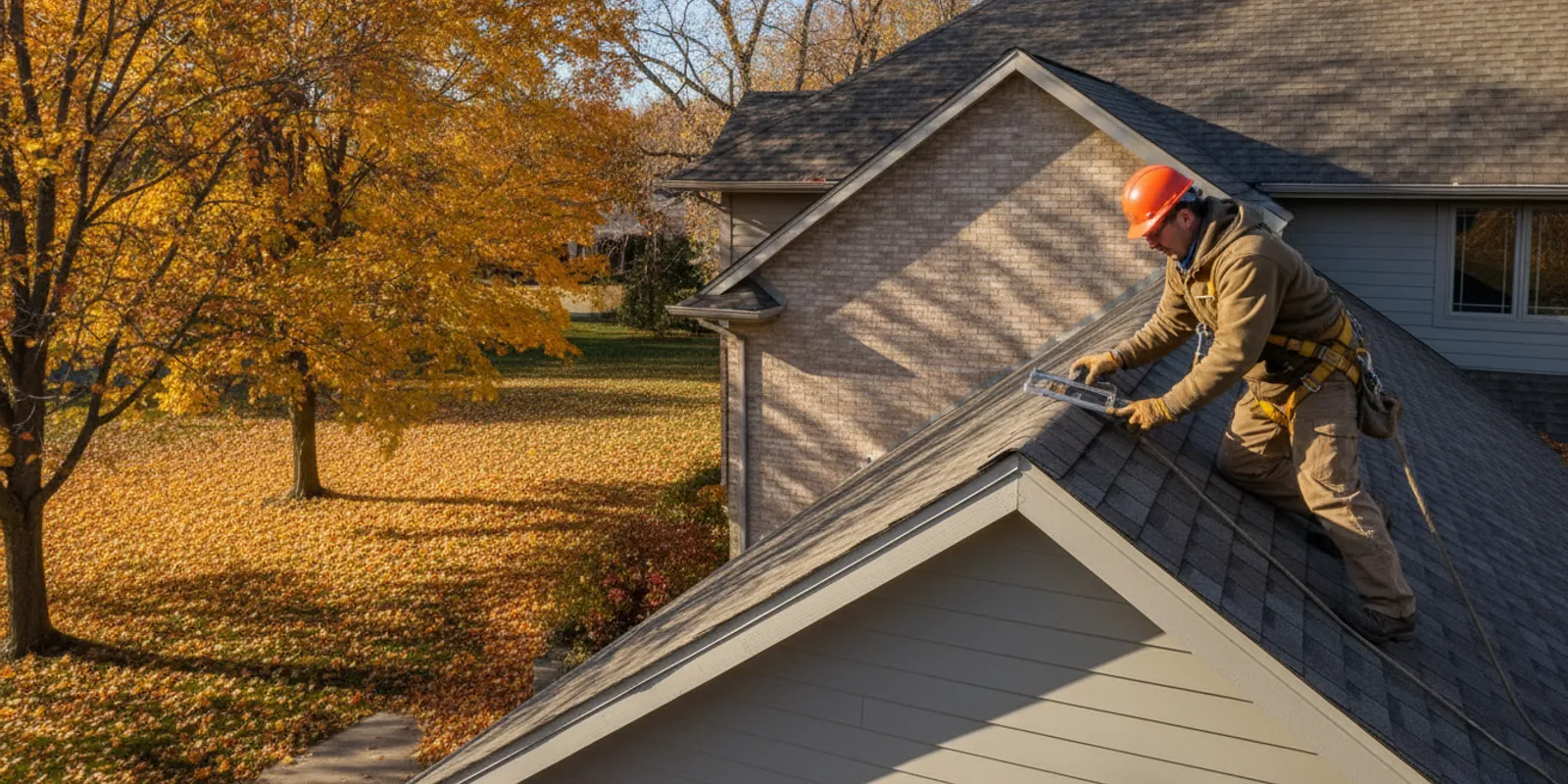
A general home inspection looks across many parts of a property. A roofing contractor focuses on roofing components and may be able to describe visible material condition, installation details, areas of concern, and potential repair or replacement paths. Their scopes are not automatically identical. Before scheduling, ask what the visit includes and what limitations apply.
The reviewer may not be able to see every roof surface. Roof pitch, weather, snow or ice, height, surface condition, and safe-access limits can affect what can be observed. A visual review also cannot promise that concealed layers or future leaks will be identified. Ask the professional to note any areas that were not accessible and why.
InterNACHI, a home-inspector association, provides consumer information about home inspections at its home inspection resource site. Use the inspector's written scope and the roofing professional's written scope to understand which questions each visit addresses. Neither should be treated as a substitute for reading the purchase documents or getting appropriate legal advice.
For buyers, the important difference is purpose. A general inspection helps build an overall picture of the home's observable condition. A roofer's evaluation can add roofing-specific detail or an estimate for work under consideration. If either professional identifies a concern outside their scope, ask who is qualified to assess it rather than assuming the roof is the source.
Think of the reports as complementary rather than competing. The home inspector might identify a stained area in an attic and recommend further evaluation, while the roofer may assess visible flashing or roof-covering conditions that could relate to it. Those observations do not prove causation on their own. If the source remains uncertain, ask what additional inspection or specialist expertise would help resolve it. Likewise, if a contractor is visiting only to prepare an estimate, confirm whether that appointment includes diagnostic observations and a written report; the word “inspection” can mean different scopes to different providers.
What should the roofer look at?
Ask the roofer to explain what they can inspect and how they will report their observations. Depending on access and the roof type, a useful discussion may cover:
- Roof covering:
visible wear, missing or damaged material, lifted edges, cracking, or other signs that may need attention. The appearance alone does not establish remaining service life.
- Roof transitions and penetrations:
visible flashing around chimneys, walls, vents, skylights, and valleys, where changes in plane or openings require careful detailing.
- Roof edges and drainage:
visible drip edges, eaves, gutters, and downspouts. Drainage or gutter issues can affect water management around the home, but they do not prove a roof leak.
- Low-slope areas:
visible seams, drainage points, penetrations, or wear on a flat or low-slope section. Ask whether the reviewer has experience with that particular system.
- Attic observations, if included and accessible:
visible staining, ventilation details, or other conditions in the space. Confirm whether the visit includes attic access; do not assume it does.
- Visible repairs:
areas that appear patched or altered, along with questions about whether documentation is available. A visual assessment cannot verify all prior workmanship or establish who completed the work.
Ask for photos where practical, plain-language notes, and a clear separation between observed conditions and recommendations. For example, “a shingle is missing near the lower slope” is an observation; “replace the entire roof” is a proposed scope that should be explained. Ask what evidence supports the recommendation and whether repair is a reasonable alternative to replacement.
A roof review should not require a buyer to take unsafe steps. Stay off the roof and do not enter an attic that is unsafe or not approved for access. Arrange any inspection through the seller or the appropriate representative, and ask the contractor to explain any limits caused by weather or access.
Before the visit, share the general inspector's specific notes rather than asking the roofer to guess what prompted the appointment. If possible, provide the property's roof type, any seller records, interior photos of stains, and a short list of questions. This context helps the contractor focus on the areas you want explained. Ask whether photos will identify the location and whether the written notes will distinguish a visible condition from a suspected cause. A useful finding might say that a flashing area appears damaged and needs follow-up; it should not overstate certainty about water entry if the evidence is not conclusive.
How do the review options compare?
The right next step depends on the question you are trying to answer. This comparison can help you decide whom to contact first. Confirm the actual scope, timing, and fee directly with each provider; no price or service scope is assumed here.
Option | Best for | What to clarify | What it does not automatically provide |
General home inspection | Getting an overall view of observable house conditions | Roof access, report detail, limits, and whether a specialist referral is suggested | A roofing contractor's repair proposal or an exhaustive assessment of concealed roof layers |
Roofing contractor review | Getting roofing-specific observations or discussing a potential repair or replacement | Which roof areas and components are included, access method, photos, and written deliverable | A full home inspection, guarantee of remaining roof life, or insurance coverage decision |
Records review with seller | Understanding known installation, maintenance, or repair history | Dates, scope of past work, invoices, permits if available, and transferable documents | Confirmation of current roof condition without an on-site assessment |
Follow-up by another qualified specialist | Investigating a concern beyond the home inspector's or roofer's scope | Which specific question needs an answer and who is qualified to address it | A replacement for the purchase agreement deadlines or your own due diligence |
For a roof replacement or repair conversation, Minnesota Roofing Company offers residential roofing information about residential roofing, roof repair, and roof replacement. These pages describe service topics; they do not establish what a specific home needs.
Consider a few common situations when choosing an option. If the general inspection says the roof was not fully visible because of snow or unsafe conditions, first ask what portion could be observed and whether safe access can be arranged later. If the report notes a small number of damaged shingles but no interior water signs, a focused roofing review or repair discussion may clarify the condition without presuming replacement. If the report describes a ceiling stain and the seller has a repair invoice, compare the invoice date and scope with the current observation, then ask whether the area needs follow-up. If the records are incomplete, the missing history is a reason to ask questions, not proof that a defect exists. These examples help define the question; they cannot determine the right contractual response.
How should you arrange and use the review?
- Read the general inspection notes first.
Mark each roof-related concern and write down the questions that remain. Avoid asking a roofing professional to repeat work that already answers your question.
- Ask the seller for available records.
Request installation and repair documentation, and ask whether the seller knows of leaks or prior storm damage. Treat records as useful context, not proof of current condition.
- Confirm access and timing.
Coordinate with the seller and your real estate representative. State your purchase deadline and ask the contractor what can realistically be completed before it.
- Agree on scope before the visit.
Ask whether the review is visual, whether roof and attic access are included, which system components will be considered, and how inaccessible areas will be documented.
- Request a written report or findings.
Ask for photos when possible, a description of observed concerns, any access limitations, and a distinction between urgent repairs and longer-term recommendations.
- Ask for options, not just a conclusion.
If the professional recommends major work, ask whether a targeted repair is feasible, what risk remains if you defer the work, and what additional information would change the recommendation.
- Share relevant findings with your advisors.
Give the report to your real estate professional and discuss any contract, negotiation, or deadline implications with the appropriate people. A roofing contractor should not make those decisions for you.
To make each step more concrete, keep a simple question log. Beside every concern, note its source, what is known, what is still unknown, who can answer it, and when you need the answer. For example: “Inspection report: flashing near chimney may be damaged; unknown: whether active water entry is present; ask roofer to photograph condition and explain repair options; deadline: confirm with agent.” This prevents a general concern from turning into an unfocused request for a full replacement estimate. It also gives your advisors a concise record of what you learned and which questions remain open.
When you request access, clarify who will be present and whether the seller needs to approve entry to the attic or other areas. Do not arrange access independently if the purchase process requires coordination through an agent or seller. Ask the contractor what happens if conditions are not safe for a roof walk; a ground-level or other limited observation may be possible, but it should be clearly described as limited. If weather prevents a useful review, find out whether rescheduling is feasible within the purchase timeline and alert your advisors promptly.
If the property is in the Twin Cities, Minnesota Roofing Company serves communities across the metro, including Columbia Heights and Fridley. Its broader roofing information includes flat roofing and shingle roofing. Roof type and access can affect what a review covers, so describe the home and your question when you reach out.
What do the findings mean for your purchase?
A roof report is information for a decision, not a decision by itself. Start by sorting observations into three groups:
- Immediate safety or active water concerns:
Ask the professional what needs prompt attention and what should be done to protect the home. Report active water entry to the seller or the appropriate representative without delay.
- Repair items:
Ask for the location, recommended work, and whether a written estimate can be prepared. A proposed repair scope may help you understand the issue, but final work planning depends on the property's condition and the parties' arrangements.
- Monitor or clarify:
Some observations may call for records, follow-up, or future maintenance rather than immediate replacement. Ask what would indicate that the condition has changed.
Do not assume every roof concern means a full replacement. Likewise, do not assume a roof is sound just because no leak is visible inside. The roof's age, material, prior repairs, exposure, installation, and conditions that could not be observed all matter. A contractor should explain the basis for recommendations and note uncertainty.
If the review suggests work may be needed, ask for a written scope and an estimate that states what is included and excluded. Minnesota Roofing Company has information on roof financing options and siding, gutters, and exterior services; those resources may be relevant to future planning, but they do not determine purchase terms or guarantee financing approval. For an estimate, use the company's Fast + Free Instant Estimate. An instant estimate is not an on-site pre-purchase inspection or a final diagnosis of hidden conditions.
Keep the documents together: the general inspection report, the roofing review, photos, seller records, and any written proposal. That gives you and your advisors a more complete basis for asking follow-up questions before deadlines. If the report is unclear, ask the author to explain the terminology rather than drawing conclusions from a single photograph or estimate.
For example, a report might identify localized damage and recommend repair, while another section notes that a roof plane could not be viewed. Treat those as separate facts: ask what the visible damage means, and ask whether the unobserved area changes the confidence of the overall assessment. If a proposal describes replacement, request a plain-language explanation of the condition driving that recommendation and what repair would or would not address. Compare scopes carefully; two estimates may use different assumptions about materials, included components, access, or related work. Ask for clarification before comparing totals or treating them as equivalent.
A simple decision record can help you avoid losing important details during a busy purchase. Record the date of each report, the person who prepared it, the areas they could not inspect, and any follow-up promised. Keep estimates separate from inspection findings, since an estimate is primarily a proposed project scope and price rather than a complete record of every observed condition. When information conflicts, ask the professionals to explain the difference in their observations or scope. Then discuss the purchase implications with your real estate and legal advisors rather than making assumptions from technical notes alone.
Frequently Asked Questions
Should I get a roof inspection before buying every Minnesota home?
Not necessarily. Begin with the general home inspection and seller records. A separate roofing review is worth considering when the report identifies concerns, the roof's history is unclear, or you need roofing-specific detail before your purchase deadlines. Decide based on the open questions, access, timing, and the review's stated scope.
Can a roofing contractor tell me exactly how many years are left on the roof?
A contractor can describe visible condition and explain a professional opinion, but no visual review can guarantee an exact remaining lifespan. Hidden materials, past installation, weather exposure, and future conditions can affect performance. Ask the reviewer to explain uncertainty and the observations behind any service-life estimate.
Is a roofing contractor's estimate the same as a roof inspection?
No. An estimate describes a proposed price or project scope based on the information available for that estimate. A roofing review should clarify what the professional observed and what the review covered. Ask whether the visit includes a written assessment, photos, access to all roof areas, or only estimate preparation.
Can I use a roof report to negotiate with the seller?
You can share relevant findings with your real estate representative and ask how they fit your purchase agreement and deadlines. A report is not a promise that the seller will make repairs or change the terms. For decisions about your contract, consult the appropriate real estate or legal professional.
What if the roof cannot be accessed on inspection day?
Ask the inspector or roofer to state what could not be viewed and why. Weather, safety, roof design, and seller access can limit an assessment. Discuss whether another safe viewing method or a later visit is appropriate, and make sure your advisors know about the limitation before relevant deadlines pass.
A roof-focused review can make a home purchase decision better informed when you understand its scope, limitations, and findings. Use the written information to ask specific follow-up questions, and work with your purchase advisors on any next steps.

Comments