
Metal Roofs and Snow in Minnesota: What Homeowners Should Know
Metal roof snow Minnesota homeowners experience can behave differently from snow on shingles, but no roof surface guarantees that snow will slide off or prevent ice-related problems. Roof pitch, panel profile, temperature, installation details, and the amount and condition of accumulated snow all matter. This guide explains what to consider when evaluating a metal roof for a Minnesota property.
Quick answer: Some metal roofs may shed snow more readily than shingled roofs, but snow can remain in place or release suddenly as conditions change. Treat the roof, the building, and the area below the eaves as one system. Ask how the proposed roof handles its geometry, drainage, and any need for snow retention instead of choosing material on snow shedding alone.
On this page
How does snow behave on a metal roof?
A smooth metal roof may provide less resistance to moving snow than a typical shingled roof. The University of Minnesota Extension says that shingled or roof decks do not shed snow and ice as easily as metal roofs. That is a comparison, not a promise that every metal roof will shed snow in every storm. The Extension also addresses roof snow loads and collapse hazards, which is a reminder that snow movement should not be treated as a substitute for sound building design. Read its snow and ice roof safety guidance for additional context.
Snow can remain on a metal roof when it is cold, when the profile or surface holds it, or when snow becomes packed and bonded during changing weather. In other conditions, sun or a temperature shift can help a layer move. If it releases, snow may slide quickly and in a large mass. That movement can affect a walkway, entry door, lower roof, vehicle, landscaping, or outdoor equipment beneath the slope.
This creates a trade-off that is easy to miss when the conversation focuses only on “snow sliding off.” Less time with snow on a slope does not necessarily mean less risk overall. Snow that releases can fall where people pass, and snow that remains can still add weight to the roof. The relevant questions are where snow may collect, whether it could move, and what lies in its path.
Snow behavior can also vary across one house. A sunny south-facing slope may warm at a different rate from a shaded north-facing slope. A roof valley may gather snow while an open plane sheds some. A lower roof under an upper slope may receive a concentrated release. It is safer to think of the roof as a set of different areas than to assume a single result for the whole house.
What affects snow shedding?
There is no single answer for all metal roofs. The following factors interact, so an observation about one roof or storm may not predict what will happen on another.
- Roof pitch:
Steeper slopes can encourage movement, while lower slopes may retain snow longer. Pitch alone does not determine the result, and roof design still needs to suit the building and system.
- Panel profile and surface:
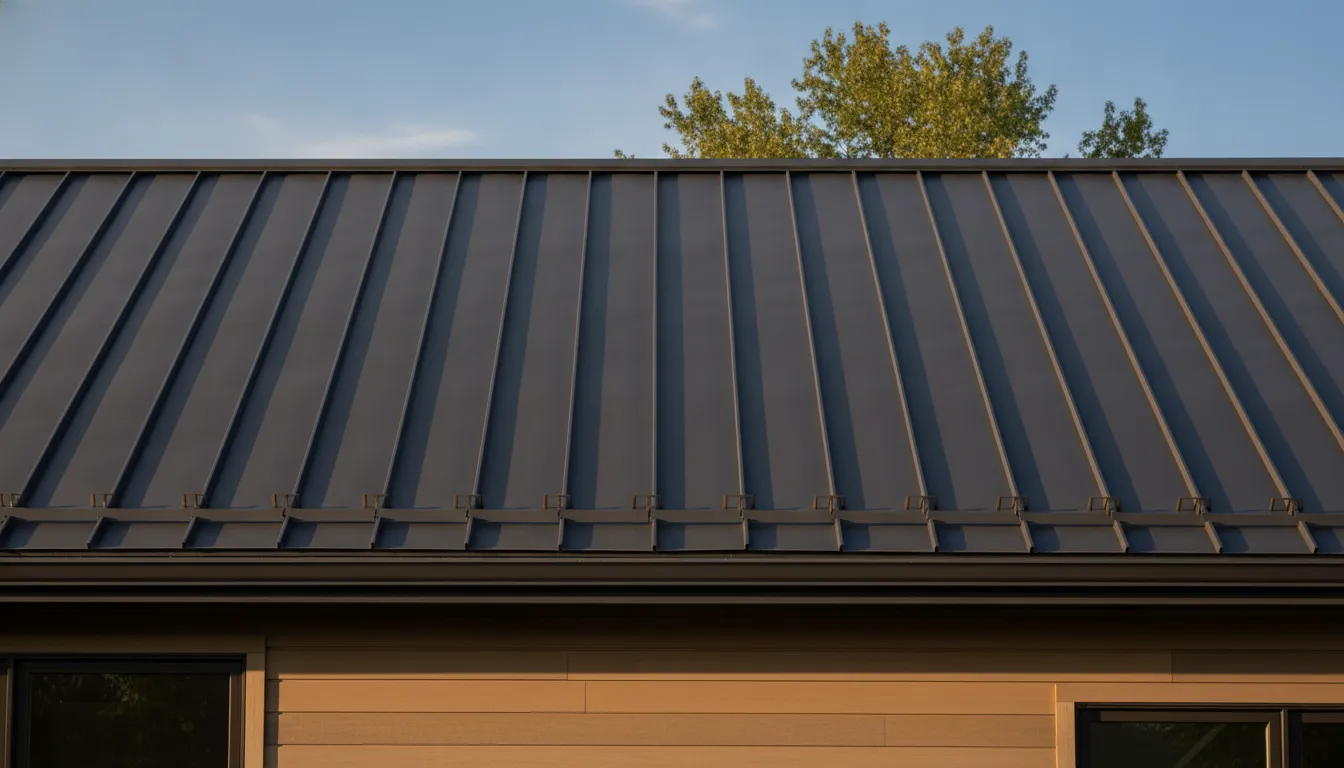
Standing seam and other metal systems differ in shape, seams, coatings, and surface characteristics. Ask about the specific product and details under consideration rather than assuming every metal roof behaves alike.
- Snow condition:
Light, dry snow and wet, compacted snow may interact differently with a surface. A thaw followed by freezing can also change how snow and ice cling to the roof.
- Roof geometry:
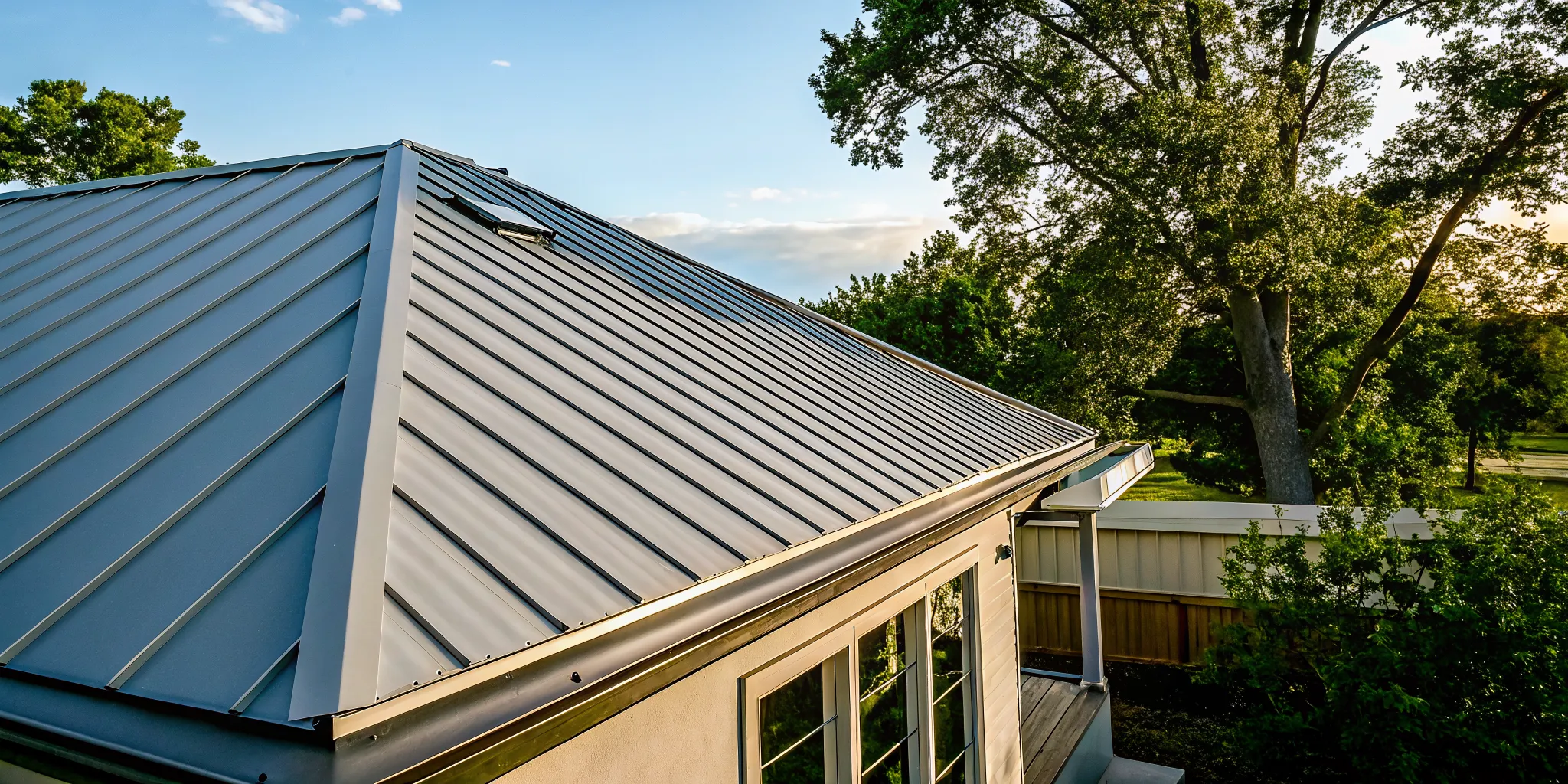
Valleys, dormers, intersecting slopes, roof-to-wall transitions, and penetrations can affect where snow gathers and where water travels. These locations deserve specific attention in planning.
- Sun, shade, and wind:
Nearby trees and buildings, exposure, and weather can affect melting and accumulation. Two slopes on the same house may behave differently.
- Installation and assembly details:
Underlayment, flashing, ventilation, fastening, and transitions are part of a roof system. Metal panels alone do not resolve every moisture or winter performance concern.
- Snow-retention design:
Where a sliding release could create a hazard, a suitable retention system may be considered. Its selection and installation should be appropriate for the roof system and the locations that need protection.
When you compare systems, ask the roofer to connect these factors to your actual roof. For example, “the roof is steep” is not a complete plan if the main entrance sits below the eave, or if a valley directs snow toward a deck. A useful discussion should describe the slope, likely movement paths, and how roof edges and transitions will be handled.
Minnesota Roofing Company installs metal roofing in Minnesota. Review its metal roofing options and ask how a proposed system fits your home’s layout and exposure. A product label alone cannot answer how snow will behave on every part of a particular roof.
How should you assess the area below the roof?
Before deciding that snow shedding is an advantage, walk the site from the ground and mark the areas that matter in daily use. Consider where people enter, where children or pets play, where a delivery might be left, and where a car is usually parked. Also look at decks, patios, exterior steps, sheds, lower roof sections, and equipment that would be difficult to move during winter.
A simple site review can turn a general roofing question into specific design questions. For each roof edge, ask: What is directly below it? Is it an area people must use? Can that area be temporarily kept clear during winter? Does the roof direct snow toward another roof or a shared path? Could a gutter or a lower roof be affected by a sudden release? The answers help determine where snow movement has practical consequences.
Area to review | What to note | Question to discuss |
Entrances and steps | Doors, stoops, and frequently used routes below an eave | Could falling snow or ice reach the normal approach? |
Walkways and driveway | Daily paths, parking areas, and places where visitors pass | Can the route be relocated or kept clear, or does the design need another approach? |
Decks and patios | Areas used seasonally or for access to the yard | Could an upper slope release onto the deck or an attached lower roof? |
Roof intersections | Valleys, dormers, lower roof planes, and wall transitions | Where might snow collect or be redirected? |
Drainage features | Eaves, gutters, downspouts, and the area where water exits | How will runoff and any snow movement be considered together? |
The table is a conversation aid, not an engineering assessment. If snow could fall onto an unavoidable entry or walkway, state that before the roof system is selected. Ask what measures are appropriate for that specific roof and what limitations remain. A snow-retention device should not be treated as a universal fix or installed without considering the roof assembly and manufacturer requirements.
Gutters are part of runoff management, not a snow-retention system. If you are reviewing how water leaves the roof, see the company’s information about gutter options. Consider the eaves, downspouts, walkways, and ground drainage together; keeping one feature in view while ignoring the others can leave a gap in the plan.
How do metal and shingle roofs compare?
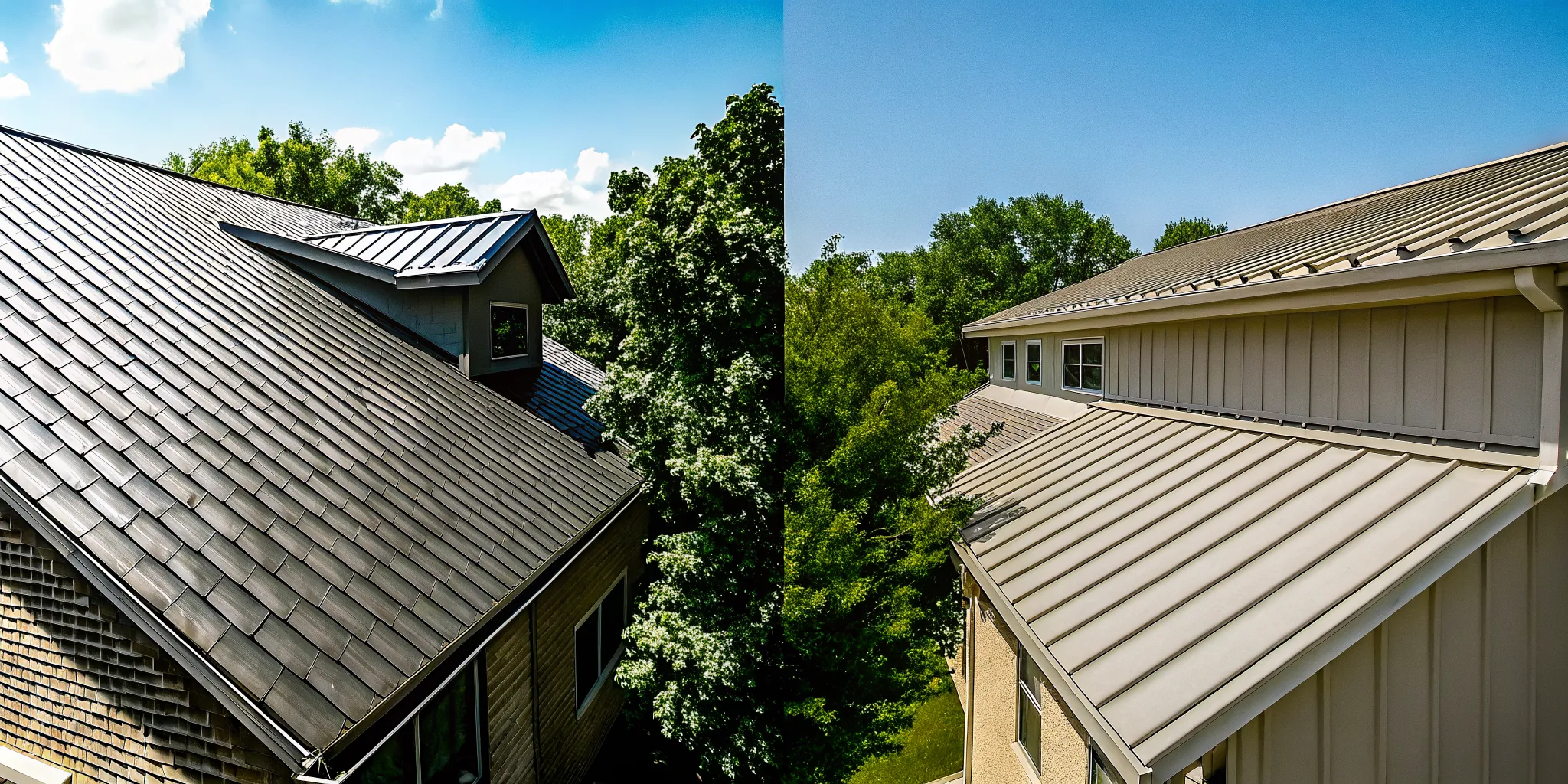
Material comparison is useful when it focuses on the decision at hand. For snow, the key distinction is potential movement, not a guarantee of a particular outcome. Compare implications alongside the needs of the building, not just a label or a broad claim that one material is “better in winter.”
Consideration | Metal roofing | Shingle roofing |
Snow movement | Snow may shed more readily on some systems and under some conditions. | Snow and ice generally do not shed as easily as on metal, according to UMN Extension. |
Potential concern | A sudden slide can create a hazard below the eaves; plan discharge areas and retention where appropriate. | Snow may remain on the roof; visible accumulation alone does not tell you whether the roof is safe. |
Design questions | Review panel type, pitch, valleys, penetrations, flashing, and snow-retention needs. | Review shingle system, roof geometry, flashing, ventilation, and existing material condition. |
Useful comparison | Evaluate the complete roof assembly and the site around it. | Evaluate the complete roof assembly and the site around it. |
The right choice depends on the property, roof design, and owner’s priorities. Explore shingle roofing alongside metal roofing if you are comparing systems. Consider the roof’s appearance, intended use, maintenance expectations, drainage, and the practical effect of snow movement. No comparison table can replace a review of roof-specific details.
For example, a home with a steep slope above a frequently used front walk may need a different discussion from a home where the eaves face an open yard. The difference is not that one material automatically solves the problem. Rather, the site changes the consequences of snow staying in place or moving. Discuss both outcomes before deciding.
What should homeowners do during winter?
Start with observation from a safe location. Look for changes that could point to a concern, such as water staining indoors, unusual dripping, a visibly damaged roof edge, or snow collecting in a location that could affect an entrance or walkway. A homeowner should not climb onto an icy roof or try to dislodge snow from below a loaded slope.
Keep people, pets, and vehicles away from areas where snow could slide from a roof.
Use caution around doors, decks, walkways, and lower roofs below a steep metal slope.
Do not stand under an eave to inspect or remove snow, and do not use improvised tools from a ladder.
If you see signs of damage or water intrusion, note what is visible from a safe place and arrange an appropriate professional review.
For concerns about unusually heavy snow or possible structural distress, seek qualified help promptly rather than waiting for snow to move on its own.
The University of Minnesota Extension guidance on preventing roof collapses from snow and ice is focused on farm buildings, but it reinforces the need to take snow accumulation and roof safety seriously. Avoid risky roof access, and do not treat a quiet-looking roof as proof that there is no concern. If you notice signs of possible structural distress, keep people clear of the affected area and get qualified assistance.
Ice dams are a related winter concern, but they are not simply a metal-versus-shingle issue. Roof and attic conditions, air leakage, insulation, ventilation, and weather patterns can all contribute. If ice dams or water entry are a concern, review the company’s information about ice dams and winter roof concerns. A persistent issue should be evaluated in the context of the home rather than attributed to one visible roof material.
Do not assume that removing snow is always the safest response. Work on an icy roof can put a person at risk, and forceful or improvised removal can damage roofing materials. If you believe snow needs attention, contact a qualified professional for guidance about the property and the safest next step. If an immediate safety risk is present, keep people away and contact appropriate emergency services.
What should you discuss before choosing a roof?
A useful conversation connects the proposed material to the building and its surroundings. Bring photos or notes about the roof’s slopes, nearby walkways, entrances, decks, and lower roofs. Ask for clear explanations rather than a broad assurance that a material will “handle snow.” These questions can help organize the discussion:
- Which metal system is being considered?
Ask about the panel profile and how the system fits the roof’s slope, geometry, and penetrations. Confirm that the recommendation addresses the whole assembly rather than the panel alone.
- Where could snow remain or move?
Identify doors, paths, driveways, lower roofs, and other areas below a shedding slope. Ask the roofer to explain where accumulation or movement is more likely based on the roof’s layout.
- Is snow retention appropriate?
Ask whether the design calls for retention in specific locations, how it will be selected, and how it will be attached without compromising the roof assembly. Also ask what conditions the system is intended to address.
- How are edges and transitions handled?
Discuss valleys, eaves, wall intersections, flashing, penetrations, and how water is directed off the roof. These details help explain how the proposed system deals with roof geometry.
- What is included in the proposed work?
Clarify the materials, installation scope, existing conditions to be reviewed, and how questions or concealed issues will be communicated. Keep the written proposal so you can compare its assumptions with another proposal.
- How will the estimate be explained?
Review the work and assumptions before deciding. A Fast + Free Instant Estimate can start the conversation, while project-specific details should be confirmed for the property.
If you are comparing a replacement with a repair, review the company’s pages about roof repair in Minnesota and roof replacement. A material-selection conversation is different from deciding whether an existing roof has a repair need. For storm-related concerns, the company’s storm-damage roofing information may help you identify the right topic for a separate discussion.
For a broader exterior project, Minnesota Roofing Company also provides exterior services. Learn about siding, gutters, and exterior services, or review attic insulation when considering related building conditions. These are not substitutes for a roof-specific snow plan, but they may be relevant when you are evaluating the home as a whole.
When comparing proposals, make sure you are comparing the same scope and system rather than only the headline material. Note whether each proposal addresses the roof’s geometry, transitions, discharge areas, and any snow-retention recommendations. If one proposal is less specific, ask what assumptions it makes. A clear explanation can help you understand what is included and what still needs a decision.
For example, suppose one quote identifies the panel system but says nothing about a valley above a deck. That is a useful prompt to ask how snow and water from that section will be handled. Another quote may describe a retention approach but not explain where people normally walk beneath the roof. Ask for the practical reasoning behind the recommendation, not just the name of a component. Your goal is to understand how design choices relate to the actual property.
Keep photographs, written recommendations, and the proposal together. If you revisit the project later, those notes can help you remember which roof areas were discussed and what questions remain. They can also make it easier to explain a concern if you notice water entry, damage, or an unexpected snow-release pattern after installation.
Frequently asked questions
Does snow always slide off a metal roof?
No. Snow movement depends on the roof’s pitch, system, surface, snow condition, exposure, and other details. Some snow may remain, while a layer may slide under changing conditions. Plan for both possibilities.
Are metal roofs safer in heavy snow?
Material alone does not establish safety. Roof structure, accumulated snow, building condition, and design all matter. The University of Minnesota Extension provides guidance on snow and ice roof-collapse hazards; do not climb onto a snow-covered or icy roof.
Should a metal roof have snow guards?
It depends on the roof and what lies below it. Where sliding could put people or property at risk, ask a qualified roofing professional whether a designed snow-retention system is appropriate for the specific roof. Its location and installation should suit the roof system.
Does a metal roof prevent ice dams?
No roof covering by itself guarantees that ice dams will not form. Attic and roof conditions, air movement, insulation, and weather can all play a role. Discuss signs of water intrusion or recurring ice with a qualified professional.
What should I do if I think my roof is under stress?
Stay out of the affected area if you suspect structural distress, avoid going onto the roof, and seek qualified help promptly. If there is an immediate safety risk, keep people clear and contact the appropriate emergency services.
Metal roofing can be a suitable option for Minnesota properties, but snow behavior should be planned rather than assumed. A roof-specific review can help you weigh snow movement, safety below the eaves, and the needs of the entire building.
Comments