
How to File Roof Insurance Claim After Hail Storm: Step-by-Step Guide for MN Homeowners
Updated: 5 days ago
The average hail damage claim in Minnesota now costs about $30,000 per home. That makes the insurance process feel like a gamble with your largest investment. Success depends on knowing how to file roof insurance claim after hail storm correctly and presenting your case with the right evidence.
Filing a roof insurance claim after a hail storm in Minnesota starts with documenting the damage before you call anyone. Take timestamped photos of dents, missing granules, and bent metal. Contact your insurer promptly. The adjuster will inspect for ten hail marks in a ten-square-foot area. Have a local contractor present during the inspection to ensure every dent is documented. This step-by-step guide walks you through the entire process so you get the full payout you deserve.
Need help with your claim right now? Call Minnesota Roofing Company at (952) 451-1978 for a free inspection and instant estimate. Our GAF-certified team advocates for homeowners throughout the claims process.
This article is part of our complete guide: Storm Damage and Roof Insurance Claims: The Minnesota Homeowner's Guide.
How to File a Roof Insurance Claim After Hail Storm: Document the Damage Before Calling Anyone
Minnesota experienced 87 hail storms between 2012 and 2021, according to the NOAA Storm Events Database. The average claim for hail damage in the state runs about $30,000 per home. How well you document the damage directly affects what your insurance company will pay.
Insurance adjusters will only compensate you for what they can verify. If you do not have clear evidence of impact marks, debris, and shingle damage, they may attribute the wear to age rather than the storm. That is why knowing how to file roof insurance claim after hail storm starts with building a strong evidence file before you ever pick up the phone.
After a storm passes, your first move should be to record every sign of damage while it is fresh. This documentation keeps you in control when you talk to your insurance company.
Start with a Safe Ground Assessment
You do not need to climb on your roof to find damage. Walk around your home and look up at the edges of the roofline. Check the yard for fallen shingle tabs or granules. If you see debris on the ground, a professional needs to inspect the full roof. If water is leaking inside, place a tarp over the affected area until repairs can begin.
Look for Clear Signs of Hail Impact
Check your gutters and downspouts first. Piles of black grit or granular loss mean your shingles are shedding their protective layer. Look for dents in metal vents, flashing, and window trim. These soft metals show hail strikes before asphalt shingles do. Missing shingle tabs or torn edges are also common indicators of hail damage on roofs. Check window frames and siding for cracks or impact marks as well.
Build a Dated Photo Record
Use your smartphone to take clear photos of every dent, bruise, and piece of debris. Take wide shots showing the full roof elevation, then close-ups of each damaged area. Position the photo to show how the damage relates to the rest of the house. Make sure your phone saves the date and time metadata for each image. This timestamped evidence makes it harder for an insurance company to claim the damage was pre-existing. Keep these files organized and backed up so you can share them with your adjuster immediately.
- Stay on the ground.
Never walk on a wet or damaged roof. Use a zoom lens to inspect high areas from the lawn.
- Check metal components first.
Look for dings in gutters, vents, and flashing. Soft metal shows impact before shingles do.
- Search for granule loss.
Piles of black grit at downspout outlets mean hail compromised your shingle surface.
- Capture timestamped images.
Use your phone camera with location services enabled. Place a coin next to damage to show scale.
- Organize your evidence.
Save all photos in one folder labeled with the storm date for easy access during your claim.
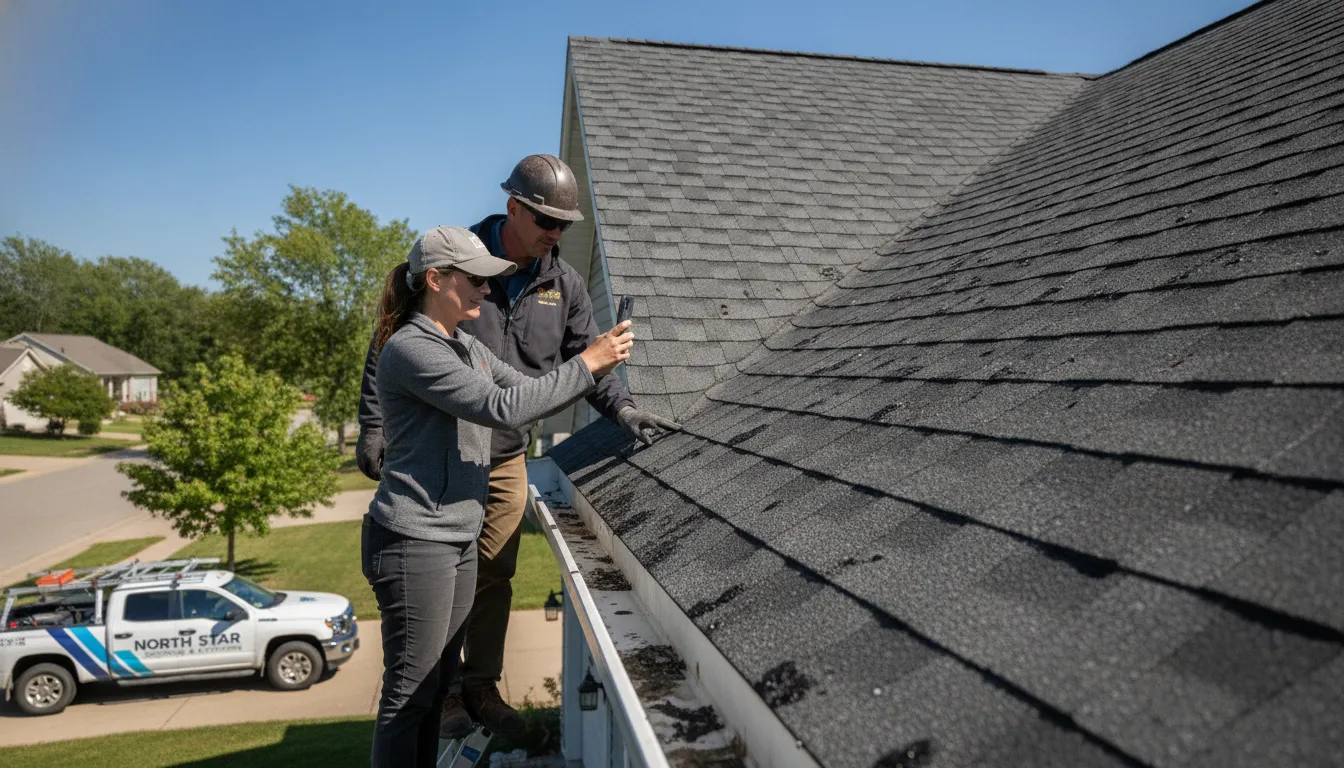
Proper documentation is the foundation of every successful claim. Without it, you are asking the adjuster to take your word for the damage. With it, you have proof that is hard to dispute.
What Information Do You Need When Contacting Your Insurance Company?
After documenting the damage, contact your insurance company as soon as possible. Most homeowner policies have time limits on when you must report a loss. Waiting too long gives the insurer grounds to deny the claim or attribute the damage to normal wear rather than the storm.
Have the following information ready when you call:
Your policy number and the effective dates of coverage.
The date and approximate time of the hail storm.
A brief description of visible damage you observed from the ground.
Your timestamped photo collection.
Any temporary repairs you made, such as tarping a leak or boarding a window.
The insurance company will assign a claim number and schedule an adjuster visit. Write down the claim number and the adjuster name and contact information. Ask what documentation they expect you to provide at the inspection. The full guide on getting insurance to pay for a new roof covers what to say during this call and what to avoid saying.
Request an estimate from Minnesota Roofing Company before your adjuster arrives.
Having a contractor estimate in hand gives you a baseline for what a fair claim should cover.
What Happens During the Insurance Adjuster Inspection?
The adjuster will visit your property to assess the damage. Most carriers look for at least ten hail hits within a ten-foot by ten-foot area before approving a full roof replacement. This threshold, often called the 10x10 rule, varies by insurer and policy language.
During the inspection, the adjuster walks the roof, measures slopes, and photographs damage. They compare what they see against your policy coverage limits and exclusions. They may use a drone or walk the surface depending on the roof pitch and safety conditions.
The table below summarizes what the adjuster checks and why each item matters for your claim outcome.
Inspection Element | What the Adjuster Checks | Why It Matters |
Hail impact count | Number of hits within 10x10 foot areas. | Determines whether replacement or repair is approved. |
Granule loss | Grit accumulation in gutters and downspouts. | Shows protective coating has been compromised. |
Flashing and vents | Dents and punctures on metal components. | Soft metal damage is strong evidence of hail. |
Valley metal | Cracks and creases in roof valleys. | Compromised valleys can lead to interior leaks. |
Decking integrity | Soft spots, rot, or moisture under shingles. | May require OSB replacement beyond the shingle scope. |
Understanding what the adjuster looks for helps you prepare. A contractor who knows how to file roof insurance claim after hail storm effectively will guide you through this process and advocate for a thorough evaluation.
Why You Need a Contractor During the Adjuster Visit
You should have a local roofing contractor present when the adjuster inspects your roof. The contractor knows where to look for damage the adjuster might miss and can point out hidden issues around vents, flashings, and valleys. Minnesota Roofing Company attends these inspections for free as part of our claim advocacy service. Our GAF-certified estimators know exactly what evidence Minnesota adjusters look for and can ensure no damage goes undocumented.
Without a contractor present, you rely entirely on the adjuster to document every item. Adjusters process multiple claims per day and may miss subtle damage on complex rooflines. A contractor who understands how to file roof insurance claim after hail storm can make the difference between a partial payout and full replacement coverage.
How Do You Get a Contractor Estimate That Matches the Claim Scope?
Your contractor estimate and the adjuster estimate will rarely match on the first pass. Adjusters work from pricing databases that may not reflect current Minnesota material and labor costs. A reputable contractor provides a detailed line-item estimate that accounts for:
Full roof replacement including underlayment and ice and water shield.
Proper flashing replacement around chimneys, vents, and valleys.
Gutter and downspout replacement when damaged by hail.
Removal and disposal of old roofing materials.
OSB deck replacement if moisture damage is present.
Minnesota Roofing Company prepares detailed, itemized estimates that adjusters can reconcile line by line. If you receive an initial payment that does not cover these items, a supplement may be necessary.
How Do You Negotiate a Supplement When the Payout Is Too Low?
A supplement is a request for additional payment when the adjuster missed items or underpaid on scope. Supplements are common in Minnesota hail claims. Adjusters sometimes miss damage on roof slopes they cannot easily access from the ground. They may also use generic material pricing that does not match current market rates in the Twin Cities metro area.
Your contractor documents the missing items with photos and manufacturer specifications. They submit a formal supplement request to the insurance company. The insurer reviews the request and issues a second payment for the additional scope. This process can repeat as new damage is uncovered during tear-off. Working with a contractor who handles supplement negotiation is one of the most valuable steps you can take during your claim.
How a Certified Contractor Advocates for You Throughout the Process
Insurance companies process thousands of claims. Your claim is one file among many unless you have someone fighting on your behalf. Minnesota Roofing Company acts as your advocate from the initial documentation through the final settlement check. Our team:
Performs a free, thorough inspection and provides a detailed estimate before the adjuster visit.
Attends the adjuster inspection to ensure every item of damage is recorded.
Handles supplement negotiations so you do not have to argue with the insurance company.
Coordinates the roofing work on your timeline and communicates directly with the adjuster.
Verifies all materials meet Minnesota building code and manufacturer warranty requirements.
This advocacy is why homeowners consistently receive higher settlements when working with a certified contractor. As a GAF Master Elite certified roofing company, we bring manufacturer-backed expertise that adjusters respect.
Contact Minnesota Roofing Company online or call (952) 451-1978 to schedule your free inspection and estimate.
Frequently Asked Questions
How long do I have to file a roof insurance claim after a hail storm in Minnesota?
Most Minnesota homeowner policies require you to report hail damage within one year of the storm date. Some carriers impose shorter windows of 180 days. Check your policy declarations page for the specific filing deadline. Filing promptly prevents the insurance company from arguing that delayed reporting caused additional damage.
Does Minnesota require roofers to have a license to handle insurance claims?
Minnesota does not have a statewide roofing contractor license. However, the Department of Labor and Industry requires contractors to register and carry workers compensation and general liability insurance. Work with a registered, insured contractor who has experience with insurance claim supplements. GAF Master Elite certification is a strong indicator of a contractor commitment to training and quality.
What if my insurance company denies my hail damage claim?
If your claim is denied, request the denial in writing and review the specific reason. Common denial reasons include wear and tear exclusion, insufficient documentation, or missed filing deadlines. You can appeal by providing additional evidence such as a second inspection report, photos from neighbors with approved claims, or a letter from your contractor. Many Minnesota homeowners succeed on appeal with help from a contractor who provides thorough documentation.
Will my insurance premium go up if I file a hail damage claim?
Filing a claim can affect your premium. However, hail damage claims are treated differently from non-weather claims in Minnesota. State law prohibits insurers from non-renewing a policy because of weather-related claims. Premium increases are still possible at renewal. Your agent can provide a personalized projection before you file.
Should I get multiple roofing estimates before filing an insurance claim?
Yes. Getting at least two estimates helps you understand the true scope and cost of the work before the adjuster sets a value. A local contractor who understands Minnesota claim practices will provide an estimate that aligns with what insurance should cover. Request an estimate from Minnesota Roofing Company and compare it with the adjuster initial determination.


Comments