
Flashing Inspection Before Winter Minnesota
Flashing inspection before winter in Minnesota can help you notice visible roof concerns before snow, ice, and freezing temperatures make access more difficult. Flashing directs water around roof openings and transitions, such as chimneys, walls, vents, and valleys. You do not need to climb onto the roof to look for warning signs. Start with safe observations from the ground and attic, then decide whether a professional evaluation is appropriate.
In brief: Look for lifted, bent, rusted, or separated metal; missing or damaged shingles beside roof transitions; and water marks inside. Take dated photos from safe locations, note when a leak appears, and avoid walking on a roof. A visible concern is a reason to ask questions, not proof of the exact cause or repair needed.
On this page
What does roof flashing do?
Flashing is material installed at roof joints and penetrations to help guide water away from vulnerable seams. It is commonly found around chimneys, plumbing vents, skylights, wall intersections, roof edges, and valleys. Its shape and installation depend on the location and roofing assembly. Shingles, underlayment, and flashing work together; a visible metal edge is only one part of that system.
When flashing is displaced, corroded, poorly sealed, or no longer integrated with adjacent roofing, water may find a path beneath the roof covering. That does not mean every stain or loose-looking edge is a flashing failure. Water can travel before it becomes visible indoors, and staining may come from another source. A qualified inspection can help distinguish among possibilities.
Different roof designs use different details. A chimney needs step flashing along its sides and a properly formed upper and lower connection. A plumbing vent has a boot or flashing collar. A wall-to-roof junction needs a water-shedding transition. A valley handles runoff from two roof slopes. When considering larger work, Minnesota Roofing Company provides information about roof repair options and roof replacement.
Where should you look before winter?
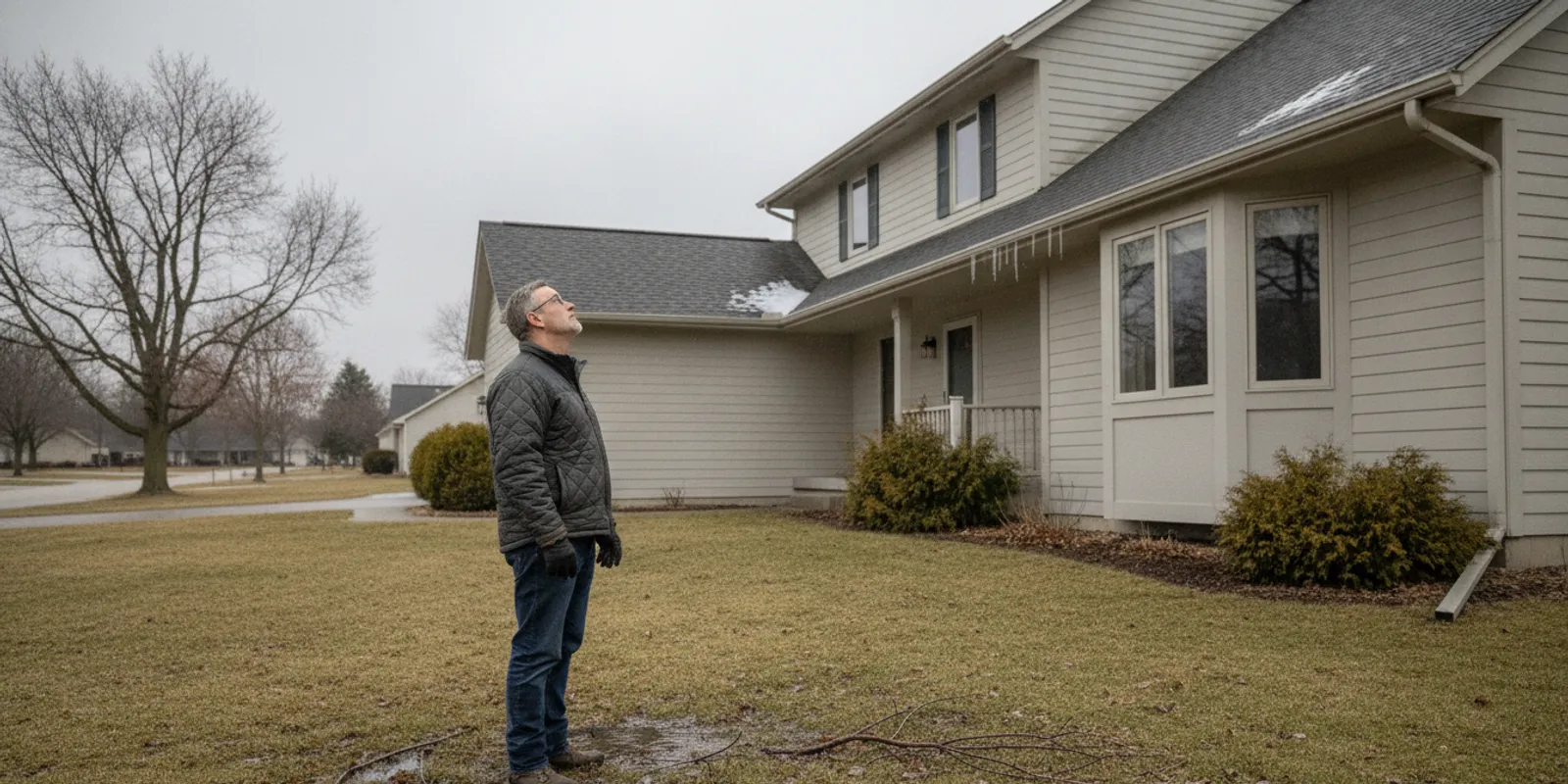
Begin with places where roof planes meet another surface or where something passes through the roof. Use binoculars from the ground if helpful. Do not climb a ladder or walk on a roof in wet, icy, or windy conditions. From inside, use an accessible attic only if it is safe to enter and you can avoid stepping on ceilings or insulation.
- Chimneys:
Check from the ground for metal that appears loose, bent, or pulled away, and look inside for dampness or staining near the chimney chase.
- Walls and dormers:
Observe roof-to-wall intersections for lifted shingles, visible gaps, or damaged siding near the roofline.
- Vents and skylights:
Look for cracked or displaced components around the opening. Do not assume a dark mark is a leak without checking for other explanations.
- Valleys:
Notice debris buildup, displaced shingles, or visible metal damage from a safe viewpoint.
- Interior surfaces:
Check ceilings and upper walls for new stains, peeling paint, or dampness, especially after rain or thawing.
A ground-level look cannot confirm whether flashing is correctly layered beneath shingles. It can help you identify where to ask for a closer assessment. If you have concerns about hail or wind effects, the company's storm damage roofing information and guide to recognizing possible hail damage offer related context.
What warning signs may point to a flashing concern?
Look for changes rather than trying to diagnose a repair from one clue. The following observations are worth documenting and discussing:
Metal appears lifted, bent, loose, or separated from a chimney or wall.
Shingles near a roof transition look cracked, missing, curled, or displaced.
There is visible rust, a split seam, or a gap where two roof surfaces meet.
A ceiling or wall stain appears near a chimney, skylight, or upper-floor roofline.
Water appears after rain, melting snow, or a freeze-thaw period, then stops.
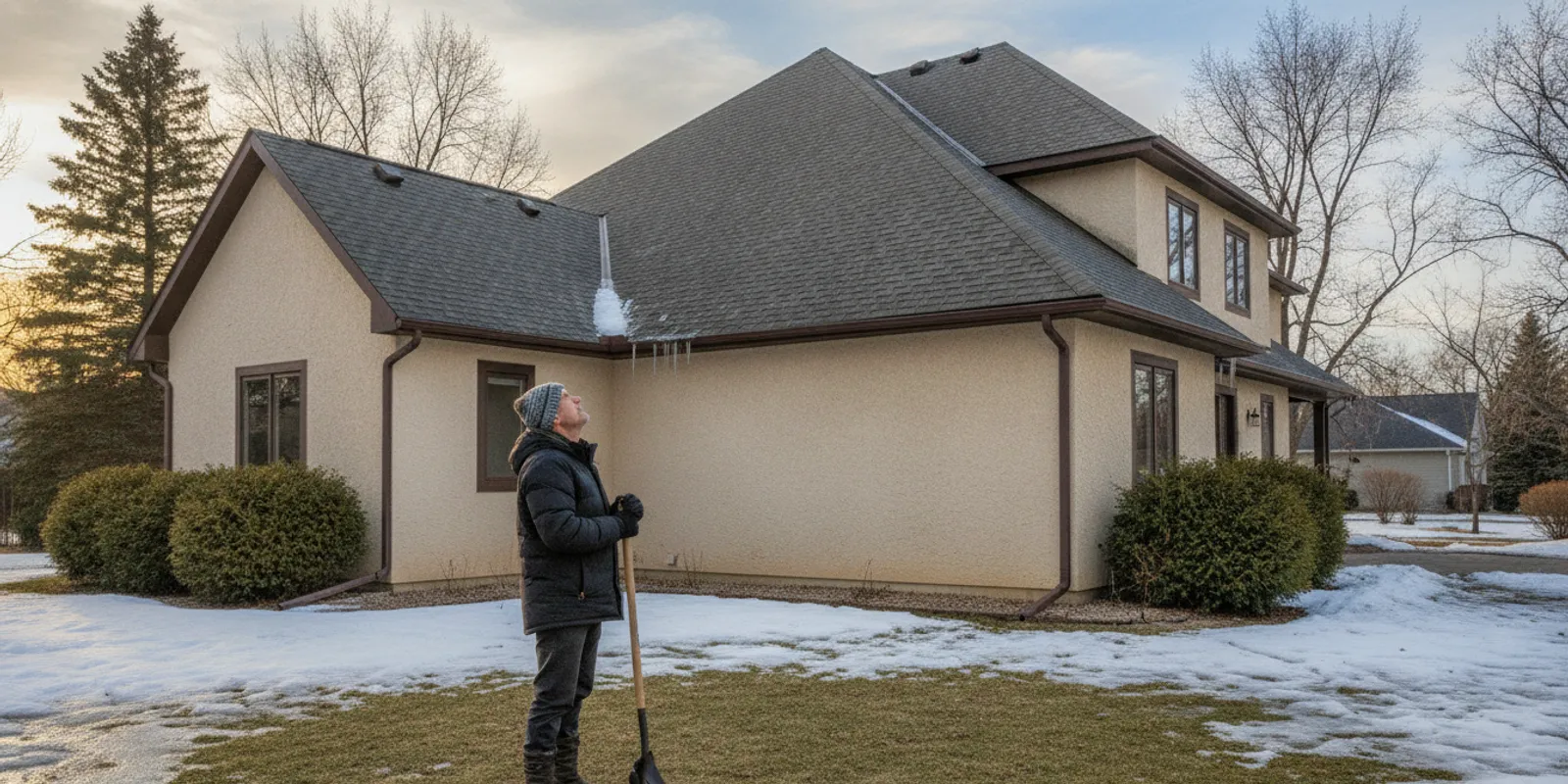
Debris or ice repeatedly collects at a roof junction or valley.
Record the location and timing. A stain that grows after a particular weather event, for example, provides useful context. Photograph the interior mark with a wider shot showing its room location, then a closer image. From the ground, capture the roof area without placing yourself beneath falling debris. Avoid pulling at metal, applying sealant, or removing snow yourself; a quick patch can conceal the underlying condition or introduce a safety risk.
How can you check flashing safely?
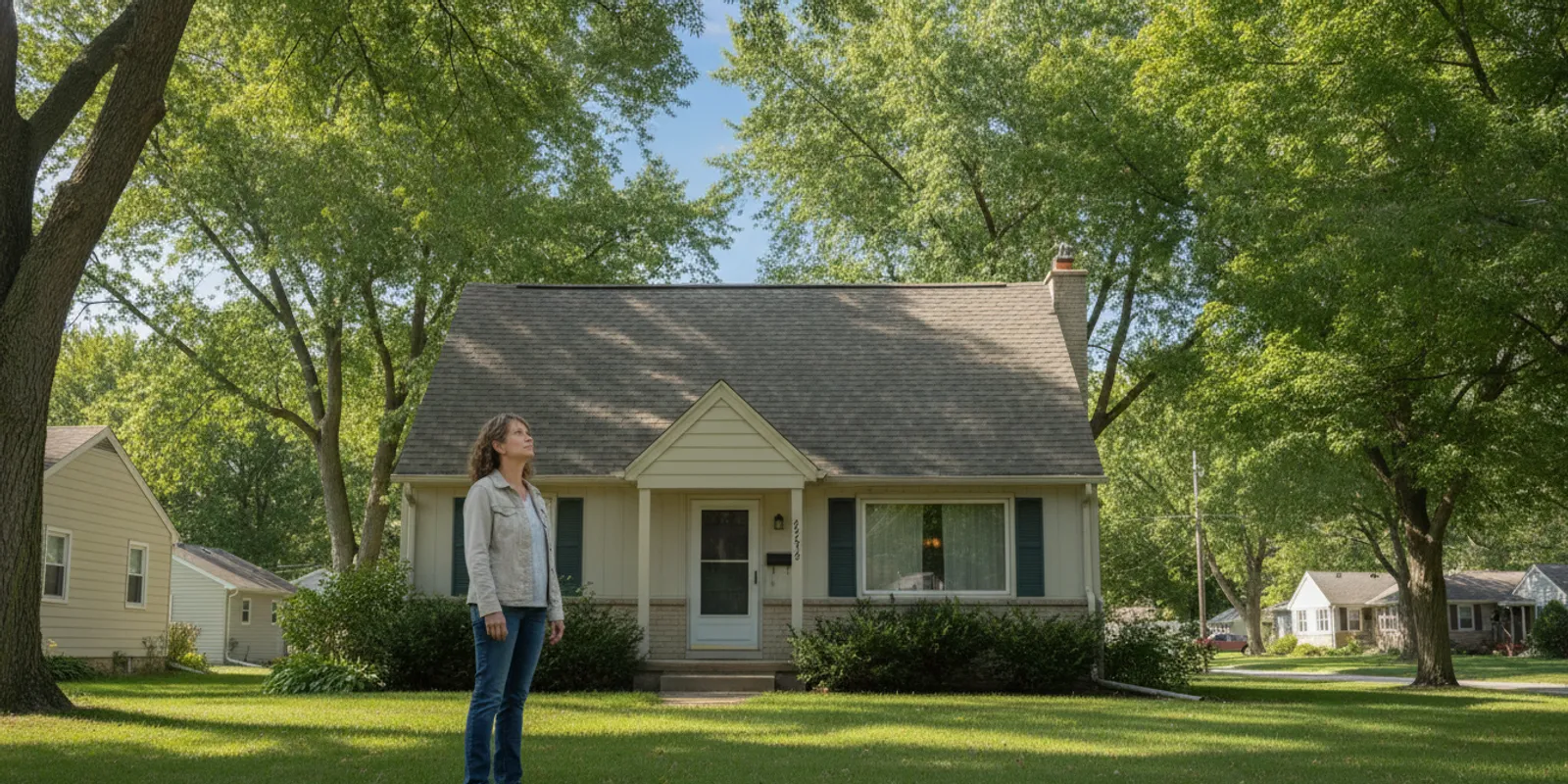
A safe inspection is mainly observation and documentation. Start by walking around the property at ground level. Use a phone camera zoom or binoculars, and note the roof slope and feature involved. If a window offers a clear view, use it rather than climbing outside. Stay clear of power lines and areas where ice or debris could fall.
If you can safely enter an attic, use a stable walkway and adequate lighting. Do not step between joists or move stored items that block your route. Look for active drips, damp sheathing, darkened wood, or daylight at a roof opening. These clues may have multiple causes, so record what you see without making a diagnosis. Leave if the space is unsafe, has exposed wiring, or shows extensive water intrusion.
Make a short record with the date, weather, room or roof feature, and any change since your last observation. Keep photos together. If water is actively entering, protect belongings and contact a roofing professional promptly. For urgent roof concerns, use the company's Minnesota roof repair page to review service information. Do not delay urgent attention solely to complete a checklist.
Build a useful observation record
A consistent record can prevent details from getting lost between the first sign and a later conversation. Write down the room or exterior feature, the date and approximate time, recent weather, and whether the mark or dampness changed. If there is more than one location, label each separately rather than grouping them as one roof issue. This makes it easier to compare observations after a later rain or thaw.
For photos, take one image that shows the broader context and another that shows the detail. A ceiling stain should be photographed with enough room features to identify its location, then close enough to show its size and edges. Exterior photos should be taken from a safe, stable place. Keep the original images if you share copies, and avoid editing in ways that could obscure color or scale. Do not place a ruler or other object on a roof to show size.
Make note of what you did not observe, too. For example, write “no active drip during the check” rather than concluding “no leak.” A short observation is more useful than a diagnosis because it preserves what you actually saw without overstating certainty.
How do common observations compare?
Observation | What it may suggest | Useful next step |
Lifted or bent metal at a roof joint | A flashing detail may have shifted or been damaged; the image alone cannot confirm the cause. | Photograph from the ground and arrange a closer evaluation if the area appears open or changed. |
Interior stain near a chimney or skylight | Water may be entering nearby, though the entry point can be elsewhere. | Record when it appears and share both room and exterior context. |
Missing shingles beside a transition | The roof covering may be vulnerable to weather; flashing condition is not confirmed. | Ask for assessment of the shingles and connected flashing detail together. |
No visible issue, no interior moisture | A ground-level view cannot establish the condition beneath roof materials. | Keep monitoring and ask about an inspection if there is a known leak, recent damage, or planned roof work. |
This comparison is a guide for organizing observations, not a substitute for an on-roof assessment. A professional can explain what is visible, what remains uncertain, and whether repair or continued monitoring is reasonable. If a larger project is being considered, review the company's residential roofing services and metal roofing information as applicable.
Think about urgency, not just appearance
Two concerns that look similar from the ground can call for different timing. A small area of visibly lifted metal with no indoor moisture is different from an active drip, spreading stain, or damp attic sheathing. The appearance alone does not establish the repair, but the presence of ongoing water is a reason to seek timely guidance. Do not wait for a larger stain to develop before recording and reporting a recurring concern.
On the other hand, an old, unchanged mark does not automatically mean water is entering now. Compare it with dated photos and check whether it changes after weather. If the mark is dry and stable, note that fact and ask what follow-up is reasonable. Avoid making a repair decision based only on the size or color of a stain.
How should you choose a next step?
Match the response to the evidence and urgency. A new active leak deserves prompt attention. A small exterior concern with no interior moisture may allow time to document and schedule an evaluation, but winter conditions can change access and make temporary measures harder. If the concern followed a storm, save the date and photographs and keep any relevant communications together.
When speaking with a roofing professional, share the location, when you first noticed the issue, and whether it changes during rain or thawing. Ask what the inspection can verify and what it cannot determine from the available access. You can also ask:
Which roof transition or penetration appears to be involved?
Is there evidence of water entry, or only an exterior concern?
How will the proposed work reconnect with surrounding shingles or roofing material?
Are there related areas that should be checked while the crew is present?
What should I monitor if no immediate repair is recommended?
Get the scope and any recommended work explained in clear terms. Avoid assuming a roof replacement is necessary based on one damaged detail; conversely, do not ignore persistent moisture because the exterior looks mostly intact. Minnesota Roofing Company offers an estimate route for homeowners considering roofing work. Related pages include ice dam information, gutter services, and attic insulation, which may be relevant to broader roof and drainage questions.
Prepare for an inspection conversation
Before an evaluation, gather the observation record, photos, and any notes about previous repairs or recurring moisture. You do not need to identify the flashing type or propose a fix. Instead, explain the symptom in plain language: where it appears, when it occurs, and what has changed. If you manage a property, include access details and identify any areas that occupants have reported.
Ask the evaluator to connect the finding to the roof system. Is the visible metal part of a chimney detail, a wall transition, or a vent penetration? Are adjacent shingles intact? Is there evidence of moisture inside, and does it align with the suspected exterior area? These questions help separate an observed condition from a conclusion about cause. If there are limitations, such as snow cover or unsafe access, ask what could not be checked and what follow-up may be needed when conditions allow.
If work is recommended, ask for a description of the affected area and how the proposed repair interfaces with surrounding materials. Request clear explanation of any alternatives, including monitoring when appropriate. A useful discussion should leave you understanding the problem being addressed, the limits of the assessment, and the next action—not simply a broad label such as “flashing issue.”
Separate roof clues from related moisture questions
Water at a ceiling or upper wall can be associated with roof entry, but the visible location does not always identify the point where water entered. Roof surfaces, framing, and interior finishes can allow moisture to travel. For that reason, note whether the mark is near an exterior wall, chimney, skylight, or roof slope, but do not assume that nearest feature is the source. A professional may need to examine both the roof detail and the interior evidence.
Also note whether the concern appears only during wind-driven rain, during a thaw, or at a different time. This timing is useful context, not a definitive test. Do not spray water on the roof or attempt a home leak test, especially in cold weather. Keep the observation focused on what happened naturally, and report any active moisture promptly.
Frequently asked questions
Can I inspect roof flashing from the ground?
You can look for visible changes from the ground, but you cannot verify how flashing is layered beneath roofing materials. Use binoculars or a camera zoom, and leave close inspection to a trained professional.
Should flashing be checked before every Minnesota winter?
There is no single schedule that fits every roof. Consider an evaluation if you see a change, have a recurring leak, or know that a roof area was affected by weather or previous work. A safe visual check can help you notice changes, but it does not replace a professional assessment.
Does a ceiling stain prove the flashing is leaking?
No. A stain can be associated with water entry, but the source may be elsewhere and moisture can travel. Note when it appears and have the area assessed rather than assuming the nearest roof feature is responsible.
Can I seal a suspected flashing gap myself?
Working on a roof can be dangerous, especially in cold or icy conditions. A surface seal may not address the underlying detail and can make later evaluation harder. Avoid roof access and ask a professional about the appropriate next step.
What should I provide when asking for an evaluation?
Share photos taken safely, the date you noticed the concern, the weather around that time, and whether you have seen indoor moisture. This information helps focus the conversation without replacing an inspection.
Taking a few safe observations before winter can make it easier to describe a concern and decide whether further evaluation is warranted.
For general background about roof features, see the National Park Service guidance on roofing. It discusses maintenance considerations for historic buildings, so its context may differ from a modern residential roof.
Comments