
Roofing Contractor Spring Lake Park MN Guide
Updated: Sep 15
A Minnesota storm can leave a roof vulnerable even when there is no obvious leak from the ground. Missing shingles, dented flashing, and small openings around vents may allow moisture to enter later. While an aging roof may already be nearing the end of its service life. A careful inspection helps separate a repairable problem from damage that calls for full replacement.
For homeowners comparing a roofing contractor spring lake park mn, the best choice is a proven local team that can inspect storm damage. Explain repair or replacement options, and provide transparent assistance through the insurance process. Minnesota Roofing Company is family-owned, based in Spring Lake Park, and has served Minnesota homeowners for more than 30 years.
Local experience matters after severe weather because accountability does not end when the storm passes. Before you decide what your roof needs, it helps to understand the contractor qualifications, inspection approach, and homeowner support that set a dependable neighborhood roofing company apart. Our Storm Damage and Roof Insurance Claims guide offers additional context as you evaluate your next step.
How to Choose a Roofing Contractor in Spring Lake Park, MN
When homeowners search for a roofing contractor in Spring Lake Park MN, they want someone local, licensed, and accountable. A storm can bring contractors from outside the area who make quick promises, collect deposits, and move on to the next damaged neighborhood. A local roofing company offers a different relationship. It has a reputation to protect, a community to serve, and a physical presence homeowners can rely on after the crew leaves.
Minnesota Roofing Company is headquartered right here in Spring Lake Park. As a 30-plus-year, family-owned roofing and renovation company, it has built its work around long-term relationships rather than temporary storm volume. That local anchor matters when a homeowner needs answers about a roof inspection, repair, replacement, or follow-up service. The company is not an out-of-state storm chaser passing through after a hail event. It is a nearby partner with a lasting stake in the quality of its work and the experience of its neighbors.
Local accountability from inspection through completion
Choosing a local contractor also makes it easier to expect clear communication. A reliable estimate should explain the materials, labor, permits, and expected timeline instead of presenting a vague price. Homeowners should also verify that a contractor is licensed, bonded, and insured before storm-damage work begins. The Minnesota Department of Commerce guidance for homeowners emphasizes the importance of selecting a reputable contractor and understanding potential out-of-pocket costs.
Spring Lake Park homeowners benefit from a contractor familiar with local homes, weather conditions, and municipal requirements. That familiarity supports a more complete evaluation, including the roof surface, flashing, ventilation, and other parts of the exterior that can affect long-term performance. It also gives homeowners a local point of contact if questions arise during the project or after completion.
Manufacturer certifications and stronger warranty options
Experience is important, but installation standards matter just as much. Minnesota Roofing Company holds manufacturer certifications with GAF, TAMKO, and Owens Corning. These certifications reflect a commitment to manufacturer requirements and technical installation practices. They can also make enhanced warranty options available, offering additional protection when the qualifying materials and installation standards are met. Homeowners should review the exact warranty terms, coverage, exclusions, and labor protections before approving a project.
That combination of local presence, family-owned experience, transparent guidance, and manufacturer-backed expertise gives Spring Lake Park homeowners a roofing partner they can continue to reach. Instead of choosing a contractor based only on who arrives after the next storm. They can choose a company rooted in the community and accountable for the finished roof.
Storm damage and hail history in Spring Lake Park and Anoka County
Wind and hail storms are a recurring part of Minnesota weather, and the north metro is not immune. After a major storm, homeowners may see a wave of unfamiliar contractors offering fast repairs. The Minnesota Department of Labor and Industry advises homeowners to do their research before hiring storm-repair help, rather than choosing the first person who arrives at the door. A local what to do after hail damages your roof in Minnesota checklist can help you slow down and make informed decisions.
Spring Lake Park has a compact, established housing stock. The community has roughly 7,000 residents and is made up largely of 1950s through 1970s ramblers and split-level homes. That matters after a storm because many roofs in these neighborhoods are already well into, or beyond, a typical replacement cycle. Older roofing systems may have weathered years of sun, freeze-thaw cycles, heavy snow, and previous wind events before a new hailstorm adds another layer of damage.
What storm damage can look like
Hail and wind damage is not always obvious from the driveway. Missing or lifted shingles, exposed underlayment, dented metal flashing, and damaged vents are common warning signs. You may also find granules in the gutters or notice a ceiling stain after the next rain. A storm-damaged roof might not leak immediately, yet small weaknesses can allow moisture intrusion and contribute to longer-term structural problems if they remain unaddressed.
Do not climb onto the roof to investigate. From the ground, take clear photographs of the exterior, gutters, siding, windows, and any visible roofing damage. Photograph interior stains as well, and note the approximate date of the storm. Documentation gives you a useful record when you speak with your insurance carrier and a roofing professional.
Stay safe and stay off the roof; inspect from the ground and note anything unusual from a distance.
Photograph the visible damage and any interior stains, and record the date of the storm.
Contact your insurance agent to confirm whether wind and hail coverage or deductibles changed at renewal.
Request a professional roof inspection rather than relying on a door-to-door assessment.
Choosing help after a hailstorm
Before work begins, verify that the contractor is licensed, bonded, and insured. The Minnesota Department of Commerce also recommends reviewing your policy and asking your insurance agent whether wind and hail coverage or deductibles have changed. Some policies use a separate wind and hail deductible, so your potential out-of-pocket cost may not match the standard deductible. A reputable roofing contractor can inspect the roof, explain what was found, and assist with documentation and claim communication. That assistance is advocacy, not a guarantee that an insurer will approve a claim.
Choose a roofing contractor with a local track record, a written scope of work, and clear warranty terms. A thorough inspection should cover the entire exterior, not just the spot where damage is easiest to see. That approach helps distinguish storm damage from age-related wear and supports a practical decision between repair and replacement.
Roof replacement options for Spring Lake Park homes: asphalt, metal, and flat roofing
The right replacement roof depends on more than appearance. Your home's roof shape, attic ventilation, exposure to wind and snow, maintenance expectations, and budget all matter. Minnesota Roofing Company installs asphalt shingles, metal roofing, and flat roofing systems using TPO or EPDM materials. A professional assessment can identify the system that fits your Spring Lake Park home instead of forcing a one-size-fits-all recommendation.
Criterion | Asphalt shingles | Metal roofing | Flat roofing, TPO/EPDM |
Expected lifespan | Varies by shingle grade, installation, and maintenance | Long-lasting system with strong weather resistance | Depends on membrane, seams, drainage, and installation quality |
Durability and weather | Durable, practical protection for common pitched roofs | Resists high winds and heavy snow loads | Designed for low-slope roofs when drainage and seams are properly managed |
Cost position | Often the most budget-friendly option | Typically a higher upfront investment | Varies with roof size, membrane, insulation, and substrate repairs |
Best use | Most residential pitched roofs and homeowners seeking broad style choice | Homes where long-term durability and severe-weather resistance are priorities | Additions, commercial-style sections, and homes with low-slope roof areas |
Maintenance focus | Check shingles, valleys, flashing, gutters, and storm damage | Inspect fasteners, seams, penetrations, and finish condition | Keep drains clear and inspect seams, membrane damage, flashing, and ponding |
Asphalt shingles remain Minnesota's most popular roofing material because they balance affordability, durability, and aesthetic variety. They are a practical fit for many Spring Lake Park ramblers and split-level homes. Metal roofing is a strong consideration when high-wind exposure, heavy snow, or a long-term durability goal weighs heavily in the decision. Energy-efficient roofing materials can also help reduce heating and cooling costs throughout the year, although the result depends on the complete roof assembly and attic conditions.
Flat and low-slope areas require different planning. TPO and EPDM membranes must be selected and installed with attention to drainage, seams, penetrations, insulation, and the existing deck. A membrane system is not simply a shingle roof laid at a lower angle. For any roof type, soffit and ridge ventilation are critical in Minnesota's changing climate because adequate airflow helps control attic moisture and supports roof-system life. Flashing around chimneys and vents also deserves close attention, since those details are common leak points.
Before choosing a material, review the roof replacement process in Minnesota and explore the company's storm repair guidance. A complete inspection and written estimate can account for ventilation, underlayment, flashing, permits, deck condition, and drainage. That assessment gives you a clearer basis for comparing options and selecting a roof built for your home's structure and Minnesota weather.
24/7 emergency response for Spring Lake Park homeowners after a storm
When wind or hail moves through Spring Lake Park, roof damage is not always obvious from the ground. Missing shingles, dented flashing, and small openings can leave a roof vulnerable even when the ceiling inside still looks dry. Minnesota Roofing Company is based in Spring Lake Park, so our team can respond locally when neighbors need help securing the property and understanding what should happen next.
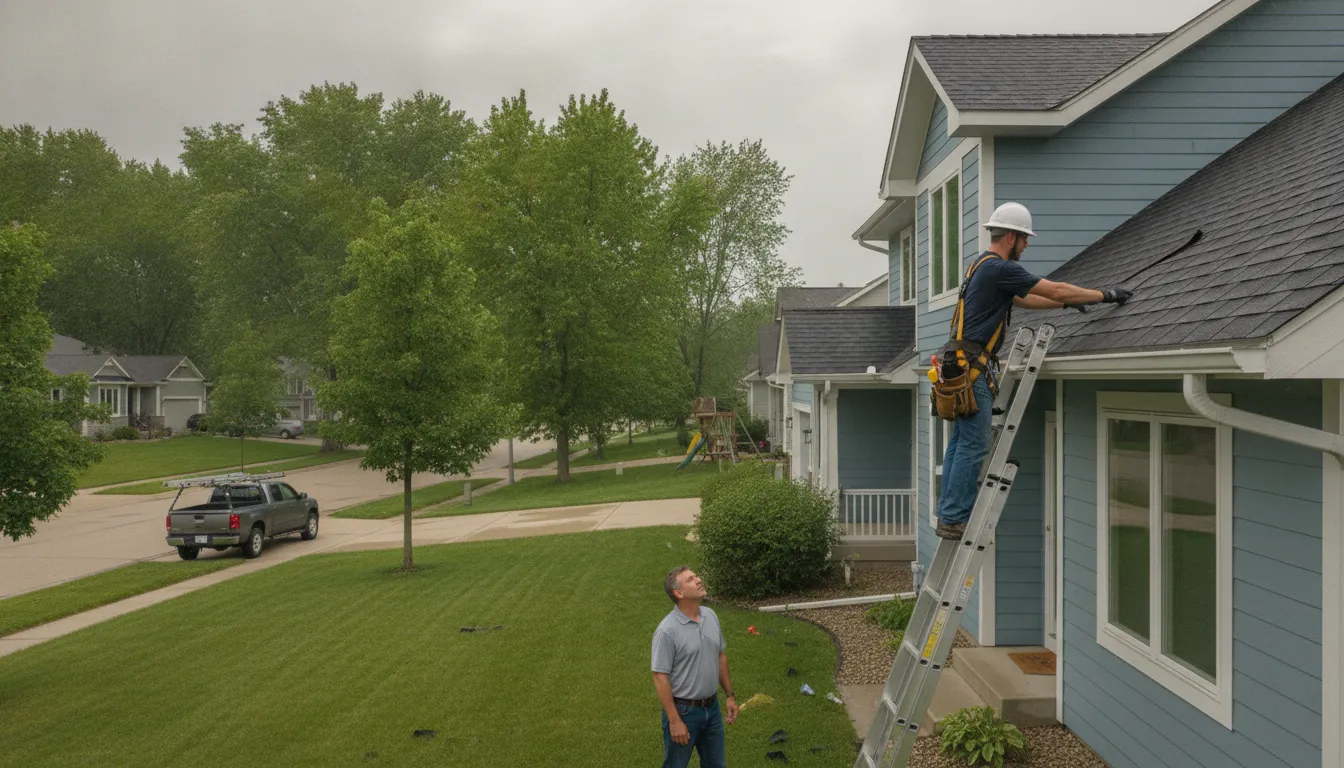
Our first priority is a careful, professional inspection. A professional roof inspection is the most accurate way to determine whether storm damage calls for a localized repair or a full replacement. We also inspect the entire exterior, not only the area where a homeowner noticed a problem. That comprehensive approach includes visible roofing surfaces, flashing, vents, siding, gutters, and other exterior components that may have been affected. Identifying the full scope early helps prevent a small, overlooked defect from becoming a larger water-intrusion issue.
Clear documentation from inspection through repair
Storm damage can make the insurance process feel uncertain, especially when the policy includes separate wind or hail terms and deductibles. Minnesota Roofing Company provides insurance-claim advocacy and assistance by helping document observed damage, organize the repair scope, and communicate clearly about the work. This support is not a guarantee that an insurer will approve a claim. Coverage decisions remain with the insurance company and depend on the policy, the cause of loss, and the evidence available.
Homeowners can learn more about the process in our Storm Damage and Roof Insurance Claims guide. For a practical overview of documentation and insurer conversations, read how to get insurance to pay for a new roof. The goal is to give you a clear record of what was found and what the proposed work includes, rather than asking you to make a rushed decision.
A written plan for the work ahead
Before repairs or replacement begin, a dependable contractor should provide an estimate that clearly outlines materials, labor, permits, and expected timelines. That detail gives Spring Lake Park homeowners a useful basis for comparing the proposed scope with their claim documentation and household plans. Warranties should also be documented in writing, including the covered work and the duration of labor coverage. Clear paperwork protects expectations on both sides and makes it easier to address questions after the project is complete.
Rapid response matters after a storm, but speed should not replace careful evaluation. A local team that can inspect the entire exterior, explain the findings, assist with claim documentation, and provide a written plan helps homeowners move forward with less uncertainty.
Get a free roof inspection in Spring Lake Park from a certified local contractor
A roof inspection is a practical first step when you are unsure whether a storm caused meaningful damage. Or when your roof is approaching or past 20 years old. Minnesota Roofing Company provides a clear, local assessment so you can understand what your roof needs before deciding between a repair, maintenance, or replacement.
Our team is based in Spring Lake Park and has served Minnesota homeowners for more than 30 years as a family-owned roofing and renovation company. That local presence matters after severe weather. You are working with a contractor who understands north metro homes and remains accountable to the community. Rather than someone who arrived from out of state after the storm. Minnesota homeowners are also encouraged to verify that any storm-repair contractor is licensed, bonded, and insured. The Minnesota Department of Commerce offers guidance for selecting a reputable contractor.
What a free roof inspection includes
A professional inspection should look beyond the spot where you first noticed a problem. Minnesota Roofing Company examines the full exterior, including the roof surface, flashing, penetrations, edges, and other areas where damage or water entry may begin. The goal is to identify the condition of the complete roof system, not simply document the most obvious damaged area.
Some storm damage is easy to recognize, such as missing shingles or visibly dented flashing. Other problems may not be apparent from the ground and may not cause an immediate leak. A careful inspection can help determine whether the issue is localized or whether the roof has broader storm-related wear that needs attention. Professional inspections are the most accurate way to assess storm damage and decide whether a repair or full replacement is appropriate.
Our manufacturer certifications with GAF, Owens Corning, and Tamko reflect training in the installation standards for those roofing systems. When replacement is warranted, working with a certified contractor may also provide access to enhanced warranty options. Any warranty, scope of work, and labor coverage should be explained clearly and documented in writing.
If a recent storm has you concerned, or your roof has reached the end of its expected service life, you can request a free inspection and estimate. You can also review our Storm Damage and Roof Insurance Claims guide to understand the next steps. An inspection does not obligate you to move forward. It gives you reliable information to make a timely, informed decision.
Frequently Asked Questions
What is the average cost of replacing a roof in Minnesota?
Many Minnesota asphalt-shingle replacements fall somewhere in the broad range of roughly $10,000 to $25,000 for an average-sized home, but that is only a planning estimate. Roof size, pitch, tear-off layers, decking repairs, ventilation, material choice, permits, and access can move the final price substantially. A written estimate should separate materials, labor, disposal, permits, and any optional upgrades.
What is the 25% rule for roofing?
The 25% rule is not a universal promise that an insurer will replace an entire roof. It may refer to building-code requirements, policy language, or a provision requiring a larger roof section to be updated when damage exceeds a stated portion. Review the policy and local requirements for your specific claim. A contractor can document the damage and advocate for you, but the insurer makes the coverage decision.
Is $30,000 too much for a roof?
Not necessarily. A $30,000 quote may be reasonable for a large or complex roof, premium materials, multiple tear-offs, extensive decking or ventilation work, or difficult access. It may be high for a small, simple asphalt-shingle roof. Compare itemized scopes rather than totals alone, and ask what assumptions would change the price.
What time of year is the cheapest to replace a roof?
Late fall and, in some cases, winter can bring more flexible scheduling or contractor promotions, but Minnesota weather can delay work and limit safe installation conditions. Spring and summer often have stronger demand. The best value is a properly planned installation using materials within their temperature requirements, not simply the lowest seasonal quote.
How do I know if my Spring Lake Park roof has hail damage?
Look for missing or bruised shingles, exposed fiberglass, dented metal flashing, damaged vents, granules in gutters, or leaks after a storm. Damage is not always visible from the ground, and a roof can develop problems later even without an immediate leak. Avoid climbing onto the roof. Document what you can safely see and arrange a professional inspection, which is the most accurate way to distinguish repairable damage from replacement needs.
Ready to Get a Free Roof Inspection?
A professional inspection can help you understand your roof's condition and identify storm damage before choosing a repair or replacement path. Minnesota Roofing Company serves Spring Lake Park homeowners with local experience and straightforward guidance. Get started by requesting a free roof inspection through our Fast + Free Instant Estimate. Share a few details about your home, and our team can review the next step with you.
Comments