
Roofing Company Roseville MN: Storm and Replacement Guide
Updated: Sep 15
Roof problems in Roseville can begin with one missing shingle, a wind event, or years of Minnesota weather exposure. The right next step depends on the roof's condition. It may need a targeted repair, storm documentation, full replacement, or commercial maintenance plan.
A roofing company Roseville MN property owners can rely on should explain the damage clearly. The inspection should cover the roof and related components, document storm impacts, and outline repair or replacement options without promising an insurance outcome. Minnesota Roofing Company serves residential and commercial properties throughout the Twin Cities, including Roseville.
Minnesota Roofing Company is a family-owned contractor with more than 30 years of experience and headquarters in Spring Lake Park. For broader regional context, read the Twin Cities Suburb Roofing Services: Your Local Contractor Guide. Then compare the company's roof repair options, storm damage roofing guidance, roof replacement process, and commercial roof replacement services.
How a Roofing Company Roseville MN Can Help With a Local Roof Problem
Roseville homeowners and property managers need a roofing response that matches the building, the urgency, and the evidence. A local inspection can help distinguish a single repair from widespread storm damage or an aging system that needs replacement. It can also identify related concerns involving flashing, ventilation, decking, gutters, siding, or interior finishes.
Minnesota Roofing Company provides residential roof repair, roof replacement, storm-damage restoration, and commercial roofing support across the Twin Cities. The company also offers related exterior and renovation services when a roofing issue affects other parts of the property. The goal is to explain what was observed and outline a practical next step.
Residential repair and replacement
Localized damage may be repairable when the surrounding roofing materials remain sound. Common examples include a damaged shingle, a flashing concern, or a leak around one penetration. A repair assessment should still look beyond the visible symptom because water can travel beneath roofing materials before it appears inside.
Replacement deserves consideration when leaks recur, deterioration is widespread, or the roof assembly needs broader attention. The review should account for the roof's age, material, size, ventilation, decking, and storm history. Homeowners can use Minnesota Roofing Company's professional roof replacement information to understand the planning conversation before authorizing work.
Storm and exterior restoration
Hail and wind can damage shingles, flashing, vents, gutters, and other exterior components. Some signs are difficult to see safely from the ground. Minnesota Roofing Company offers storm-damage restoration and 24/7 emergency response capabilities for storm-related situations. Its team can document observed conditions and explain the insurance-advocacy process, while coverage and claim decisions remain with the insurance provider.
Material selection is part of a replacement discussion. Minnesota Roofing Company holds Tamko Diamond Level, GAF Certified Installer, and Owens Corning Preferred Contractor credentials according to its company information. Those relationships can help homeowners compare product options alongside appearance, weather exposure, ventilation, and the existing roof assembly.
What to Ask a Roofing Company Roseville MN Homeowners Are Considering
When comparing contractors, ask who will inspect the property and how findings will be documented. Ask which materials are recommended and what the written estimate includes.
A qualified contractor should explain the options plainly and give you room to make a decision without pressure.
Local accountability matters after the crew leaves. Look for an established Twin Cities presence, a clear point of contact, and a process for responding to questions about workmanship, warranties, or concealed conditions. Minnesota Roofing Company is headquartered in Spring Lake Park and identifies Roseville as one of its priority service communities.
Credentials are another useful checkpoint. Minnesota Roofing Company is licensed under Minnesota Contractor License #BC688547 and reports Tamko Diamond Level, GAF Certified Installer, and Owens Corning Preferred Contractor status. Ask what a credential means for your proposed roofing system, installation requirements, warranty documentation, and post-project support. A certification should support your evaluation, not replace a clear scope of work.
Review the written scope
The estimate should distinguish confirmed observations from items that need further investigation. It should also make clear what is included, what is excluded, and how the contractor will handle changes if concealed damage appears after removal. Before approving a project, ask about:
Roof removal, disposal, and protection of landscaping or exterior features.
Shingle or membrane materials, flashing, ventilation, and deck inspection.
Cleanup standards, schedule communication, and weather-related delays.
Manufacturer warranty requirements and the contractor's workmanship coverage.
Storm documentation and insurance coordination, without accepting a promise of claim approval.
The best comparison is not just a material name or a low initial number. It is the quality of the evidence, the clarity of the scope, and the accountability offered from inspection through completion. Homeowners can also review the regional Twin Cities suburb roofing guide when evaluating how local service fits into a broader property plan.
What Should Roseville Homeowners Do After Hail or Wind Damage?
After hail or wind damage, make the property safe, limit additional water entry, document visible conditions, and arrange a professional inspection. Then notify the insurer according to the policy and coordinate the repair plan with a qualified contractor. Do not climb onto a wet or damaged roof to investigate or make a temporary repair.
- Protect people first.
Keep clear of loose roofing materials, downed branches, electrical hazards, and ceilings that are bulging or visibly saturated. If water is entering the home, move belongings away from the affected area and use containers under active leaks when safe.
- Reduce additional exposure.
If a temporary covering is needed, ask a contractor about emergency measures or use only a method that can be completed safely from the ground. Minnesota Roofing Company reports 24/7 emergency response capabilities for storm damage.
- Document what you can see.
Take dated photographs and video from the ground and inside the property. Record missing or lifted shingles, dents in accessible metal, damaged gutters, fallen branches, water stains, and affected belongings. Keep receipts for reasonable temporary protection.
Arrange an inspection.
Hail bruising, granule loss, creases, and damage around vents or flashing may not be obvious from the ground. A qualified inspector can assess accessible roof and exterior areas and provide written observations. The
National Roofing Contractors Association inspection guidance
supports periodic evaluation as part of responsible maintenance.
- Contact the insurer.
Report the loss according to the policy, share photographs and inspection records, and ask what claim procedures or deadlines apply. Coverage depends on the policy, the roof's condition, and the cause of the loss. A contractor can help organize documentation, but cannot guarantee a coverage decision.
Review the repair plan.
Give the contractor and adjuster access to the same evidence. Ask which work is temporary, which is permanent, and whether related components need attention. Minnesota Roofing Company's
can help you frame that conversation.
Prompt action can reduce the chance that a small opening becomes interior damage. Do not discard damaged materials before documenting them unless they create a safety hazard. Once the property is safe, a clear inspection record gives you a better basis for choosing repair, replacement, or continued monitoring.
When Does a Roseville Roof Need Repair or Replacement?
Repair is often appropriate when damage is limited and the rest of the roof remains sound. Replacement becomes more practical when problems are widespread, the roof is near the end of its useful service. Or inspection reveals recurring leaks, deteriorated materials, damaged decking, or ventilation concerns. A careful assessment helps separate a manageable repair from a larger roofing decision.
Signs a repair may be enough
A few missing or damaged shingles, a small flashing failure, or an isolated leak may be repairable when nearby materials are in good condition. Visible clues can include a lifted shingle, exposed fasteners, damaged pipe flashing, or water staining near one roof penetration. Even a small problem deserves attention because the visible indoor stain may not show the full path of the water.
After hail or wind, avoid relying on a ground-level glance alone. Granule loss, bruising, creased shingles, and damage to vents or flashing can be difficult to identify safely. A professional roof repair assessment can document affected areas and clarify whether the issue is isolated or part of a broader pattern.
When replacement deserves consideration
Replacement is more likely when leaks occur in multiple areas, shingles are broadly brittle or deteriorated, prior repairs keep failing, or the roof has reached an advanced age. The decision should also account for decking and ventilation. Soft or moisture-affected decking may need attention before new roofing is installed. Inadequate intake or exhaust ventilation can contribute to moisture buildup, so it should be evaluated as part of the project.
Insurance questions should be handled with the same care. The Insurance Information Institute explains that roof age and condition can affect insurance discussions and that older roofs may receive additional scrutiny. Its roof and insurance guidance is useful context, but it does not determine coverage for a particular property. The insurer and policy control that decision.
Commercial Roofing Support for Roseville Properties
Commercial property owners and managers need a roofing plan that protects operations, documents conditions, and addresses problems before they disrupt occupants. Minnesota Roofing Company supports commercial properties with maintenance, leak response, inspections, repairs, and replacement planning. The right next step depends on the roof system, age, drainage, condition, and urgency.
For ongoing protection, begin with a documented inspection and maintenance schedule. After severe weather or a reported leak, prioritize safe access, temporary protection when appropriate, and clear records of affected areas. The contractor should explain what requires attention now, what can be planned later, and what the building's occupants or tenants need to know.
Situation | Practical next step | Records to keep |
Small leak or isolated damage | Arrange a targeted inspection and repair assessment. | Leak location, date, photos, interior impact, and temporary measures. |
Recurring leaks or widespread wear | Request a system-level evaluation and compare repair with replacement planning. | Roof age, system type, repair history, drainage observations, and findings. |
Storm damage affecting the roof or interior | Protect people and contents, arrange prompt response, and document before permanent work. | Storm date, visible damage, interior conditions, photos, and response activity. |
Commercial replacement planning should account for more than surface wear. Materials, roof size, insulation, drainage, deck condition, the building's use, and access requirements all influence the project sequence. A clear scope can help managers coordinate tenants, safety procedures, equipment, and business continuity. Review Minnesota Roofing Company's commercial roof replacement options when planning the next discussion.
What Happens During a Roseville Roof Inspection and Estimate?
A Roseville inspection and estimate should give you a clear picture of the roof's condition, not a rushed sales pitch. Minnesota Roofing Company begins with your concerns and property history, completes a safe visual assessment. Documents findings, explains repair or replacement options, and outlines practical next steps for your home or business.
1. The intake identifies the reason for the visit
You may be dealing with a leak, visible wear, recent hail or wind, an aging roof, or planning for a future project. Sharing when you noticed the issue, which rooms are affected, and any previous repairs helps focus the assessment. Commercial owners may also discuss maintenance records, tenant concerns, roof-system type, and access requirements.
2. Findings become a plan
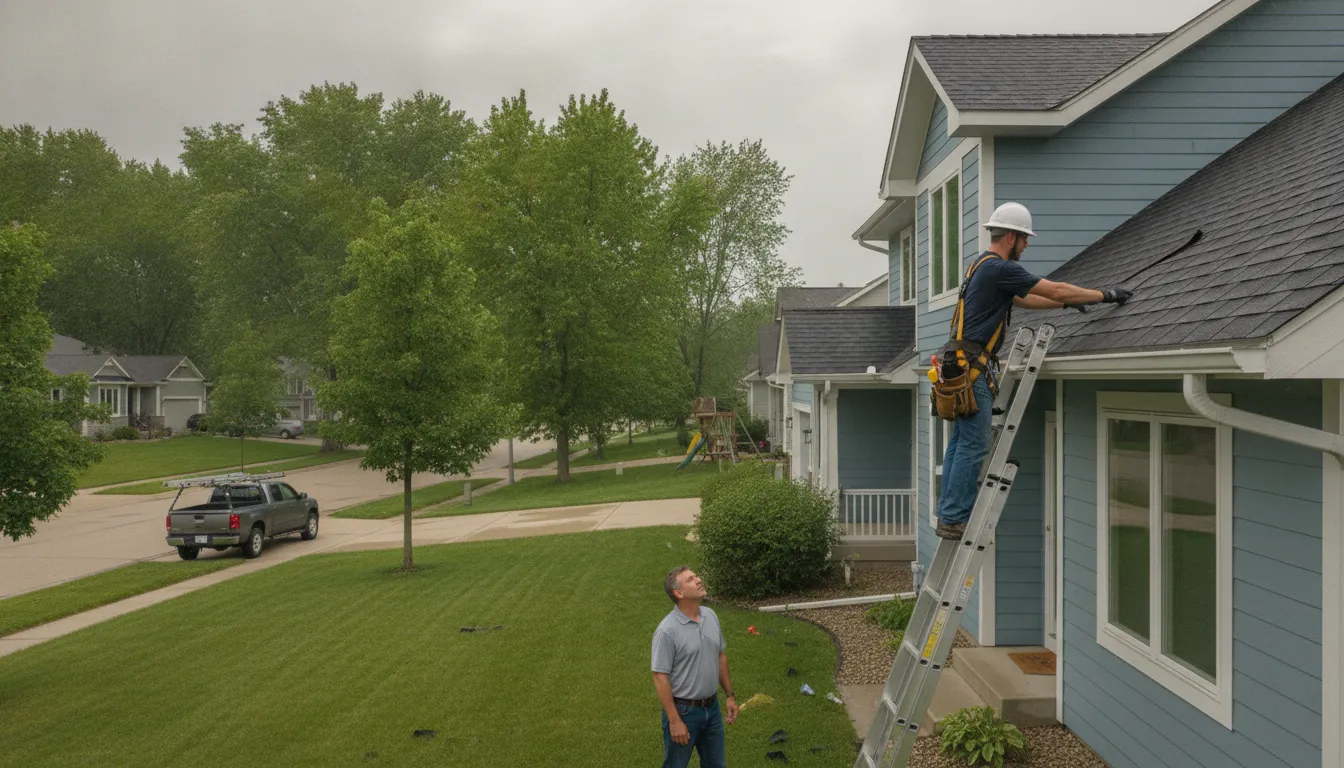
The inspector reviews accessible roof surfaces, flashing, penetrations, drainage areas, and visible signs of moisture or storm impact. Safety comes first, so the inspection method depends on roof design, conditions, and access. Photos and written observations create a record you can use when comparing options.
After the assessment, Minnesota Roofing Company can explain whether the observed condition points toward roof repair, continued maintenance, or roof replacement in Roseville. The recommendation should separate confirmed observations from items that need further investigation. If storm damage is involved, documentation can support an informed insurance conversation, but no contractor can guarantee approval or a specific outcome.
3. You receive clear next steps
A useful estimate explains the recommended scope, materials or system options, known exclusions, and decisions still pending. Ask questions before authorizing work, and keep the inspection documentation with your property records. When you are ready to continue, use the free instant estimate tool to begin the conversation.
Frequently Asked Questions About Roofing in Roseville, MN
How often should I inspect my roof in Minnesota?
Arrange a professional inspection periodically and give the roof extra attention after a severe winter, major storm, recurring leak, or noticeable change in condition. Periodic evaluation can identify small defects before they become larger repair problems. The National Roofing Contractors Association recommends periodic inspections as part of responsible roof maintenance.
What are the signs of hail damage on a roof?
Possible signs include bruised or missing shingle granules, circular dents, cracked or creased shingles, and damage to vents, flashing, or gutters. Hail damage is not always visible from the ground, so avoid climbing onto the roof. Ask a qualified roofing professional to document suspected damage after hail or high winds.
Does homeowners insurance cover roof replacement in Minnesota?
Coverage depends on the policy, roof age and condition, the cause of damage, and the insurer's assessment. Do not assume a claim will be approved. Photograph damage, prevent additional interior damage when safe, and keep inspection and repair records. A contractor may assist with documentation, but the insurer makes the coverage decision.
Do I need a permit for roof repair in Roseville?
Permit requirements can vary with the scope of work, property, and current local rules. Before work begins, ask the contractor whether the project requires a permit and confirm the requirement with the City of Roseville building department. Keep any permit and final inspection records with your project documents.
What factors determine whether my roof needs replacement?
A roofing professional will consider the roof's age, condition, size, material, ventilation, decking, and the extent of damage. Repeated leaks, widespread storm damage, or deteriorated materials may point toward replacement, while isolated damage may be repairable. An inspection helps compare practical options without relying on a generic cost estimate.
Comments