
Hail Damage Roof Inspection Cost: Minnesota Homeowner Guide
Updated: Sep 15
After a Minnesota hailstorm, the most important question is not only whether your roof looks damaged. But whether the evidence is documented clearly enough to guide your next decision. Hail strong enough to damage roofing materials often leaves marks on nearby cars, siding, fences, or shutters, although the roof still needs a close professional assessment.
For many homeowners, a hail damage roof inspection cost may be waived when the inspection is connected to an insurance claim. While a standalone inspection from a certified contractor commonly carries a fee. The final price depends on factors such as roof size, pitch, accessibility, and the level of documentation needed.
A careful inspection can separate hail impact from age-related embrittlement, cupped shingle edges, or manufacturing issues. It can also create a clearer record for conversations with your insurer without promising a particular claim outcome. Minnesota Roofing Company helps homeowners evaluate storm damage restoration needs across the Twin Cities and statewide. Start by understanding when an inspection is free and when paying for an independent evaluation may make sense.
Is a Roof Inspection After Hail Free or Paid?
In Minnesota, the answer depends on why you are requesting the inspection and who performs it. A roofing contractor may offer a complimentary first look after a storm, especially when the visit is connected to an insurance claim or an estimate for covered repairs. That initial assessment can help determine whether a closer inspection is worthwhile, but homeowners should ask what the visit includes and whether any obligation follows.
A standalone inspection from a certified roofing professional may carry a fee. This is more likely when you want independent documentation, a detailed written report, or an evaluation that is not connected to a proposed repair or replacement project. Pricing varies by roof size, access, pitch, location, and the level of documentation requested. Before scheduling, confirm whether the inspection is free, what you will receive in writing, and whether the inspector will meet with your insurance adjuster.
When a free inspection can make sense
A no-cost first inspection can be a practical starting point when a recent storm affected your neighborhood. The contractor can look for visible impact marks, check vulnerable roof areas, and discuss whether filing a claim appears reasonable. It is still wise to compare the contractor's observations with your policy and your insurer's process. A free inspection should not be treated as proof that an insurer will approve a claim, and no contractor can guarantee that result.
Weather evidence can help you decide whether to request that first look. Hail generally needs to reach about 1 1/4 inches in diameter, roughly the size of a half-dollar. Before it can damage heavy composite or wood shake shingles, according to the Nebraska Department of Insurance. Hail powerful enough to damage a roof will often leave clues on nearby cars, fences, shutters, or siding as well. Those signs do not replace a roof inspection, but they give a Minnesota homeowner useful context when describing the storm.
When paying for an inspection may be worthwhile
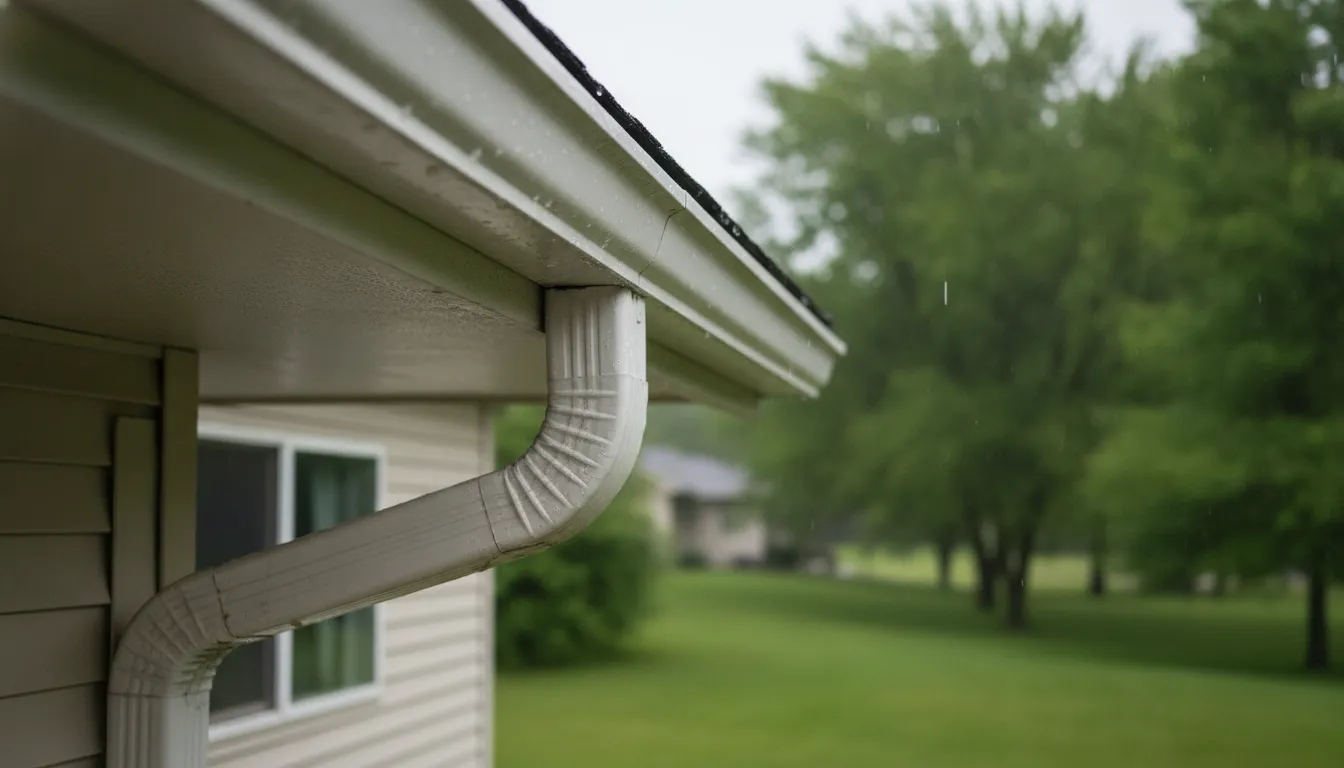
Consider a paid inspection when you need a neutral record before choosing a contractor. When the roof's condition is difficult to evaluate from the ground, or when you need documentation for a dispute or second opinion. A professional should explain the findings clearly and distinguish hail impact from age-related wear, embrittlement, installation issues, or manufacturer defects. Granules in gutters or downspouts may indicate that further evaluation is needed, but granule loss alone does not prove hail damage.
The lowest price is not always the best value. Ask about credentials, roof access and safety practices, photographs, written findings, and whether the fee is credited toward approved work. A clear scope lets you compare a free preliminary assessment with a paid, documented inspection without confusing the two.
What a Professional Hail Damage Inspection Covers
A thorough inspection is more than a quick look at the shingles from the driveway. On a Minnesota roof, the inspector works across the roof surface and its vulnerable details, then documents what the evidence does and does not show. That distinction matters when you are evaluating repairs, discussing a claim, or deciding whether the hail damage roof inspection cost is justified.
Documenting impact marks and granule loss
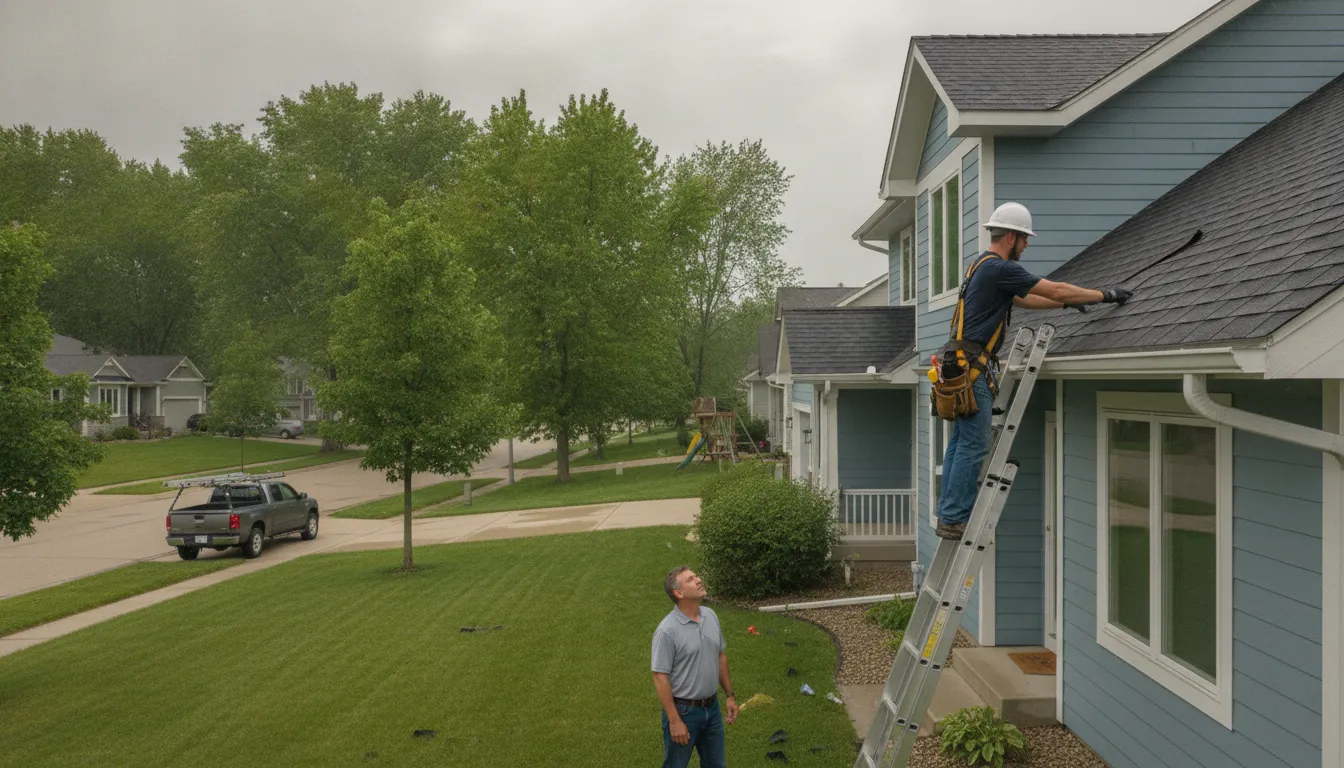
The inspection typically begins with a systematic review of the shingle fields. The inspector looks for impact marks, exposed mat, fractured asphalt, bruising, and patterns that are consistent with hail strikes. Photos should show the affected area clearly and include enough surrounding context to identify the roof slope and location. A written report can then connect each observation to a specific part of the roof instead of relying on a general statement that the roof appears damaged.
Granules in gutters or at the ends of downspouts can be a useful clue, especially when the loss appeared after a storm. However, granule loss alone does not prove hail damage. It can result from age, normal wear, installation conditions, or other factors. The Nebraska Department of Insurance specifically notes that granule loss may indicate potential damage, but does not confirm it by itself. Its hail damage guidance is a useful reference for understanding that distinction.
Checking the roof's details and surrounding property
A professional does not stop at the middle of the shingle field. The inspection should include flashing around chimneys, vents, skylights, and wall transitions, along with valleys, hips, ridges, and roof edges. These areas may respond differently to impact and can reveal whether damage is localized or spread across multiple slopes. The inspector should also look at gutters, downspouts, siding, window trim, fences, and other exposed features.
Ground-level damage provides context, not automatic proof. Hail strong enough to damage a roof will often damage nearby cars, wood fences, shutters, or exterior siding as well, according to the same state guidance. That surrounding evidence can help establish the storm's severity, but the roof itself still requires a close inspection.
Separating hail damage from other shingle problems
Finally, the inspector compares suspected impact marks with conditions that can look similar. Embrittlement or hardening, cupped edges, age-related deterioration, installation issues, and manufacturer defects may create cracking or surface changes without being caused by hail. A careful report identifies those differences rather than labeling every defect storm damage. That objective assessment gives a Minnesota homeowner a clearer basis for maintenance or repair decisions and helps prevent unsupported conclusions.
What Determines Hail Damage Roof Inspection Cost in Minnesota
For Minnesota homeowners, a hail damage roof inspection cost typically falls between $150 and $500 when the inspection is a standalone, professional service. That range is a planning estimate, not a guaranteed quote. Some contractors include an inspection at no charge when it is part of a repair or replacement project, while a certified, documentation-heavy inspection may carry a separate fee.
The most important question is not simply what the inspection costs. It is what the inspection includes and whether the resulting documentation will help you make a sound repair decision or organize an insurance claim.
Roof size, pitch, and access
A large roof takes longer to walk, photograph, and map than a small, straightforward roof. Steep pitches can require additional fall-protection equipment, more setup time, or a combination of ground-level and close-range inspection methods. Roofs with multiple elevations, additions, dormers, skylights, or complicated valleys also require more attention than a simple gable roof.
Access matters in Minnesota properties with attached garages, mature trees, narrow side yards, or landscaping that limits ladder placement. If the inspector must spend additional time protecting the property or reaching difficult roof sections, the scope and price may increase.
Inspection technology and documentation
Some inspections rely primarily on a physical roof assessment and photographs. Others may add drone imagery, close-up photography, moisture checks, or a roof diagram showing the location and type of observed damage. Drone technology can be useful for steep, high, or hard-to-access areas, but it does not automatically make an inspection more thorough. The value comes from how the information is interpreted and documented.
Ask whether the final report identifies each roof plane, includes dated photos, distinguishes hail impacts from wear or manufacturing issues, and explains recommended next steps. The Nebraska Department of Insurance notes that embrittlement, cupped edges, and other conditions can resemble storm damage. It also cautions that granule loss alone does not prove hail damage. Review the agency's hail-damage guidance for additional context.
Storm severity and inspector credentials
Hail size and storm conditions can affect how much investigation is needed. The same state guidance says hail generally needs to reach about 1 1/4 inches in diameter before it damages heavy composite or wood shake shingles. Hail strong enough to damage a roof may also leave evidence on nearby cars, fences, shutters, or siding. Those observations can help establish a useful timeline, but they do not replace a roof-specific assessment.
Inspections completed by experienced, manufacturer-certified contractors may cost more because they reflect specialized training and more detailed reporting. A typical inspection takes about one to three hours, depending on the roof and the requested scope. Before scheduling, confirm the price, whether photo evidence for an insurance claim is bundled, and whether a written report is included. A clear scope helps you compare estimates fairly without assuming that the lowest fee provides the same level of evidence.
How Inspection Reports Affect Your Insurance Claim
A detailed roof inspection report gives you and your insurance company a shared record of what was observed. Where it was found, and why it may be related to the storm. It should document the roof's condition, affected slopes, damaged accessories, photographs, and any conditions that could explain the findings. That level of detail does not guarantee claim approval, but it can make the evaluation more organized and help prevent important information from being overlooked.
The report helps establish the roof's pre-storm value
When an adjuster evaluates a hail claim, the analysis may include the roof's Actual Cash Value, or ACV, immediately before the storm. ACV generally reflects the roof's value after considering age and depreciation. A thorough report can provide useful context about the roof's age, materials, visible condition, prior repairs, and the specific storm-related damage observed. The Nebraska Department of Insurance explains that an adjuster calculates the roof's ACV immediately before the hailstorm: read the agency's hail damage guidance.
This is one reason an inspection should identify both damage and pre-existing conditions. For example, an inspector may distinguish hail impacts from embrittlement, cupped edges, or a manufacturer defect. Granules in a gutter or at the end of a downspout can indicate potential damage, but granule loss alone does not prove that the shingles sustained hail damage. The report should explain the evidence rather than treat every roof issue as storm-related.
Deadlines and deductibles can change the claim calculation
Review your policy as soon as possible after the inspection. Many policies require covered repairs within a specific timeframe, often about 180 days, for replacement-cost coverage to apply. The exact deadline and conditions vary by policy, so confirm them with your insurance carrier or agent. Waiting too long to understand the requirements can create avoidable problems, even when the roof damage itself is documented.
Also check whether your policy includes a separate wind-and-hail deductible. Some policies set this deductible higher than the standard deductible. Your inspection report can describe the scope of work, but your policy determines how deductibles, depreciation, limits, exclusions, and replacement-cost provisions affect the financial outcome. A roofing contractor can help explain the repair scope and documentation, while the carrier makes coverage decisions.
Keep the documentation consistent
Save the inspection report, dated photographs, contractor estimates, invoices, policy correspondence, and adjuster's estimate together. If additional concealed damage or omitted work is discovered, ask for the documentation to be reviewed through a supplemental roof insurance claim process. Clear evidence and consistent descriptions help everyone compare the same information.
What to Look for When Comparing Inspection Quotes
Price is only one part of comparing a roof inspection. Before you schedule, ask what the inspector will examine, whether someone will be on the roof or at the property, and what documentation you will receive afterward. A low or no-cost option can be useful for an initial conversation, but it may not provide the detailed, claim-ready record a homeowner needs.
Inspection option | What you get | Typical cost or cost expectation | Best for whom | How hail damage is documented for a claim |
Free instant estimator | A preliminary roof or project estimate, often based on property details, measurements, satellite imagery, or information you provide. | Usually no upfront fee. Confirm whether the estimate is limited to screening and whether an on-site inspection is included. | Homeowners who want an initial budget range or need help deciding whether to request a full inspection. | May identify an apparent storm event or likely concern, but it may not document individual shingles, collateral damage, photographs, or testable findings in a written report. |
Paid standalone certified inspection | An on-site assessment by a qualified inspector, with roof-surface observations, photographs, notes about roof condition, and a written scope. | Often falls in the $150-$500 range, depending on roof size, pitch, accessibility, technology, and certification level. Get the fee and deliverables in writing. | Homeowners who need an independent condition assessment, are evaluating a property, or want detailed documentation before discussing a claim. | A strong report should describe the location and type of observed damage. Distinguish hail from aging or defects, include dated photographs, and explain what was and was not inspected. |
Insurance-driven inspection | An inspection arranged as part of an insurance claim, generally focused on covered loss and the policy's requirements. | There may be no separate inspection bill to the homeowner, but the claim can still involve a deductible and policy-specific conditions. | Homeowners who have reported a storm loss and are ready for the carrier's evaluation. | The adjuster's report records the carrier's findings and estimate. Keep your own photos, storm-date notes, contractor report, and copies of every document for comparison. |
Questions to ask before you accept a quote
Will a qualified person inspect the roof on-site, or is this satellite-only?
Will I receive a written report with photographs, roof areas inspected, damage descriptions, and limitations?
Does the fee include attic or collateral-damage observations, or are those separate services?
Is the quoted price fixed, and what could cause additional charges?
Be cautious of any report that treats granules in a gutter as proof by itself. Granule loss can indicate potential damage, but it does not confirm hail-related structural damage. A professional assessment should also consider embrittlement, cupped edges, manufacturing defects, and other explanations. Hail large enough to damage a roof may also leave evidence on nearby cars, fences, shutters, or siding, so note those conditions without overstating them. The Nebraska Department of Insurance explains that hail generally must reach about 1 1/4 inches to damage heavy composite or wood shake shingles. Although roof materials and conditions vary. Review the department's hail damage guidance when evaluating the scope of an inspection.
Why a Certified Contractor's Inspection Carries More Weight with Adjusters
An adjuster needs to determine whether the roof has covered storm damage, what caused the observed condition, and what work may be appropriate under the policy. A certified contractor's inspection helps answer those questions with more than a quick visual impression. It connects the condition of the shingles to the storm, records where the damage appears, and separates hail impact from ordinary aging or installation-related problems.
That distinction matters because shingles can show several conditions that look concerning from the ground. Embrittlement, cupped edges, and manufacturer defects may affect a roof without being caused by the recent hailstorm. A professional inspection can help distinguish those causes instead of labeling every defect as hail damage. The Nebraska Department of Insurance notes that an inspection can reveal other causes of roof damage, including embrittlement and hardening. Review the state guidance on identifying hail damage for additional context.
Evidence is stronger when it shows patterns, not isolated clues
Granules in gutters or at the end of downspouts can be worth documenting, but granule loss alone does not prove hail-related damage. A thorough inspection looks for impact marks across representative roof areas, considers the age and condition of the shingles, and compares findings with other exterior evidence. Hail strong enough to damage a roof may also damage nearby cars, fences, shutters, or siding. Those observations can provide useful context, although they do not replace a roof inspection.
Photo documentation makes the report easier to evaluate. Clear, close-range images can show individual impact points, while wider photos identify the roof plane and the location of each finding. A complete file may also document flashing, vents, skylights, gutters, siding, and other related components. Notes should explain what was observed and what was not, rather than relying on dramatic language or unsupported conclusions.
Certification supports a consistent inspection process
Manufacturer certifications from companies such as GAF, Owens Corning, and Tamko indicate training within those manufacturers' systems. Certification does not guarantee a claim outcome, but it can support a more disciplined assessment and a clearer explanation of the roof's materials and condition. The goal is an accurate record that gives the homeowner and adjuster the same factual basis for next steps.
If hail has recently moved through your area, start with what to do after hail damages your roof in Minnesota. You can also learn more about storm damage roofing services and the documentation that may help you make an informed repair decision.
Frequently Asked Questions
Should you get your roof inspected after hail?
Yes, especially after a severe storm or when you see dents, exposed areas, leaks, or damage to siding, fences, or vehicles. A professional inspection can identify damage that is difficult to see from the ground and can separate hail impact from normal aging or manufacturing issues. Hail strong enough to damage a roof often damages nearby exterior objects as well, according to the Nebraska Department of Insurance.
How much do roofers charge for a roof inspection?
The fee depends on the roof's size, pitch, accessibility, inspection method, and the contractor's experience. Some companies offer an inspection connected to an insurance-claim evaluation at no separate charge, while a standalone certified inspection may carry a fee. Before scheduling, ask what the inspection includes, whether documentation is provided, and whether any follow-up estimate is separate.
How long can a roof last after hail damage?
There is no reliable lifespan estimate without knowing the extent of the damage, the roof's age, and the shingle type. Minor cosmetic issues may not require replacement, but functional damage can worsen with later weather and should be documented promptly. Have a qualified contractor inspect the roof rather than assuming it is safe because there is no immediate leak.
How do you prove hail damage on a roof?
Build a clear record with dated storm information, photos of affected shingles and nearby property, the inspection report, and repair estimates. A contractor should document representative impact marks and explain why they are consistent with hail rather than embrittlement, cupped edges, or defects. Granules in gutters can suggest a problem, but they do not prove hail damage by themselves, according to the Nebraska Department of Insurance.
Get Started With a Hail Damage Inspection
A clear inspection can help you understand your roof's condition and organize useful documentation before an insurance review. Minnesota Roofing Company can help you take the next step with a practical, professional evaluation.
Comments