
Can You Replace a Roof in Winter Minnesota?
Can you replace a roof in winter minnesota? Sometimes, but a date on the calendar does not decide whether a Minnesota roof is ready. The roof, materials, surface, and weather all matter.
In Minnesota, the answer to "can you replace a roof in winter minnesota" is sometimes yes. Asphalt shingles have a long history of use in cold climates. But not every winter day is suitable. Follow the shingle manufacturer's cold-weather instructions. Safe roof conditions and a contractor's assessment should guide the decision.
Before choosing to proceed or wait, it helps to separate what is technically possible from what is safe and appropriate for this particular roof. The details begin with the surface and weather conditions crews would face.
Can You Replace a Roof in Winter in Minnesota?
Yes, an asphalt roof replacement can be possible during a Minnesota winter, but that does not make every winter day or every roof suitable. Asphalt shingles have a long history of use in cold climates, according to the Asphalt Roofing Manufacturers Association (ARMA). Whether a project should proceed depends on the roof's condition, the material and accessory requirements, and the conditions at the property.
Cold-weather installation is not a matter of applying one rule to every shingle. ARMA advises installers to follow the specific shingle manufacturer's instructions for cold-temperature application, storage, and handling of accessory components. Those instructions, along with the roof assessment and job conditions, help determine whether a particular installation can be completed appropriately. There is no single temperature threshold to assume applies to every product.
That distinction matters if you are weighing whether to replace a roof now or wait. A contractor should assess the existing roof and explain what the selected materials require before recommending a schedule. If conditions or product instructions do not support a sound installation, it may be better to postpone. Another option may address the roof's immediate condition. Technical possibility alone is not a reason to proceed.
Minnesota Roofing Company serves Twin Cities property owners with roof replacement and follows manufacturer specifications and Minnesota building codes. An inspection can help clarify the roof's condition, the proposed scope, and whether a winter work window is suitable for that home. For broader information about the service, see the Minnesota roof replacement service.
Which Winter Conditions Should Stop or Delay the Work?
A winter roof replacement needs a safe, workable roof surface, not simply a day without falling snow. Snow can conceal the deck and make footing uncertain. Ice or frost may be difficult to see, yet still create a serious slip hazard. The Asphalt Roofing Manufacturers Association (ARMA) advises waiting until the roof surface is free of ice and frost before installing shingles. A roof that is wet from melting snow or precipitation also deserves a careful assessment before work proceeds.
Wind matters for both safety and the work itself. If gusts make it difficult to handle roofing materials or maintain stable footing, the crew may need to pause. A forecast that changes quickly can also affect whether a roof can be opened and protected safely. The contractor should assess current conditions and the expected work window, then explain how exposed areas will be protected if weather moves in. There is no single temperature or wind number that fits every roof, product, and site; the crew's assessment and manufacturer requirements should guide the decision.
Worker safety is part of the scheduling decision. OSHA identifies cold stress, rooftop snow removal, and work at heights among winter-weather hazards. Homeowners should not climb onto a roof or try to clear snow or ice themselves. If conditions are unsuitable for a full replacement, ask whether a limited repair or temporary protection is appropriate while the roof is reassessed. Minnesota Roofing Company offers Minnesota roof repair options for property owners weighing the next step.
Before work begins, ask the contractor what surface conditions must be met. What weather would pause the job, and how the home will be protected if the plan changes. A clear answer should account for the roof itself, the crew's safety, and the forecast, rather than treating every winter day as workable.
For source details, see ARMA's cold-weather installation recommendations and OSHA's winter-weather hazard guidance.
How Cold Weather Changes Shingle Installation
Cold-weather installation is less about a simple temperature cutoff and more about following the selected product's requirements while protecting the roof and the crew.
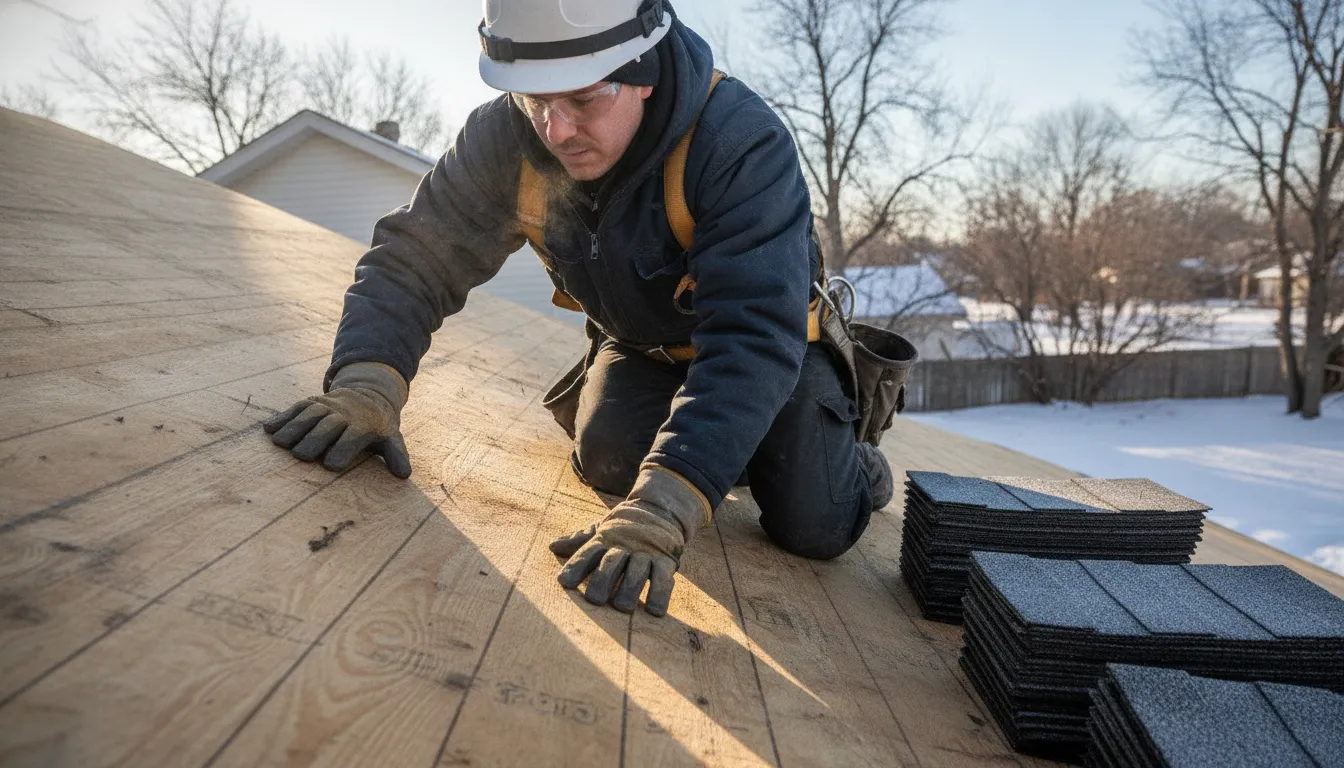
Cold weather changes how asphalt shingles behave before and during installation. As temperatures drop, shingles become less flexible, so lifting or bending them can lead to cracking or breakage. The Asphalt Roofing Manufacturers Association (ARMA) advises careful handling and says installation and storage should follow the specific shingle manufacturer's instructions. There is no single temperature cutoff that applies to every product and roof. ARMA's cold-weather shingle guidance explains why product-specific directions matter.
Bundles also need attention. Cold shingles can retain the shape of the surface they were stacked on, which may make them harder to lay flat. Installers should handle bundles and individual shingles carefully and make sure each shingle lies flat when nailed. Otherwise, a nail can break through the shingle surface. Storage and handling practices, including whether bundles can be kept warm before use, should be based on manufacturer recommendations rather than assumptions.
The adhesive strip that helps hold shingle tabs down may not seal immediately. The time it takes to thermally seal can vary with roof slope, orientation, and the amount of sun or heat reaching the shingles. That means a crew needs a plan for the product and the conditions on the actual roof. Not a blanket promise that every winter installation will seal the same way. ARMA notes that hand-sealing may provide added protection from wind blow-off in very cold conditions. But only with adhesive acceptable to the manufacturer and in accordance with its installation requirements. It is not a universal substitute for following the product instructions.
Cold-weather handling can also affect details such as valleys, where some installation methods require shingles to bend. The material and method should be selected within the product's specifications. Minnesota Roofing Company's Minnesota shingle roof installation information and its overview of roofing materials for Minnesota winters can help homeowners understand the broader choices. For a specific project, the contractor should explain how the selected product, fastening, sealing, and roof details will meet manufacturer requirements and Minnesota code.
What to Ask Before Scheduling a Winter Roof Replacement
A useful winter plan should explain how the crew will protect the roof, handle materials, and adjust if conditions change. These questions can help you understand the work without trying to set technical limits yourself.
Which manufacturer instructions apply to the shingles and other roof components?
Ask about product-specific guidance for cold-weather installation, storage, and handling of accessories. ARMA advises following these instructions, which may differ by product:
ARMA's cold-weather installation recommendations
.
- How will you confirm the roof is clear and the deck is dry?
Ask what the crew will inspect before covering the roof and what happens if ice, frost, or moisture is present. Frost can be hard to see and makes surfaces hazardous. ARMA advises waiting until the surface is free of ice and frost before shingle installation.
How will shingles be stored, handled, fastened, and sealed?
Cold shingles are less flexible and can crack if bent carelessly. Cold bundles may keep the shape of their storage surface, so the crew should handle them with care and lay each shingle flat during nailing. A seal strip may take time to bond. Timing varies with roof slope, orientation, and sun or heat exposure. Ask whether the product calls for hand-sealing. If so, confirm the method and adhesive meet the manufacturer's requirements. See
.
- What conditions would make the crew pause or stop work?
Ask how the crew will decide when to delay and resume. Do not assume one temperature or wind cutoff fits every roof and product. The plan should account for product instructions, roof condition, and crew safety.
- If weather changes after tear-off, how will the exposed roof be protected?
Ask about the weather contingency, who checks conditions, and how the home will be secured if installation cannot continue. Agree on how a pause and resumption will be communicated.
- What is included in the full replacement?
Ask whether the written scope includes deck inspection and how damaged areas are documented and approved for repair. Confirm which underlayment, ice-and-water barrier, and ventilation components are included. Minnesota Roofing Company says its installation follows manufacturer specifications and Minnesota building codes. Request the scope in writing so the planned system and any changes are clear before work begins.
Should You Replace Now, Repair, or Wait for Spring?
The right choice depends on whether the roof is keeping water out and whether a safe, manufacturer-compliant work window is available. An active leak, missing shingles, or exposed roof deck calls for prompt professional assessment. That does not automatically mean a full replacement must begin immediately. A contractor can inspect the damage and explain whether a repair, temporary protection, or replacement is appropriate for the roof and current conditions.
If the deck is exposed or water is entering, ask whether temporary protection is feasible while a permanent repair or replacement is planned. A temporary dry-in may be an option on some jobs, but it is not suitable or available in every case. The contractor needs to assess the roof, forecast, materials, and safe access before confirming any work. Never assume a temporary covering will solve the underlying problem or remain effective in changing weather.
Safety can affect timing even when the damage is urgent. Nearly invisible ice or frost on a roof or deck can make work hazardous, and ARMA advises waiting until the surface is clear before installing shingles (ARMA cold-weather installation guidance). OSHA also identifies rooftop snow removal and working at heights as winter-work hazards (OSHA winter weather hazards). If conditions are unsafe, ask what can be done to limit exposure now and when the roof can be reassessed.
A stable roof with no active leak or open area may be a better candidate for waiting until spring, when suitable conditions are easier to schedule. Waiting still deserves a plan: arrange an inspection, document any changes inside or outside, and ask what warning signs should prompt another call. If water is getting in, do not simply wait for warmer weather. Minnesota Roofing Company provides Minnesota roof repair options and can assess the roof before you decide whether repair or replacement makes sense.
Roof situation | Possible next step |
Active leak or exposed area | Get a prompt professional assessment. Discuss repair or temporary protection if full replacement cannot proceed safely. |
Widespread wear with no open area | Compare replacement timing with a suitable weather window. Confirm materials, scope, and protection plan. |
Stable roof without an active leak | Ask whether work can wait for spring and what changes should prompt an earlier inspection. |
For ice-dam-related concerns, address the source and any water intrusion rather than treating interior stains as a roofing schedule alone. UMN Extension notes that water backed up by an ice dam can leak indoors and damage walls, ceilings, and insulation (UMN Extension's ice dam guidance). The separate Minnesota ice dam roof damage guide covers that issue in more detail.
How Winter Affects Project Timing and Planning
A winter roof replacement is scheduled around conditions on the specific roof, not a calendar promise. Daylight, changing weather, safe access, and whether the roof is ready for work can all shape the usable work window. Cold-weather shingle guidance also varies by product, so the installation plan needs to account for the chosen materials and their manufacturer instructions.
Before setting a start date, ask the contractor to explain what conditions need to be in place and what could pause the work. For asphalt shingles, the Asphalt Roofing Manufacturers Association advises following the product maker's cold-weather application, storage, and handling instructions. It also notes that ice or frost on the roof or deck can make work hazardous, so the surface should be clear before installation. Review ARMA's cold-weather installation guidance for more detail.
Have the written scope identify how the crew will manage weather interruptions and protect any roof areas exposed during tear-off. Ask what happens if conditions change before the roof is closed in. How the crew will decide whether to stop, and how work will resume when conditions are suitable. The answers should reflect the roof's layout and materials, rather than relying on a blanket temperature or timing promise.
Site readiness matters too. Discuss access, staging areas, and any items around the home that need to be moved or protected. For a broader overview of inspections, preparation, and project steps, see the Minnesota roof replacement process. If replacement timing is still uncertain, review the Minnesota roof replacement service and ask for an on-site assessment and a clear written scope. That gives you a practical basis for comparing a suitable winter work window with waiting for different conditions, without assuming a particular schedule or price outcome.
Frequently Asked Questions
What temperature is too cold to replace a roof?
There is no single temperature that applies to every shingle and roof. Follow the specific shingle manufacturer's cold-weather installation instructions, along with the product requirements for storage and handling. The Asphalt Roofing Manufacturers Association (ARMA) directs installers to those manufacturer-specific instructions: ARMA cold-weather recommendations.
Can shingles seal properly after a winter installation?
Shingle seal strips may take time to bond, and the timing varies with roof slope, orientation, and sun or heat exposure. If hand-sealing is needed, ARMA advises using only an adhesive accepted by the shingle manufacturer and following its installation requirements. Ask the contractor how the selected product will be handled and sealed in the forecast conditions.
Can roofers install shingles over frost or ice?
The roof and deck should be clear of ice and frost before shingle installation. Even a thin, hard-to-see layer can make roof work hazardous, so the crew may need to wait for a safe, clear surface. ARMA explains this hazard and recommends waiting until the surface is free of ice and frost in its cold-weather guidance.
Should I replace a leaking roof now or wait for spring?
Start with an inspection to determine whether the roof can be safely and adequately protected in current conditions. An active leak or exposed area needs prompt attention, but that does not automatically mean a full replacement should proceed immediately. A contractor can explain whether a repair or temporary protection is appropriate, what conditions would allow replacement, and what needs to be monitored until then.


Comments